
Antibes is where Riviera yachting meets lived scale.
Antibes is not defined by arrival, nor by spectacle.
It is defined by proximity.
The harbour sits beside the old town, not below it. Stone walls meet masts without transition. Movement between yacht and shore happens quickly, without staging, without distance. What in other ports is performed here is simply part of the day.
Port Vauban is not symbolic. It is operational — a place where yachts berth, prepare, reposition, and depart. Around it, the town continues at its own rhythm: markets open, streets narrow, terraces fill and empty without reference to the harbour’s scale.
This coexistence is what defines Antibes.
Not separation — but adjacency.
Not projection — but continuity.
To understand Antibes is not to follow an itinerary, but to read how these elements hold together.
Why Antibes matters in yachting
Arrival — Antibes from the water
The Antibes day
Spatial structure of Antibes
Institutions that define Antibes
Where to stay when the harbour is the reference
Dining and terraces
When Antibes is most itself
What Antibes asks of you
What Antibes is not
Antibes, understood correctly
Plan your Antibes loop
Why Antibes matters in yachting
Port Vauban as operational centre
Port Vauban is not defined by image.
It is defined by function.
As one of the largest marinas in the Mediterranean, it operates as a core point within the Riviera’s yachting system — not for display, but for use. Superyachts berth here for preparation, maintenance, crew changes, provisioning, and transit between seasons.
This is where yachts pause between movements.
Not to be seen.
But to be made ready.
Unlike Monaco or Cannes, where visibility defines position, Antibes centres on continuity. Yachts arrive without announcement, remain as needed, and depart without event. The harbour is active, but not staged.
This is yachting in its working form.
Where old town and superyacht scale coexist
In Antibes, scale does not separate.
The fortified walls of the old town sit directly beside one of the Riviera’s most important harbours. Masts rise above stone. Quays connect immediately to narrow streets. There is no transition from maritime to urban — both exist within the same frame.
This creates a rare condition.
A superyacht can sit metres from structures that predate it by centuries. Movement from vessel to town is direct, unfiltered, and constant. The contrast is visible, but never forced.
It is simply how Antibes is built.
Brokerage, refit, and seasonal logic
Antibes holds a central role in the seasonal rhythm of Mediterranean yachting.
At the beginning and end of the summer, Port Vauban becomes a point of concentration — yachts arriving from or preparing for transit, crew rotations increasing, technical services operating at full capacity. Refit yards, provisioning networks, and brokerage activity all intersect here.
This is not occasional.
It is cyclical.
For owners, crew, and operators, Antibes is not just a stop along the Riviera. It is part of the infrastructure that allows the season to function — a place where decisions are made, logistics are handled, and yachts transition between states.
Approach along the bay and Cap d’Antibes
Antibes does not announce itself.
The coastline opens gradually — Cap d’Antibes extending outward, low landforms shaping the bay, the harbour only becoming visible as you draw closer. There is no singular reveal, no defined moment of arrival.
Instead, the approach is continuous.
Yachts move along the coastline without interruption, aligning naturally toward the harbour entrance. The town remains low, contained, and partially concealed until proximity reduces distance enough to read detail.
Antibes does not project.
It becomes visible through approach.
First contact — walls, masts, and stone
The first clear impression is not skyline.
It is structure at eye level.
Fortified walls, harbour edges, and dense rows of masts define the visual field. The old town presents itself as mass rather than height — stone surfaces, linear edges, and a contained geometry that sits directly against the water.
There is no separation between vessel and town.
Only contact.
From the deck, this is immediate.
Mooring lines, quay edges, and narrow streets all exist within a compressed horizontal plane — readable, tangible, and close.
Harbour entry and working rhythm
Entering Port Vauban reveals a different type of movement.
Less display.
More coordination.
Berths are occupied by vessels in various states — preparing, waiting, transitioning. Crew move along quays, tenders reposition, services operate in parallel. The harbour is active, but its rhythm is practical rather than performative.
There is no single choreography.
Only overlapping tasks.
This is where Antibes distinguishes itself most clearly from other Riviera ports.
Movement here is not observed for effect.
It is observed because it is necessary.
Transition: yacht to shore
The transition is immediate and direct.
From berth to quay, from quay to street — movement happens without staging. There are no extended marina corridors, no separation zones designed to buffer the experience.
You step off.
And you are already inside the town.
Within minutes, harbour activity gives way to narrow streets, shaded passages, and the internal rhythm of the old town. The yacht remains close, but no longer defines the environment.
It becomes part of it.
Morning — harbour before display
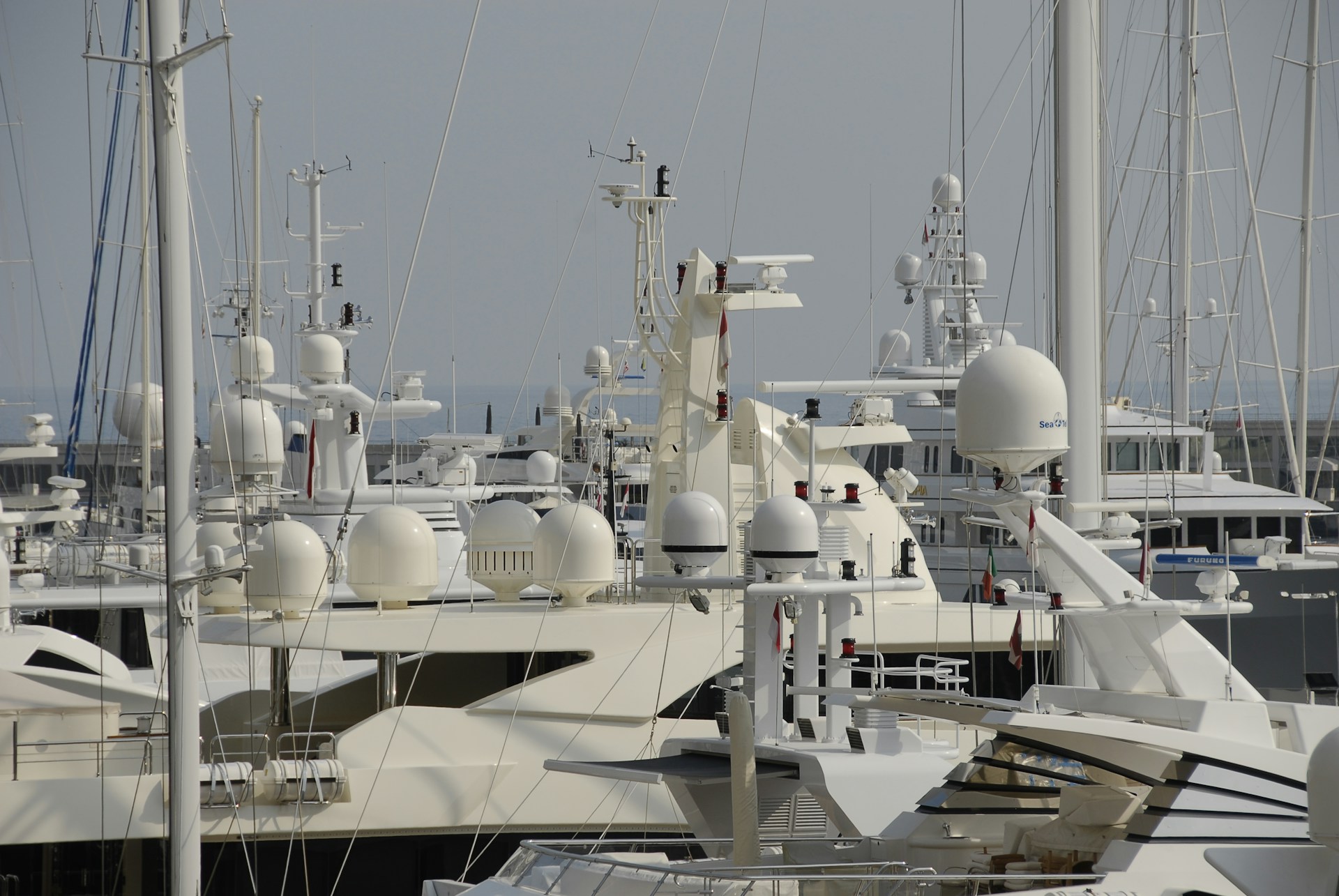
Morning begins inside the harbour.
Before the town fills, before terraces align, Port Vauban is already active. Crew move along the quays, lines are checked, tenders reposition for the day ahead. There is no pause between night and day — only a shift in light.
The old town follows more slowly.
Shutters open. Streets clear. The market begins to form. From the harbour edge, this transition is visible in fragments — movement inside the port, stillness within the walls, both unfolding in parallel.
Nothing is staged.
Everything begins where it is.
Midday — stone, market, and circulation
By midday, Antibes is fully in motion.
But not as a single field.
Movement distributes itself between harbour and town — along the quays, through the market, across narrow streets where shade replaces exposure. Unlike Cannes, there is no dominant surface. Instead, activity is layered — visible in parts, concealed in others.
The Marché Provençal fills and disperses. Harbour edges remain active. Boats arrive, depart, or remain in preparation. The system continues, but without drawing attention to itself.
This is circulation without display.
Late afternoon — ramparts and return light
This is where Antibes becomes most precise.
Light lowers across the harbour and strikes the ramparts — revealing edges, textures, and the relationship between stone and water. The town is no longer read through movement, but through form.
From the walls, the bay opens.
Yachts sit at berth or at anchor beyond, their scale measured against the fixed geometry of the old town. Movement slows, not because it ends, but because it becomes less central.
This is not a moment of spectacle.
It is a moment of clarity.
Evening — quieter density
As the day closes, Antibes does not intensify.
It settles.
Restaurants fill along the harbour and within the old town, but without the projection of Cannes or the control of Monaco. Light remains close — contained within streets, reflected off stone, held along the water’s edge.
The harbour continues its rhythm.
But now it sits alongside the town, not ahead of it.
There is no separation between the two.
Only coexistence.
Spatial structure of Antibes
Port Vauban — working gravity
Port Vauban holds Antibes together.
Not as a centre of spectacle, but as a point of gravity — where yachts arrive, remain, and depart within a continuous operational rhythm. The harbour is structured, dense, and highly legible, with berths, quays, and circulation paths clearly defined.
From here, everything connects.
Crew move outward into the town. Supplies move inward to the vessels. Decisions, preparations, and transitions all pass through this space without interruption.
This is not where Antibes is displayed.
It is where it functions.
Vieil Antibes — stone and human scale
Behind the harbour, the old town shifts the scale entirely.
Narrow streets, enclosed passages, and low-rise structures create a different condition — one defined by proximity and texture rather than visibility. Movement slows, distances shorten, and the rhythm changes from operational to lived.
There is no separation between past and present.
Only continuity.
Here, Antibes is not read through yachts or infrastructure, but through surfaces — stone, shade, and the density of daily life contained within the walls.
Cap d’Antibes — distance and privacy
To the south, Cap d’Antibes introduces distance.
The peninsula extends into the sea, separating itself from the immediate rhythm of the harbour. Villas, tree cover, and controlled access create a quieter layer — one where visibility reduces and movement becomes selective.
From here, the coastline opens outward.
The harbour remains present, but no longer dominant. Yachts become part of a wider field rather than the centre of it.
This is Antibes stepped back.
Ramparts and waterfront — threshold condition
Along the edge of the old town, the ramparts define the boundary between land and sea.
They are not simply historical structures.
They are spatial thresholds.
On one side, the contained geometry of Vieil Antibes.
On the other, the open surface of the Mediterranean.
Movement along this edge reveals both conditions at once — stone and water, enclosure and exposure, past and present. It is here that Antibes becomes most legible as a whole.
Not divided.
But held together through contrast.
Institutions that define Antibes
Port Vauban — infrastructure over image
Port Vauban is not a backdrop.
It is infrastructure.
As one of the largest and most active marinas in the Mediterranean, it defines Antibes through function rather than projection. Yachts berth here for preparation, maintenance, and transition — supported by a network of services that operate continuously, not occasionally.
This is where the Riviera’s yachting system becomes visible in its working form.
Not curated.
Not staged.
Sustained.
Fort Carré — fixed reference
Fort Carré sits above the harbour as a constant.
Its geometry is clear, its position unchanged, its role not dependent on season or movement. From the water and from the quays, it provides a fixed point against which everything else can be read — yachts entering, masts shifting, light changing across the port.
It does not participate in the system.
It defines its scale.
The market — continuity of daily life
Marché Provençal anchors Antibes in something older than yachting.
Located within the old town, the market operates on its own rhythm — opening, filling, dispersing — independent of the harbour’s cycles. It introduces a second system, one defined not by vessels and movement, but by produce, trade, and routine.
This is not contrast.
It is coexistence.
The presence of both systems — maritime and local — is what prevents Antibes from becoming singular.
Yachting services and brokerage network
Beyond visible landmarks, Antibes is defined by what supports the harbour.
Brokerage offices, provisioning specialists, refit coordination, and crew logistics form an underlying network that allows Port Vauban to operate at scale. These elements are not architectural, but they are essential — connecting vessels to services, schedules, and decisions.
They are not seen as institutions.
But they function as such.
Where to stay when the harbour is the reference
Old-town proximity — immediate access
Staying within or directly beside Vieil Antibes places you inside the shortest possible distance between harbour and town.
From Port Vauban, movement into the old town takes minutes. Quays lead directly into narrow streets, and the transition from vessel to town happens without layers of separation.
This is the most direct way to experience Antibes.
Not through views.
But through access.
Rooms here are not defined by scale or spectacle. They are defined by proximity — to the harbour, to the market, to the daily rhythm that continues independently of yachting.
Harbour-facing positions — operational convenience
Properties aligned with the harbour edge offer a different advantage.
From these positions, Port Vauban remains fully visible — berths, masts, and movement readable throughout the day. For crew, operators, and guests moving frequently between yacht and shore, this reduces friction.
Distance becomes measurable.
Time becomes predictable.
The experience remains connected to the harbour’s rhythm, rather than the town’s internal pace. This is not about retreat.
It is about alignment with function.
Cap d’Antibes — distance and privacy
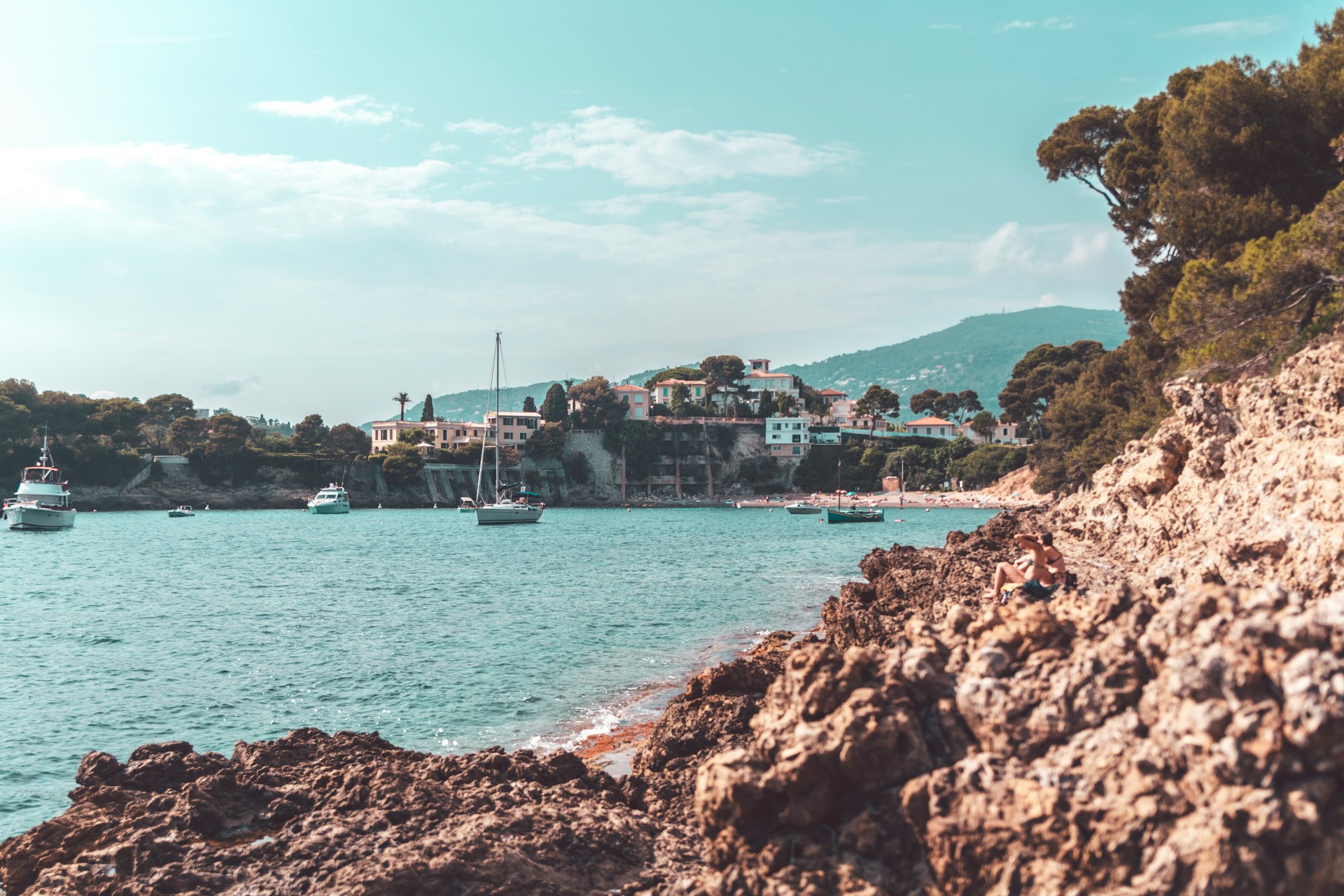
South of the harbour, Cap d’Antibes offers separation.
Villas and select properties are positioned away from the density of Port Vauban and the old town, introducing space, controlled access, and reduced visibility. Movement becomes intentional rather than continuous.
From here, Antibes is no longer immediate.
It is observed at a distance.
This layer suits those who move between harbour activity and private retreat — using Antibes as a base, without remaining inside its daily flow.
Dining and terraces
Lunch near the harbour
Midday in Antibes stays close to the water.
Tables along the edge of Port Vauban remain connected to the harbour’s movement — crew passing, tenders shifting, vessels preparing or holding position. The scale is smaller than Cannes, the rhythm less exposed, but the link between yacht and table remains direct.
You do not step away from the system.
You sit within it.
Here, lunch does not separate from the day’s activity. It runs alongside it — quieter, more contained, but continuous.
Old-town tables and interior courtyards
Inside Vieil Antibes, dining shifts in scale.
Narrow streets open into small squares and shaded courtyards where movement slows and visibility reduces. The harbour remains close, but no longer defines the experience. Stone walls, filtered light, and shorter distances create a more contained environment.
This is where Antibes becomes tactile.
Sound softens. Time extends. The focus moves from movement to presence — not in isolation, but in proximity to everything just beyond the walls.
Evening along the walls and waterfront
As light lowers, the edge of the old town becomes the primary line.
Tables along the ramparts and waterfront align with the sea, where the horizon remains open but the town holds its structure behind you. Light reflects off stone and water at close range, without projection or scale shift.
The harbour continues nearby.
But it does not dominate.
Evening in Antibes is not staged outward.
It settles inward — held between walls and water, without separating the two.
When Antibes is most itself
Summer transit season — harbour at full function
During the height of summer, Port Vauban reaches full operational visibility.
Yachts arrive, reposition, and prepare for movement across the Mediterranean. Crew rotations increase, provisioning runs intensify, and the harbour moves in continuous cycles of arrival and departure. Nothing here is fixed for long.
This is not an event.
It is the system at full capacity.
From the quays, this becomes visible in fragments — lines adjusted, tenders moving, schedules shifting without announcement. Antibes does not amplify this activity.
It simply sustains it.
Shoulder months — clarity without pressure
Outside peak periods, Antibes becomes more readable.
The harbour remains active, but without overlap. Movement slows, spacing increases, and the relationship between port and town becomes easier to follow. Yachts remain present, but no longer dominate the visual field.
This is when structure becomes clear.
Not through reduction, but through balance.
For many, this is Antibes at its most precise — where the same systems operate, but without compression or distraction.
Morning market and late-day waterfront rhythm
Antibes is not defined by major events.
It is defined by repetition.
The market opens and closes. The harbour prepares and resets. The waterfront fills and settles with the light. These cycles repeat daily, independent of season, forming a rhythm that is constant rather than occasional.
There is no single moment that defines Antibes.
Only continuity across time.
What Antibes asks of you
Attention over spectacle
Antibes does not present itself immediately.
There is no single viewpoint, no dominant scene that defines the experience. What matters here is not what is shown, but what is noticed — small shifts in the harbour, the relationship between stone and water, the way movement passes without drawing attention.
To understand Antibes, you have to look closer.
Not further.
Walking over projection
This is a place that is read on foot.
Distances are short. Transitions are direct. Movement from harbour to old town, from market to waterfront, happens within minutes — not as a sequence of destinations, but as a continuous path.
You do not position yourself here.
You move through it.
The experience builds through proximity, not display.
Practicality and patience
Antibes operates without urgency, but not without purpose.
Harbour activity follows its own rhythm. Services run as needed, not on demand. Streets narrow, routes compress, and movement occasionally slows — not as friction, but as part of the place itself.
To engage with Antibes is to accept this pace.
Not to resist it.
What Antibes is not
Antibes is not Monaco.
It does not organise itself around visibility or control. There is no central point where position defines everything, no system that compresses activity into a single field. The harbour functions continuously, but without projection.
It does not seek to be seen.
Antibes is not Cannes.
It does not extend itself along a surface of movement and exposure. There is no Croisette equivalent, no linear axis where presence unfolds in parallel with the sea. Activity here is contained, distributed, and often partially hidden.
It does not perform.
Antibes is not defined by isolation.
Despite its old walls and contained streets, it remains fully connected to the harbour and the coastline beyond. Movement between vessel and town is immediate, and the relationship between the two is constant.
There is no separation.
Only proximity.
Antibes is not a constructed image of the Riviera.
It does not reduce itself into a single expression of lifestyle, luxury, or identity. Instead, it holds multiple conditions at once — harbour and town, past and present, function and continuity — without forcing them into alignment.
There is no singular reading.
Only what you are able to recognise.
Antibes, understood correctly
Antibes is not defined by what it shows, but by how its elements remain in place.
The harbour, the old town, the walls, the coastline — all exist within immediate proximity, without hierarchy. Nothing dominates. Nothing withdraws. Movement passes through the same space where daily life continues, without interruption or separation.
To understand Antibes is not to locate a centre.
It is to recognise how these parts coexist.
Between vessel and stone.
Between movement and routine.
Between continuity and change.
Nothing here is staged.
Nothing needs to be.
For readers, not audiences.
Yachtluéur letters are released selectively — when observation becomes reference, and reference becomes worth keeping.
Thank you!
You have successfully joined our subscriber list.
Plan your Antibes loop
A clear comparison of Monaco, Cannes, and Antibes — how embarkation, harbour structure, and early routing shape the first day of a yacht charter.