
Cannes is not concentrated. It unfolds.
Why Cannes matters in yachting
Arrival — Cannes from the water
The Cannes day
Spatial structure of Cannes
Institutions that define Cannes
Where to stay when the bay is the reference
Dining and terraces
When Cannes is most itself
What Cannes asks of you
What Cannes is not
Cannes, understood correctly
Plan your Cannes loop
Opening
Cannes does not compress itself into a single point.
It stretches — along the bay, across the Croisette, into a sequence of positions where movement replaces control.
There is no centre in the Monaco sense.
No fixed gravity.
Instead, Cannes operates as a continuous field — where yachts, beaches, hotels, and terraces exist in parallel, not hierarchy.
For yachting, this changes everything.
The yacht is not placed against the city.
It moves with it.
Why Cannes matters in yachting
Vieux Port as an open stage
Vieux Port is not enclosed.
It is exposed.
Positioned at the edge of the old town, Cannes’ primary harbour operates as a visible platform — where yachts are not contained, but presented. Lines of vessels sit against a low urban edge, open to the bay, readable from the Croisette, the terraces, and the rising streets above.
There is no separation between marina and city.
Only proximity.
Here, yachts are not hidden within infrastructure.
They are part of the scene — aligned, observed, and continuously in view.
The Croisette as interface
In Cannes, the Croisette replaces the concept of a centre.
It runs parallel to the bay — a linear axis where hotels, beaches, restaurants, and movement form a continuous interface between land and sea. From this line, the harbour is never far, but never dominant.
Everything circulates.
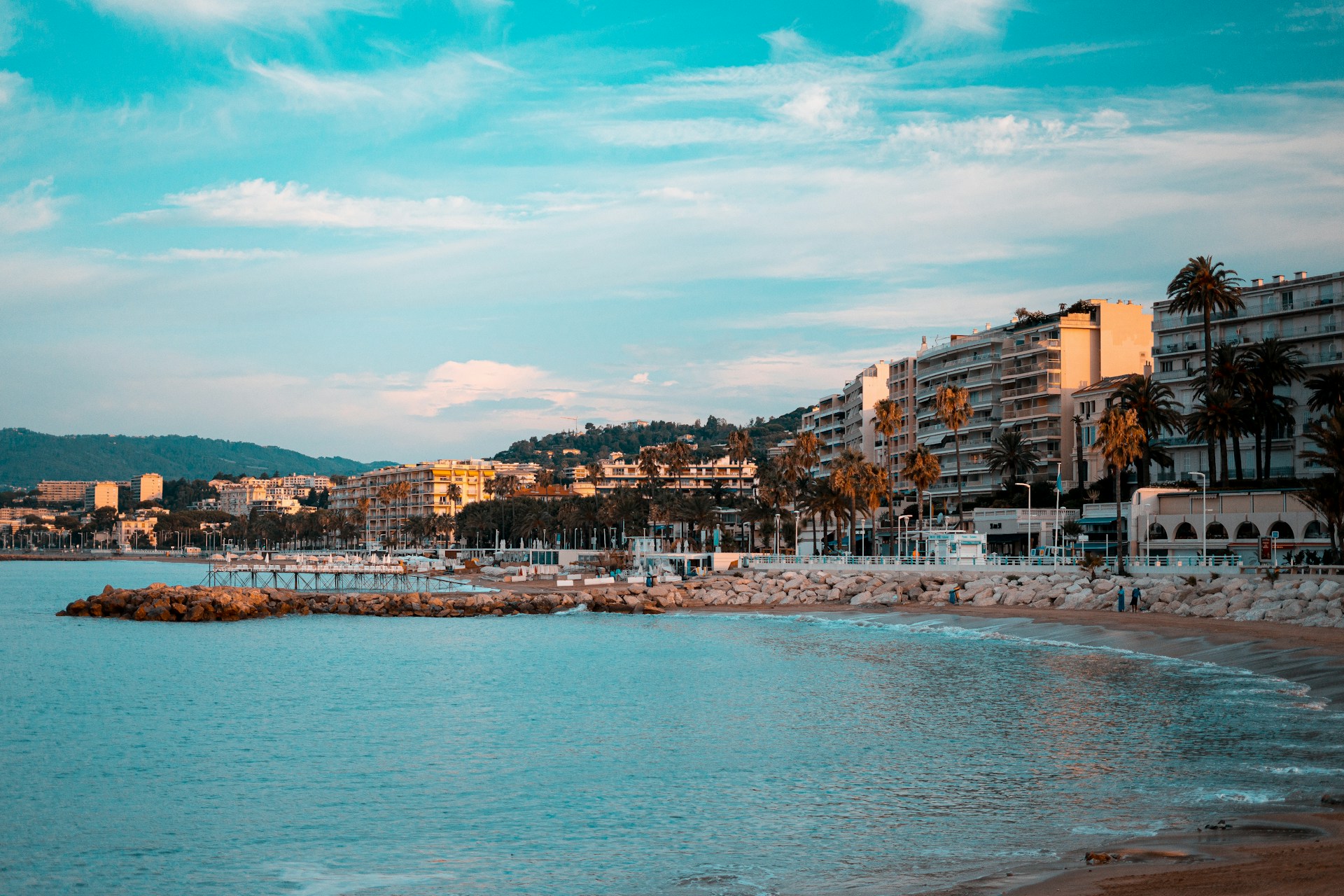
Guests move from yacht to beach, from terrace to tender, from hotel to shoreline without interruption. There is no fixed position — only sequences of arrival and departure.
This is where Cannes differs from Monaco.
Not control, but flow.
Charter, brokerage, and visibility
Cannes operates as one of the most active charter environments on the Riviera.
Yachts are not only based here — they rotate through it. Arrivals, departures, day charters, and short-term movements define the rhythm of the bay. Compared to Monaco, where positioning is fixed, Cannes is defined by circulation.
This creates a different kind of visibility.
Less formal.
More constant.
For brokers, charter guests, and operators, Cannes offers something Monaco does not:
a system where movement itself becomes the signal.
Approach along the bay
Cannes does not appear at once.
It extends.
The coastline opens gradually — a wide arc of sand, hotels, and low structures unfolding along the Mediterranean. There is no abrupt entry, no moment of compression. The bay receives you early, and holds you in view.
Approaching Cannes by yacht is not about arrival.
It is about alignment.
Distance reduces slowly. Positions become readable — Vieux Port to the west, the Croisette stretching east, the Lérins Islands set further out, marking the outer limit of movement.
Nothing forces entry.
You move into it.
First contact — shoreline, not skyline
The first impression is horizontal.
Where Monaco rises, Cannes extends. Buildings do not dominate the horizon; they trace it. The shoreline defines the visual field — beaches, terraces, hotel facades, all arranged in a continuous line facing the water.
From the deck, the city does not close around you.
It remains open.
The eye moves laterally — following the Croisette, reading sequences instead of layers. This changes perception immediately.
Cannes is not vertical.
It is distributed.
Docking rhythm and exposure
Movement in Cannes is less controlled, but no less visible.
Yachts enter Vieux Port or hold position in the bay, depending on size, timing, and intent. Tenders move constantly — linking anchored vessels to shore, tracing short, repeated paths across the water.
There is no single choreography.
Instead, multiple movements overlap — arrivals, departures, crossings — forming a fluid system that remains readable from every angle: the harbour, the beaches, the terraces above.
Exposure is continuous.
But never fixed.
Transition: yacht to shore
The transition is immediate, but less defined.
From anchorage or berth, movement to shore is short — but not structured into a single path. Guests step onto tenders, approach beaches, hotel jetties, or harbour edges, depending on where they choose to enter.
There is no single threshold.
Instead, multiple points of contact connect yacht and city — each offering a slightly different reading of Cannes. A beach club, a Croisette terrace, a quiet edge near the old town.
The yacht remains in the background.
Present, but not dominant.
Morning — softness and reset
Light arrives without pressure.
The bay is open, almost empty in feeling. Water reflects the first movement of the day — slow tenders, early crews, quiet preparation on decks that have not yet been read by the city.
Cannes does not stage its mornings.
It allows them.
Beaches are still. Terraces are not yet aligned. The Croisette exists, but without direction. From the yacht, the city feels suspended — present, but not activated.
This is when Cannes is least defined.
And most legible.
Midday — movement and circulation
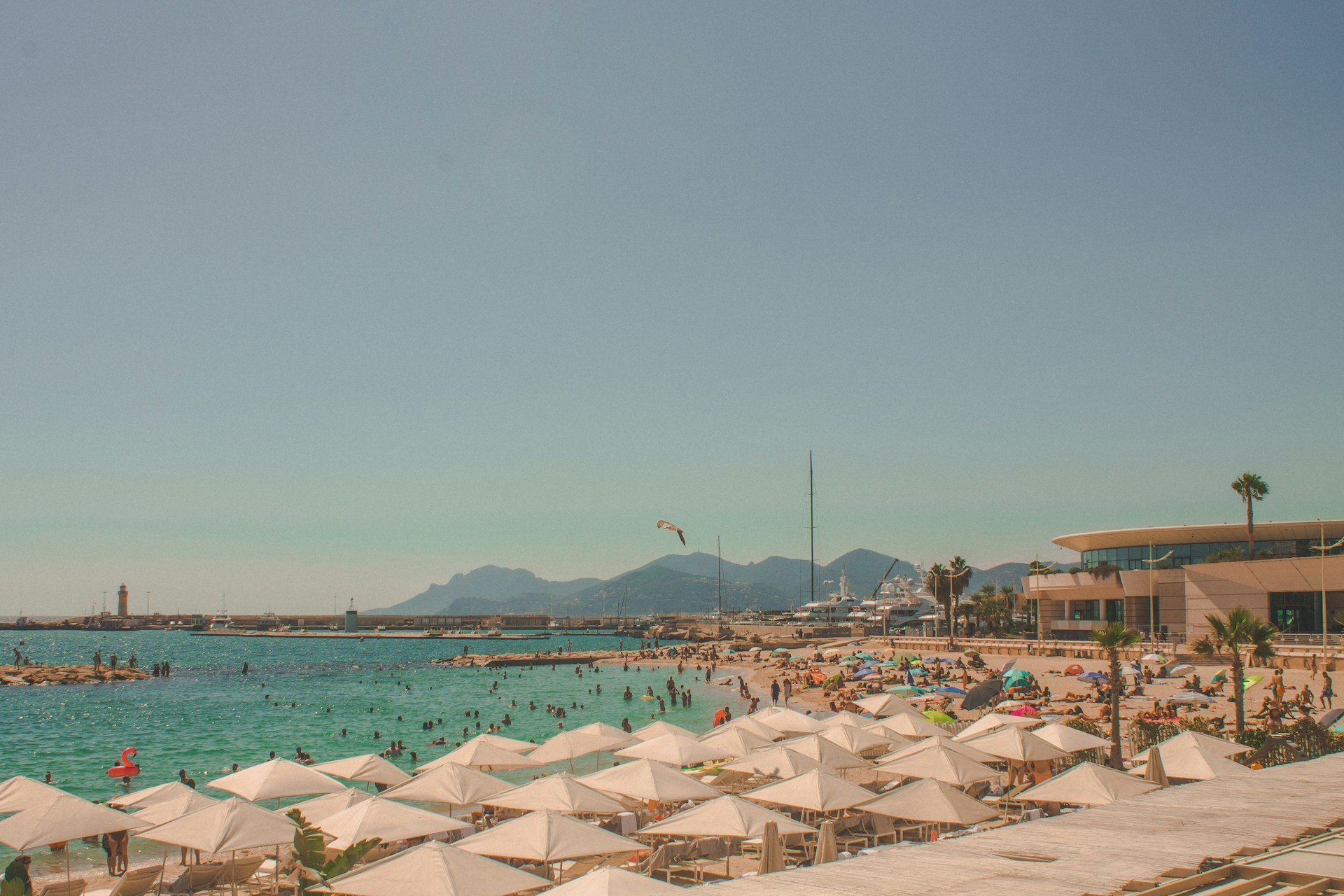
By midday, the system begins to move.
Tenders cross the bay in constant lines. Guests shift between yacht, beach, and terrace. The Croisette fills — not as a single event, but as overlapping sequences of movement.
There is no centre.
Instead, Cannes operates as circulation — a continuous exchange between water and land. Yachts hold position or drift slightly at anchor, while the shoreline becomes active, visible, and interconnected.
Everything is in motion.
And everything remains exposed.
Late afternoon — alignment
The day begins to organise itself.
Light lowers across the bay, and movement becomes directional. Returns begin — from beach to yacht, from terrace to harbour, from the outer edges back toward Vieux Port.
The Croisette sharpens.
Positions that were fluid at midday become more defined. Reservations, timing, and intention start to replace spontaneity. The same spaces remain, but their use becomes more precise.
Cannes does not compress.
But it aligns.
Evening — projection and presence
As light leaves the bay, Cannes shifts again.
The Croisette becomes a continuous line of illumination — hotels, terraces, and restaurants forming a visible edge against the water. The city turns outward, projecting itself across the bay.
Yachts remain, but their role changes.
They become background to the social field — anchored points within a wider system of presence, movement, and visibility. From the water, the city reads as a sequence of light and sound. From land, the bay becomes depth.
There is no single scene.
Only multiple layers of presence, unfolding at once.
Spatial structure of Cannes
Vieux Port — working centre
Vieux Port anchors Cannes without containing it.
Positioned at the western edge of the Croisette, it operates as the primary harbour — receiving yachts, organising berths, and structuring the flow between sea and city. Compared to Monaco’s Port Hercule, it is less enclosed, more exposed to the bay, and more directly connected to the surrounding streets.
This is where arrivals become visible.
Masts, superyachts, tenders — all aligned against a low urban backdrop that allows the harbour to remain readable from multiple angles: the Croisette, Le Suquet, and the water itself.
It is the centre of operation.
Not the centre of experience.
La Croisette — linear axis
La Croisette defines Cannes.
It stretches along the bay as a continuous line — hotels, beaches, restaurants, and movement arranged in parallel to the water. There is no interruption, no shift in direction. Only extension.
From here, everything connects.
Yachts offshore. Beach clubs at the edge. Terraces above. Movement flows along this axis, not toward a point. Guests walk, pause, redirect — never fully arriving, always transitioning.
This is the difference.
Cannes does not gather.
It extends.
Le Suquet — elevation and memory
Above the harbour, Le Suquet introduces distance.
The old town rises behind Vieux Port — narrow streets, stone surfaces, and a different rhythm from the Croisette below. From here, the bay can be read in full: yachts at anchor, harbour movement, the linear structure of Cannes stretching east.
This is not where Cannes operates.
It is where Cannes is understood.
The elevation removes you from circulation and replaces it with observation — a slower, more defined perspective on the same system.
Lérins Islands — release from the surface
Offshore, the Lérins Islands mark the outer edge of Cannes’ spatial field.
A short distance from the mainland, they offer a different condition — quieter, less structured, less exposed. Anchorages form around their edges, allowing yachts to step outside the constant visibility of the Croisette and the harbour.
Here, movement reduces.
Sound drops. Distance increases.
The islands do not compete with Cannes.
They complete it — providing the only real counterpoint to its continuous surface.
Institutions that define Cannes
Palais des Festivals — image as infrastructure
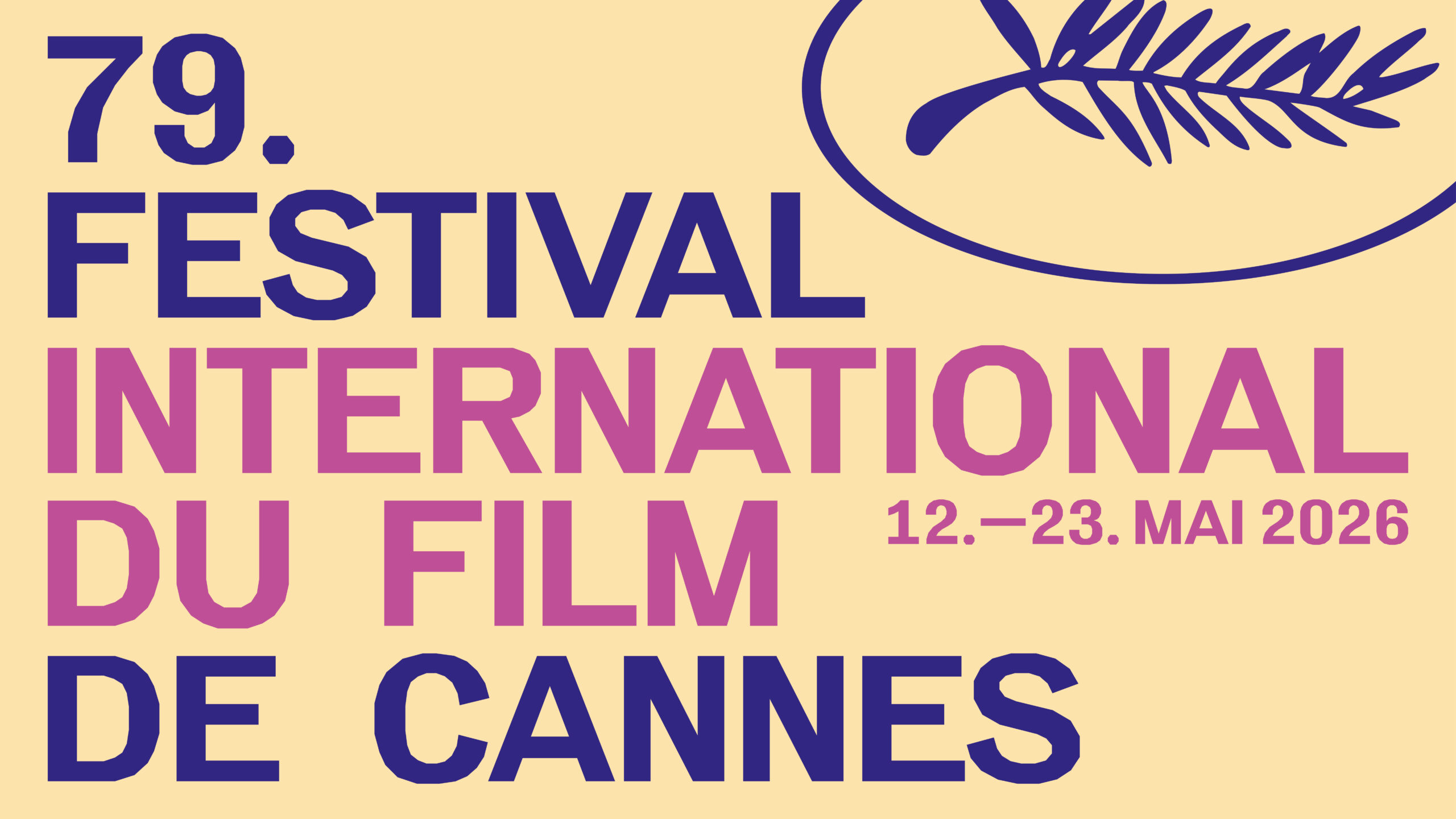
The Palais des Festivals defines how Cannes is seen.
Positioned at the edge of Vieux Port, it anchors the city’s global identity — not through architecture alone, but through what it hosts. The Cannes Film Festival transforms this building into a point of projection, where cinema, media, and presence converge into a single, highly visible moment.
For yachting, its role is indirect but decisive.
During the festival, the harbour, the Croisette, and the bay reorganise around it. Yachts become extensions of the event — platforms for hosting, negotiation, and visibility. Movement intensifies, access tightens, and the entire city aligns toward a shared focal point.
This is where Cannes changes scale.
Not through control — but through amplification.
Cannes Yachting Festival — the harbour as exhibition
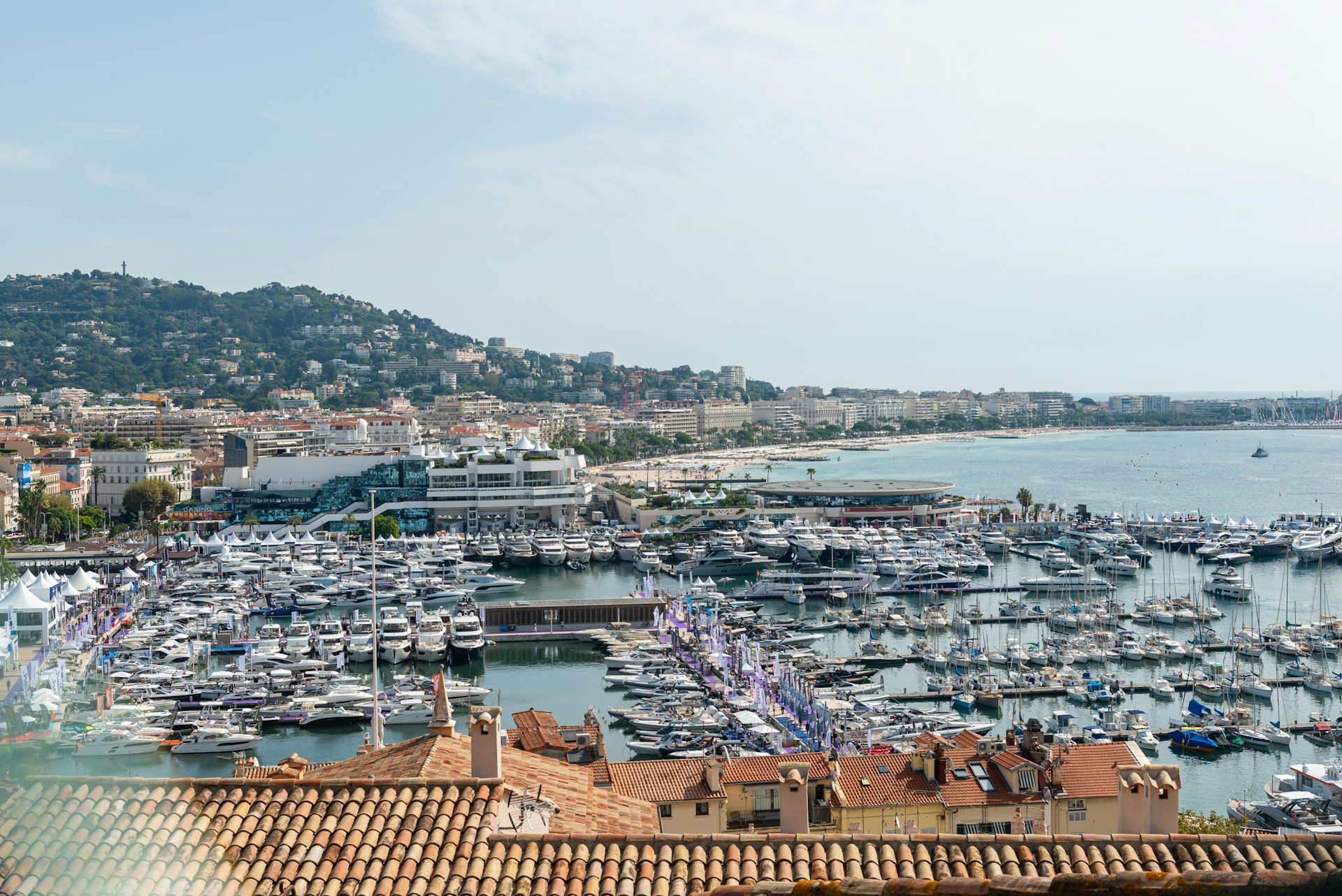
Once a year, Vieux Port and Port Canto shift function.
The Cannes Yachting Festival transforms the harbour into an open exhibition — where shipyards, brokers, and designers present vessels directly within the water. Unlike Monaco, where the environment is more contained, Cannes spreads the experience across multiple zones.
Movement becomes part of the display.
Visitors move between ports, along the Croisette, across tenders and walkways — reading yachts in sequence, not isolation. The event extends into the city, rather than compressing into a single space.
For the industry, this is not only presentation.
It is circulation made visible.
The Croisette hotels — continuous frontage
The hotels along the Croisette are not isolated destinations.
They form a continuous frontage — Carlton, Martinez, Majestic — aligned along the same axis, facing the same bay, participating in the same system of visibility. Each operates independently, but together they define how Cannes is experienced from land.
Terraces, beach clubs, entrances — all positioned to engage with the movement outside.
For yacht guests, these hotels are not alternatives to the vessel.
They are extensions of it.
Spaces where the relationship between water and city continues — through meetings, dining, and presence — without leaving the field of the bay.
Where to stay when the bay is the reference
Croisette hotels — direct interface
Staying along the Croisette places you inside the system.
Here, the bay is not a view.
It is a constant presence.
Rooms, terraces, and beach clubs face directly onto the water — aligned with the movement of yachts offshore and the continuous flow along the promenade. From morning to night, the relationship between hotel and sea remains uninterrupted.
This is not distance.
It is interface.
For yacht guests, these hotels function as immediate extensions of the day — allowing movement between vessel, beach, and terrace without transition. Everything remains within the same field of visibility.
Elevated positions — distance and control
A shift upward changes perception.
Above the Croisette, Cannes becomes quieter — not in activity, but in exposure. Elevated hotels and residences introduce distance from the continuous movement below, while maintaining full visual command over the bay.
From here, yachts are no longer immediate.
They are composed.
The coastline becomes legible as a whole — Vieux Port, anchored vessels, the Croisette line extending east. Movement is observed rather than joined.
This position suits those who remain connected to Cannes,
without remaining inside its flow.
Private villas — withdrawal from exposure
Beyond the central axis, Cannes offers a different condition.
Private villas — positioned in surrounding hills or quieter districts — remove you from the surface entirely. The bay remains present at a distance, but the immediate system of movement, visibility, and exchange falls away.
Here, Cannes is no longer continuous.
It becomes selective.
Access is controlled, timing becomes internal, and the relationship to the yacht changes — from participation to return. The vessel is no longer part of a visible network, but a point of departure.
This is not Cannes as it is seen.
It is Cannes, stepped outside.
Dining and terraces
Lunch — facing the water
Midday in Cannes is defined by orientation.
Tables are positioned toward the bay — not as decoration, but as alignment. From the Croisette, beach clubs, and harbour edges, lunch unfolds in direct relation to the water: yachts offshore, tenders crossing, movement continuing beyond the table.
You are not separate from it.
You remain inside the same field.
Here, dining extends the day rather than interrupting it. Conversations happen against a moving background — arrivals, departures, crossings — all visible, all continuous.
In Cannes, lunch is not an escape.
It is participation.
Dinner — controlled interiors or lit terraces
As the light shifts, Cannes reorganises.
Dining moves inward — into structured interiors — or remains outside, on terraces where lighting replaces the sun and the bay recedes into darkness. The relationship to the water changes, but does not disappear.
It becomes indirect.
Rooms introduce control — spacing, pacing, acoustics — shaping a more defined experience than the openness of midday. Terraces, by contrast, maintain connection, but filter it through light and distance.
The same city remains.
But it is no longer read in motion.
Late hours — extension without closure
Cannes does not end at dinner.
It continues.
Bars, lounges, and terraces extend the evening without clear transition. Movement persists along the Croisette, between hotels, across beachfronts — less structured than Monaco, less controlled, but no less deliberate.
There is no single destination.
Only continuation.
From the water, this is visible as a shifting line of light. From land, the bay becomes depth — a quiet counterpoint to the ongoing presence along the shore.
The day does not close.
It disperses.
When Cannes is most itself
Cannes Film Festival — projection at maximum scale
For a short period each year, Cannes becomes entirely outward-facing.
The Cannes Film Festival transforms the city into a surface of projection — where image, media, and presence converge along the Croisette and extend into the bay. The Palais des Festivals anchors the event, but its influence spreads across hotels, terraces, and yachts offshore.
Everything becomes visible.
Yachts operate as extensions of the festival — hosting, observing, positioning within a network of attention that moves continuously between land and sea. Access tightens, timing becomes critical, and the entire system aligns around a shared moment of exposure.
This is Cannes at maximum intensity.
Not contained.
Projected.
Cannes Yachting Festival — circulation as system
Later in the season, the focus shifts from image to structure.
The Cannes Yachting Festival reorganises the harbour and surrounding areas into a working environment — where shipyards, brokers, and clients move through yachts in sequence. Vieux Port and Port Canto divide the experience, creating multiple zones that must be navigated rather than absorbed at once.
Movement defines everything.
Visitors cross between ports, along the Croisette, and across the water — reading vessels not as isolated objects, but as part of a continuous system. Compared to Monaco, where density concentrates, Cannes distributes.
This is yachting understood through circulation.
High summer — continuous presence
Outside of major events, Cannes maintains a steady condition.
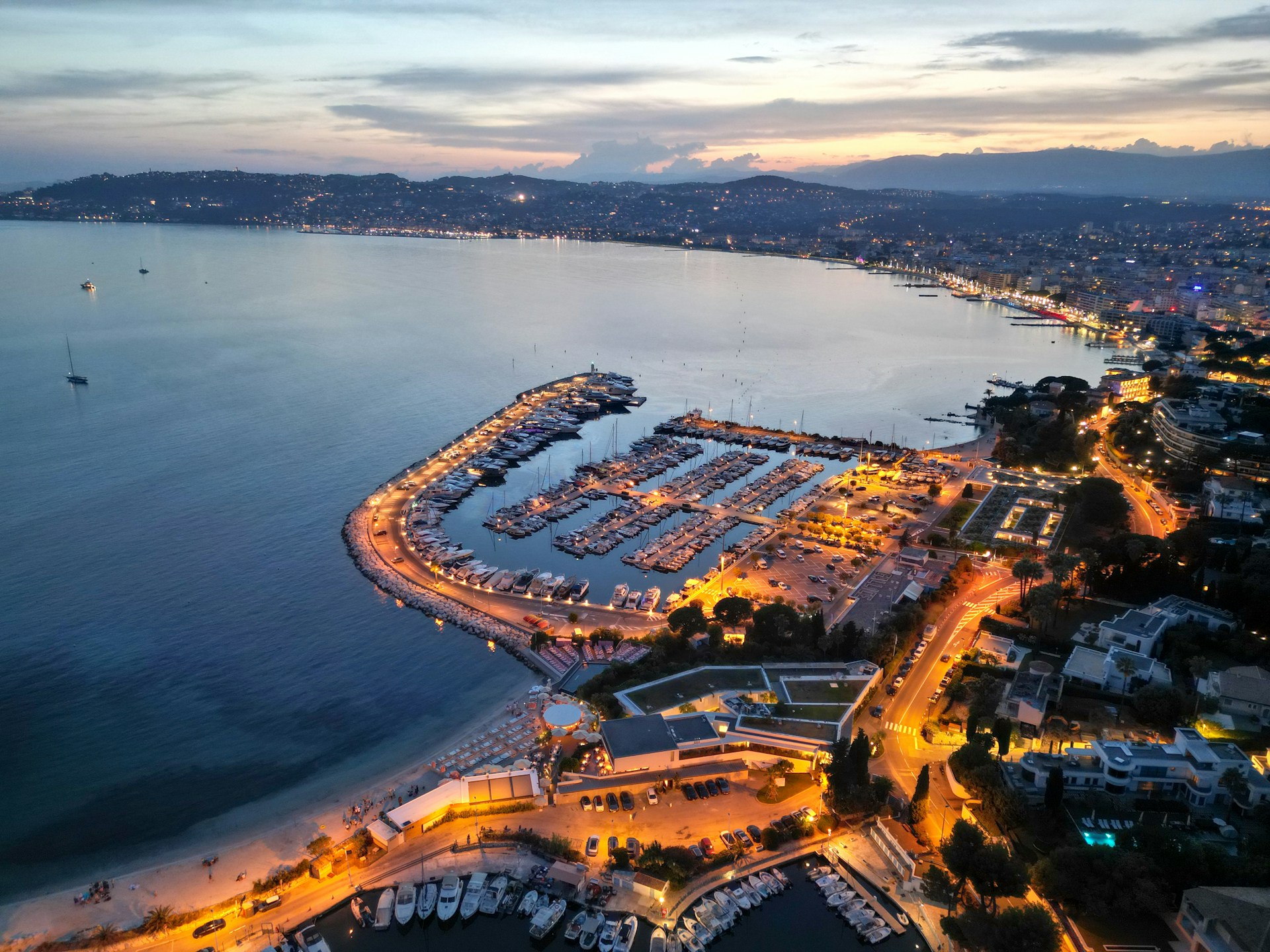
The bay remains active. Yachts arrive, reposition, and depart in a constant flow. The Croisette operates without interruption — beaches, terraces, and movement forming a continuous surface from morning through late evening. At Port Canto, the pattern becomes visible — lines of berths, arrivals, and departures held within a clear structure.
There is no peak moment.
Only continuity.
This is Cannes in its default state — where visibility, access, and movement remain consistent, without the compression of events or the quiet of off-season.
Shoulder months — clarity without pressure
Beyond summer, Cannes becomes more readable.
The same structures remain — Vieux Port, the Croisette, the bay — but with reduced intensity. Movement slows, spacing increases, and the system becomes easier to observe without constant overlap.
Yachts are still present.
But no longer dominant.
For some, this is when Cannes reveals itself most clearly — not through spectacle, but through proportion, light, and sequence.
Less amplified.
More precise.
What Cannes asks of you
Movement over position
In Cannes, stillness does not define experience.
You are expected to move.
Between yacht and shore. Between beach and terrace. Between one point and the next. The city is not organised around a single position to hold — it operates through sequences that require participation.
Remaining static removes you from the system.
To engage with Cannes is to follow its movement — not to control it.
Visibility without enclosure
Cannes offers visibility, but not protection.
Along the Croisette, within Vieux Port, across the bay, presence is continuous and shared. Yachts, terraces, and public spaces exist within the same visual field — open, accessible, and constantly observed.
There is no boundary that fully separates private from public.
Only degrees of exposure.
To be in Cannes is to accept this condition — to be seen without the structure of enclosure that defines more controlled environments.
Timing as coordination
Access in Cannes is less restricted, but no less dependent on timing.
Tables, berths, tenders, and movement all align around specific moments — not through rigid systems, but through coordination. Without it, the experience fragments. With it, Cannes flows.
Arrive too early, and the system has not formed.
Arrive too late, and it has already moved on.
Precision exists here.
But it is fluid.
What Cannes is not
Cannes is not contained.
It does not gather itself into a single point of control, nor does it organise experience through enclosure. There is no equivalent to a closed harbour system where position defines everything.
It remains open.
Cannes is not private in the Monaco sense.
There is no separation that fully removes you from view — not along the Croisette, not across the bay, not within the harbour. Even at distance, presence is shared, layered into the same visible field.
Exposure is not optional.
Cannes is not defined by stillness.
It does not reward remaining in place, nor does it structure experience around fixed positions. Movement is constant — across water, along the shoreline, between points that never fully settle.
To stop is to fall out of rhythm.
Cannes does not simplify the Riviera.
It does not reduce it into a single expression of luxury, control, or status. Instead, it expands it — into sequences, surfaces, and overlapping conditions that resist singular definition.
There is no single Cannes.
Only the one you move through.
Cannes, understood correctly
Cannes is not defined by what it offers, but by how it moves.
The bay, the Croisette, the harbour, the islands — all exist within a continuous field where position never fully stabilises and visibility remains shared. Experience is not held in one place, but carried across sequences of movement that shift throughout the day.
To understand Cannes is not to locate yourself.
It is to follow the system.
Between yacht and shore.
Between surface and depth.
Between presence and transition.
Nothing here is fixed.
Everything passes through alignment.
For readers, not audiences.
Yachtluéur letters are released selectively — when observation becomes reference, and reference becomes worth keeping.
Thank you!
You have successfully joined our subscriber list.
Plan your Cannes loop
A clear reading of Vieux Port and Port Canto — how the world’s leading yacht show reshapes Cannes each September.
Where to go, how long to stay, and how movement between Lérins Islands and the bay defines the charter rhythm.