
Monaco is the Mediterranean at its most compressed
Why Monaco matters in yachting
Arrival logic
The Monaco Day
Spatial structure of Monaco
Institutions that define Monaco
Where to stay when the harbour is the reference
Dining and terraces
When Monaco is most itself
What Monaco asks of you
What Monaco is not
Monaco, understood correctly
Plan Your Monaco loop
Why Monaco Matters in yachting
Port Hercule as a global reference point
Port Hercule is not simply a marina.
It is one of the most recognized yacht harbours in the world — a fixed reference in the global yachting system.
Here, superyachts, sailing yachts, and tenders align against a dense urban edge, creating a rare condition: a working harbour inside a capital of luxury. Berths in Monaco are limited, visible, and highly structured, making positioning part of status and logistics.
Unlike open anchorages along the Riviera, Port Hercule operates as a controlled environment — defined by access, timing, and precision. Every movement, from approach to docking, is observed and understood.
Event gravity: Grand Prix and Monaco Yacht Show
Monaco’s calendar shapes its identity as much as its geography.
During the Monaco Grand Prix, the harbour transforms into a circuit-side theatre, where yachts become viewing platforms and social centres. The city compresses further — noise, speed, and visibility intensify around Port Hercule and Monte Carlo.
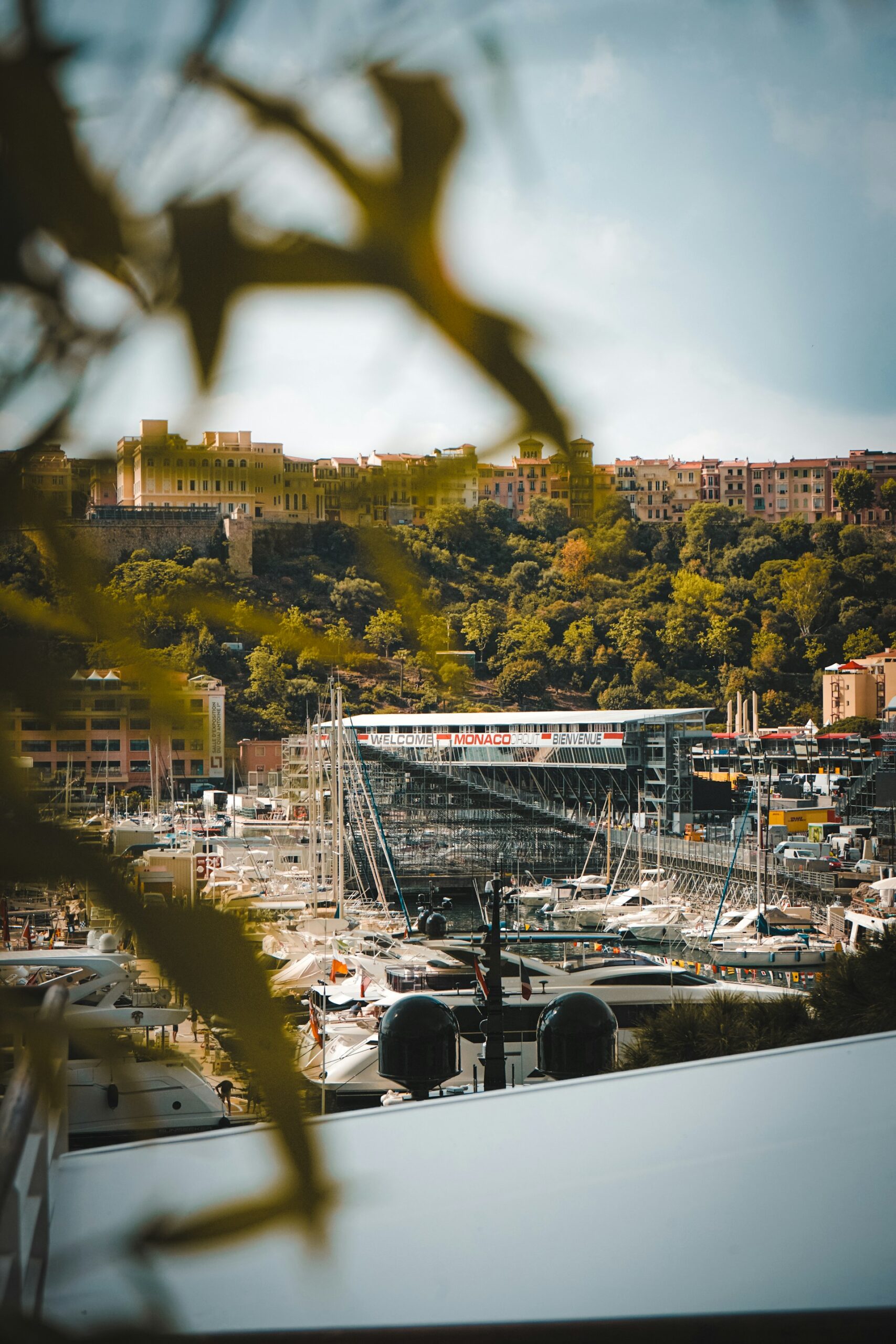
Later in the season, the Monaco Yacht Show redefines the same space. The harbour becomes a curated exhibition of the world’s most advanced superyachts, concentrating shipyards, brokers, designers, and owners into a single controlled environment.
These events do not sit on Monaco.
They reveal what Monaco already is — a place where yachting, culture, and commerce converge at maximum density.
Where brokerage, design, and lifestyle converge
Monaco operates as a permanent meeting point for the global yachting industry.
Brokerage houses, design studios, shipyard representatives, and private clients move through the same physical space — often within minutes of each other. Decisions are not abstract; they happen in proximity to the yachts themselves — within the harbour, the Yacht Club, and the surrounding city.
Monaco sustains a complete luxury ecosystem: hotels facing the marina, restaurants aligned with harbour views, and residences layered above the waterfront. This creates a continuous dialogue between yacht and city — between ownership, charter, design, and daily life.
In this sense, Monaco is not just a destination.
It is infrastructure for Mediterranean yachting at its highest level.
Approach by sea
Monaco does not reveal itself slowly.
The coastline tightens. The mountains close in. The harbour appears almost suddenly — Port Hercule cut into the land with precision. There is no soft entry. No gradual transition.
From the water, Monaco reads as structure first.
Angled facades. Vertical lines stacked above the sea.
As a yacht approaches, distance collapses. Landmarks align — the harbour walls, the Yacht Club de Monaco, the Monte Carlo skyline — forming a compressed visual field where navigation, positioning, and timing become immediate.
You are not arriving into landscape.
You are entering a system.
First visual contact: density and verticality
The first impression is not beauty.
It is density.
Buildings rise directly from the harbour edge, layer upon layer — a vertical city engineered around Port Hercule. There is no separation between marina and urban life. Monaco harbour is embedded inside the city itself.
From the deck, everything is visible at once: terraces, hotels, balconies, roads, and movement. The eye moves upward as much as outward.
Verticality defines Monaco yachting.
A yacht is never isolated here — it exists in constant relation to the city above it.
Docking choreography and harbour rhythm
Movement inside Port Hercule is controlled, deliberate, and observed.
Tenders circulate. Lines are prepared. Berths are approached with precision. The harbour operates less like a marina and more like a system — where timing, spacing, and communication define the rhythm.
Every arrival is visible from multiple vantage points — neighbouring yachts, waterfront terraces, upper-level residences. Docking in Monaco is not only technical. It is performative.
This is where Monaco differs from open-anchor Riviera life.
There is no anonymity.
Only position.
Transition: yacht to shore
The shift from yacht to city happens in seconds.
One step off the passerelle, and you are immediately inside Monaco — roads, cars, terraces, and hotels within direct reach of the harbour. There is no buffer zone. No extended marina perimeter.
This proximity defines the Monaco experience.
Lunch in Monte Carlo, a meeting at the Yacht Club, an evening in the Casino — all begin at the water’s edge. Movement is short. Continuous.
The yacht remains present even when you leave it.
Within sight.
Within reach.
Morning — restraint and reflection
Early light flattens the harbour.
Port Hercule is still.
Water turns to glass.
Yachts sit in silence before the day begins to move.
This is the only moment Monaco softens.
Crew reset the decks before guests appear. Lines are checked. Breakfast happens quietly — on board or just above the harbour, where terraces look down without urgency. The city is present, but not yet performing.
From the yacht, Monaco feels almost balanced.
For a short time.
Midday — exposure and movement
By midday, everything is visible.
Light sharpens the facades of Monte Carlo. Reflections harden across the water. Movement increases — tenders crossing Port Hercule, guests arriving, terraces filling, the harbour fully awake.
Monaco at full exposure.
Yachts are no longer just vessels — they become part of the visual field. Read from the shore. Compared. Noticed. Positioned within the density of the marina.
There is no background here.
Only foreground.
Late afternoon — vertical light
This is when Monaco becomes architectural.
The sun drops behind the mountains, and the city reveals its structure — layers, shadows, depth. The verticality sharpens: terraces above terraces, glass against stone, light moving across the harbour walls.
From the water, the city separates into planes.
This is the most precise moment to read Monaco — not as spectacle, but as composition. A yacht in Port Hercule sits inside that composition, held between sea and structure.
Everything slows slightly.
But never fully.
Night — staged intensity
After dark, Monaco reorganises itself.
Light replaces the sun.
Movement becomes selective.
Access defines experience.
Monte Carlo, the Casino, and the harbour edge shift into a controlled intensity — restaurants, bars, private rooms, late arrivals. The city feels active, but not open.
From the yacht, the view changes again.
Port Hercule becomes a field of light and shadow — illuminated decks, dark water, reflections breaking across the surface. The skyline remains present, quieter, more distant.
Monaco at night is not chaos.
It is edited.
Spatial structure of Monaco
Port Hercule — centre of gravity
Everything in Monaco begins here.
Port Hercule is not just the main harbour — it is the physical and symbolic centre of Monaco yachting. The marina sits directly within the city, holding superyachts, sailing yachts, and tenders in a confined, highly visible basin.
From here, Monaco unfolds upward.
Berths are structured, limited, and exposed. Position within the harbour carries meaning — proximity to the Yacht Club de Monaco, alignment along the quay, visibility from the main terraces.
Unlike dispersed anchorages across the Riviera, Port Hercule concentrates activity into a single controlled field.
This is Monaco’s defining condition:
yacht and city occupying the same space.
Monte Carlo — spectacle and control
Above and around the harbour, Monte Carlo operates as Monaco’s public face.
Here, the Casino, Hôtel de Paris, and the surrounding terraces define the visual and social axis of the city. Architecture, retail, and hospitality are arranged with precision — designed to be seen, accessed, and navigated within short distances.
From the harbour, Monte Carlo reads as a vertical extension of Port Hercule.
From Monte Carlo, the harbour remains a constant reference point.
This dual visibility creates Monaco’s dynamic:
the yacht observes the city, and the city observes the yacht.
Larvotto — softened edge of the city
Moving east, the structure loosens.
Larvotto introduces space — a more open shoreline, beach access, and a reduced intensity compared to the harbour core. The architecture remains controlled, but the rhythm shifts.
Here, Monaco feels less compressed.
For yacht guests, Larvotto functions as a release from Port Hercule’s density — a place for swimming, daytime movement, and quieter intervals without leaving Monaco.
Still Monaco.
At lower pressure.
The elevated city — distance and privacy
Above the harbour and Monte Carlo, Monaco changes again.
The elevated zones — residential areas, terraces, and private buildings — introduce distance from the immediate activity of Port Hercule. Views open across the Mediterranean, while the harbour becomes something observed rather than inhabited.
This is where Monaco regains a degree of privacy.
Movement is less constant. Access is more controlled. The relationship to the yacht shifts — no longer direct, but always present below.
From here, Monaco is understood differently.
Not as intensity, but as structure held at a distance.
Institutions that define Monaco
Yacht Club de Monaco
The Yacht Club de Monaco is not a venue.
It is a centre of gravity for the global yachting community.
Positioned directly above Port Hercule, the building — designed by Norman Foster — mirrors the language of the harbour itself: structure, precision, visibility. From its terraces, the entire marina can be read at once.
Membership, events, and informal meetings converge here.
Owners, brokers, designers, and shipyard representatives move through the same space — often within hours.
In Monaco, the yacht is outside.
The conversation happens here.
Casino de Monte-Carlo
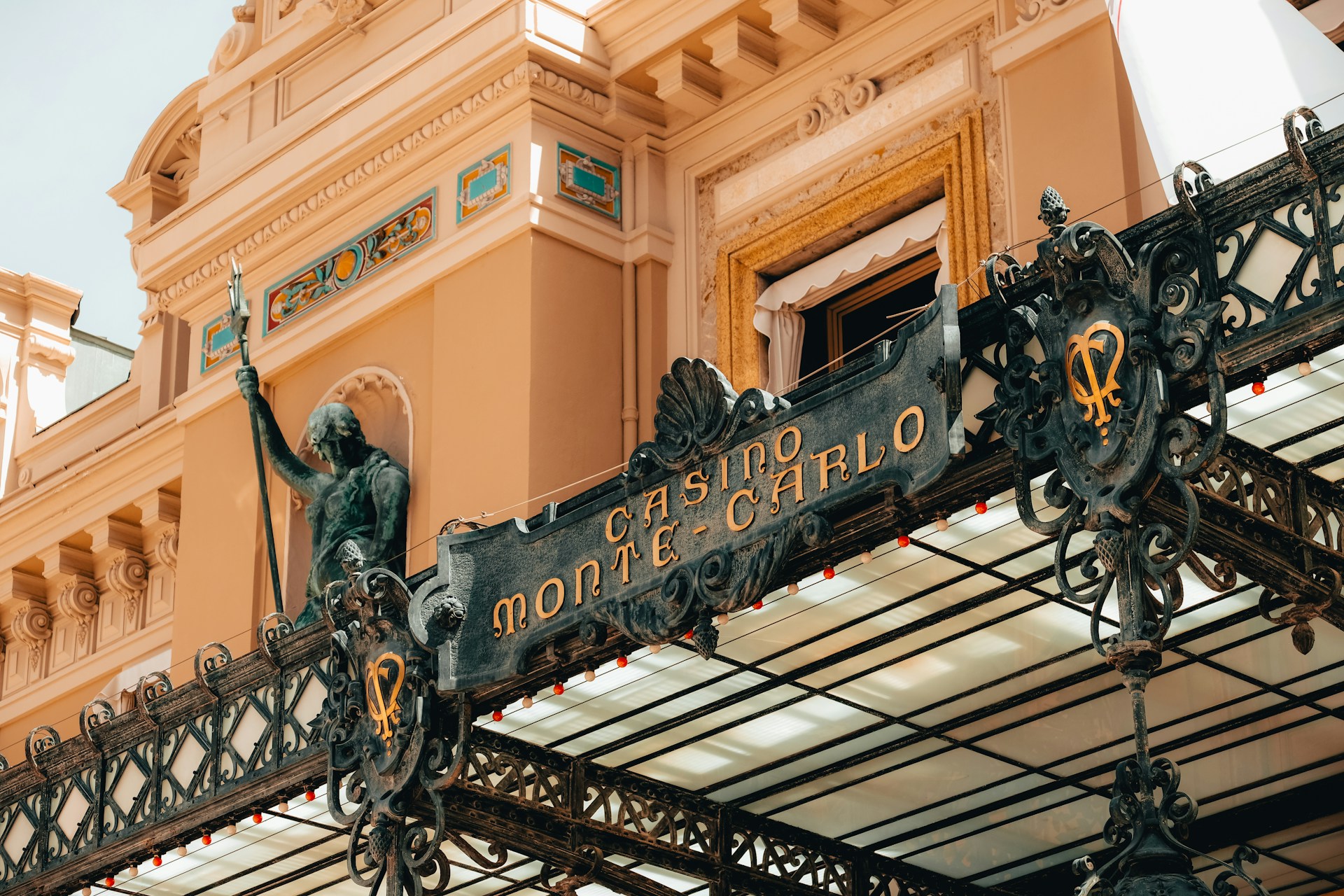
The Casino de Monte-Carlo defines Monaco’s public image, but its role is structural, not symbolic.
It anchors the upper city — connecting Hôtel de Paris, surrounding terraces, and the Monte Carlo axis into a single controlled environment. Movement through this area is deliberate, framed, and visible.
For yacht guests, the Casino is not simply a destination.
It is part of Monaco’s choreography — where arrival, presence, and social positioning extend beyond the harbour.
Hôtel de Paris Monte-Carlo and the historic axis
Adjacent to the Casino, Hôtel de Paris operates as one of Monaco’s longest-standing reference points.
Rooms, terraces, and dining spaces overlook both the square and, indirectly, the harbour below. The hotel functions as a bridge between Monaco’s maritime and urban identities — connecting yacht life with the city’s historic core.
Around it, the Monte Carlo axis forms:
a tight concentration of architecture, hospitality, and movement that defines how Monaco is experienced on land.
Monaco Yacht Show
Once a year, Port Hercule is redefined.
The Monaco Yacht Show transforms the harbour into a controlled exhibition of the world’s leading superyachts, shipyards, and designers. Access is restricted. Movement is curated. The marina becomes a professional environment.
For the industry, this is one of the most important weeks of the year.
For Monaco, it reveals its underlying function: a place built to host, display, and negotiate yachting at the highest level.
Monaco Grand Prix as urban transformation
During the Monaco Grand Prix, the city changes form.
Track barriers reshape the streets. Viewing positions are recalibrated. Yachts in Port Hercule become platforms — for observation, hosting, and presence. The harbour and the circuit merge into a single environment.
Unlike most events, the Grand Prix does not sit on Monaco.
It reconfigures it.
For a few days, Monaco reaches maximum density — where sound, speed, and visibility compress into the same space that defines it year-round.
Where to stay when the harbour is the reference
Harbour proximity
Staying close to Port Hercule changes the entire experience of Monaco.
Here, the harbour is not a destination — it is a constant presence. Rooms and terraces look directly onto the marina, where yachts define the visual field from morning through night. Movement between hotel and yacht is immediate, often measured in minutes.
Properties such as Hôtel Hermitage Monte-Carlo and Hôtel de Paris Monte-Carlo operate within this zone — positioned above the harbour and fully integrated into Monaco’s central axis.
This is the most direct way to experience Monaco:
no separation between water and city.
Privacy above the city
A short vertical shift changes everything.
Above the harbour, Monaco becomes quieter — not in volume, but in exposure. Elevated residences and select hotels reduce direct visibility while maintaining proximity to Port Hercule below.
From these positions, the yacht remains present, but distant.
The city is still accessible, but no longer immediate.
This layer suits those who move between intensity and retreat — using Monaco without remaining fully inside its field.
Legacy hotels
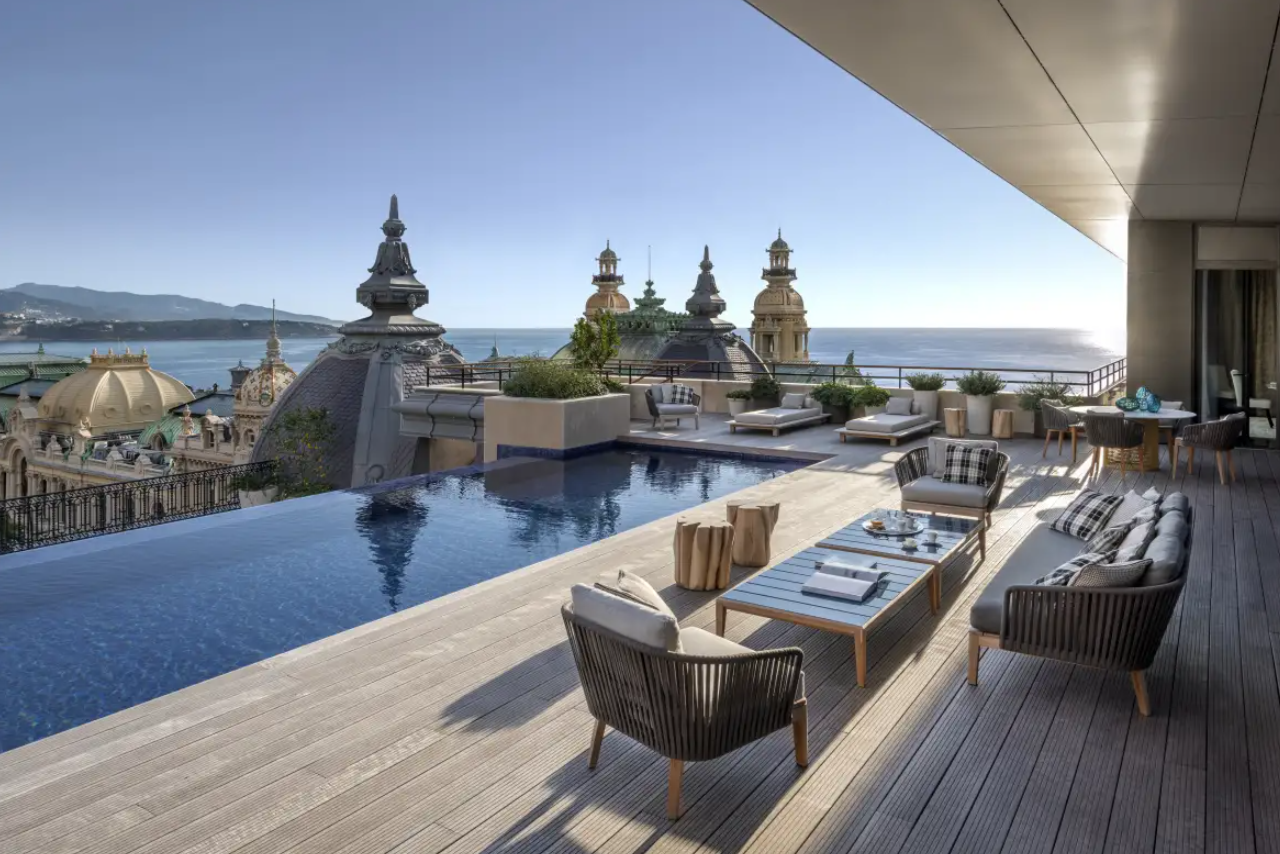
Some addresses in Monaco carry more than location.
They hold continuity — of service, architecture, and clientele — forming part of the city’s long-standing identity. These are not simply hotels; they are extensions of Monaco’s institutional structure.
Within this category, Hôtel de Paris Monte-Carlo remains the clearest reference, with spaces aligned directly to the Casino and the harbour beyond.
To stay here is not only about comfort.
It is about position within Monaco’s established order.
Contemporary alternatives
Monaco’s newer, design-forward hotels introduce a different reading of the same environment.
Here, emphasis shifts toward interiors, materials, and controlled minimalism — offering a quieter counterpoint to the city’s historic density. Views remain. Access remains. The experience is filtered through a more modern lens.
These properties attract a different kind of guest — less focused on visibility, more on atmosphere and spatial quality — while still operating within Monaco’s tightly structured geography.
Dining and terraces
Lunch facing the harbour
Midday in Monaco is defined by exposure.
Tables positioned above Port Hercule become extensions of the marina — places where movement, light, and visibility converge. Lunch is not separate from yachting life; it continues it from a different elevation.
Terraces around Monte Carlo and the harbour edge allow a direct read of the marina: arrivals, departures, the shifting composition of yachts across the water. Timing matters. Position matters.
Here, dining is less about cuisine.
More about alignment — with the harbour, with the light, with the moment.
Dinner rooms with structure
As the day closes, Monaco moves indoors.
Dining shifts into controlled environments — rooms defined by architecture, lighting, and pacing rather than view alone. The relationship to the harbour remains, but becomes indirect.
These are spaces where movement slows, conversations lengthen, and the city’s intensity is edited into something more deliberate. Tables are not interchangeable. Layout, spacing, and reservation timing shape the experience.
In Monaco, dinner is structured.
Not improvised.
Late hours and controlled energy
After dinner, Monaco does not disperse.
It concentrates.
Bars, lounges, and select terraces operate within a narrow band of access — where entry, timing, and familiarity define the atmosphere. The energy is present, but filtered.
From the harbour, this layer is visible but distant.
From within it, Monaco becomes more selective — less about where you go, more about where you are received.
This is the final shift of the day.
From open visibility
to controlled presence.
When Monaco is most itself
Grand Prix period
For a few days each year, Monaco reaches maximum compression.
The Monaco Grand Prix transforms the entire city into a single system of movement, sound, and visibility. Streets become tracks, terraces become viewing platforms, and Port Hercule becomes one of the most concentrated vantage points in global sport.
Yachts line the harbour not only as vessels, but as positions — each berth carrying direct visual access to the circuit. The relationship between yacht and city tightens further, until the two are almost indistinguishable.
This is Monaco at its most exposed.
And it’s most defining.
Monaco Yacht Show
Later in the season, the focus shifts from speed to structure.
The Monaco Yacht Show redefines Port Hercule as a curated environment — where the world’s leading superyachts, shipyards, brokers, and designers converge within a controlled harbour layout.
Access becomes selective. Movement becomes intentional.
The marina becomes a professional field rather than a social one.
For those within the industry, this is Monaco operating at full precision — where conversations, inspections, and decisions happen in direct proximity to the yachts.
High summer
Outside of major events, Monaco maintains a steady intensity through summer.
Port Hercule remains active. Monte Carlo remains visible. The city operates at a constant pace — neither escalating nor retreating. Yachts arrive, reposition, and depart within a continuous flow.
This is Monaco in its default state.
Not defined by a single moment, but by sustained presence — where access, reservation, and positioning shape the experience day after day.
Shoulder months
Beyond peak periods, Monaco becomes more legible.
The harbour opens slightly. Movement slows.
The same structures remain, but with less pressure.
For some, this is when Monaco can be read more clearly — architecture, light, and spatial relationships becoming more apparent without the overlay of peak-season density.
It is still Monaco.
Just without the full weight of its calendar.
What Monaco asks of you
Access and reservation culture
In Monaco, access is not assumed.
Tables are held. Rooms are allocated.
Entries are controlled long before arrival.
Spontaneity has limits here.
Position is secured in advance — through reservation, relationship, or timing.
Without it, the city remains visible, but not fully accessible.
Berths, rooms, and timing
Space in Monaco is finite.
Berths in Port Hercule, hotel rooms overlooking the harbour, and key positions across Monte Carlo operate within fixed capacity. Demand concentrates around the same dates, the same views, the same lines of access.
Timing defines outcome.
Arrive too late, and options narrow.
Arrive correctly, and Monaco aligns with precision.
Cost as structure, not exception
Monaco does not hide its cost.
It is built into the system — in berthing, accommodation, dining, and access. Prices do not fluctuate as anomalies; they reflect the density, demand, and positioning of the place itself.
This is not a destination where cost can be separated from experience.
It is part of the structure.
And understood as such.
What Monaco is not
Monaco is not a retreat.
It is not an anchorage where distance creates privacy.
Not a coastline where time slows without intention.
Not a place that reveals itself through wandering.
Monaco does not soften the Mediterranean.
It concentrates it.
There is no anonymity in Port Hercule.
No separation between yacht and city.
No space that is not observed, structured, or positioned.
For those seeking withdrawal, other destinations exist.
Monaco is for presence.
Monaco, understood correctly
Monaco is not defined by what it offers, but by how it holds everything in place.
The harbour, the city, the events, the institutions — all exist within a single, controlled field where distance disappears and visibility becomes constant. Life here is not expanded across the coastline, but compressed into a structure that rewards timing, access, and position.
To understand Monaco is to read its relationships.
Between yacht and shore.
Between presence and observation.
Between movement and control.
Nothing here is accidental.
Everything is placed.
For readers, not audiences.
Yachtluéur letters are released selectively — when observation becomes reference, and reference becomes worth keeping.
Thank you!
You have successfully joined our subscriber list.
Plan your Monaco loop
A broader orientation of Monaco — districts, movement, and how the city is navigated beyond the harbour.
A detailed look at Port Hercule — availability, positioning, and what defines a successful arrival.