
A broker-grade guide to what really moves your final bill — and how to stay in control
By Yachtluéur Editors — Last updated January 2026
There is a moment in every serious charter conversation when the numbers stop being simple.
Not because the broker is unclear.
Not because the yacht changed.
But because the real cost of a charter is created after the contract is signed.
This guide explains — with precision — the hidden costs of yacht charter.
Not to alarm you. To give you control.
If you are planning a Mediterranean charter and want to understand where money actually moves, this is the page brokers quietly send to clients when they don’t want to oversimplify the truth on the phone.
The real meaning of “hidden costs of yacht charter”
Let’s be very clear from the start.
Hidden costs when chartering a yacht are not secret fees.
They are variable operational costs created by:
-
where you go
-
when you move
-
how long you stay
-
and what you ask the yacht to do for you
They exist because a yacht is not a hotel room.
It is a moving, fuel-burning, crewed, port-regulated asset.
The mistake most first-time clients make is assuming:
“If I know the weekly charter price, I know the cost.”
You don’t.
You only know the platform.
Everything else is created dynamically during your week.
Why brokers cannot give you a fixed “real total”
This is the single point most misunderstood in yacht charter.
A broker cannot lock your final operational spend because:
-
weather can change your route
-
port availability can change your nights
-
your own schedule can change your cruising profile
And every one of these changes creates cost.
This is not a commercial problem.
It is a physical one.
The three cost layers that build your final bill
Before we go deeper, you must understand the structure.
Every charter has three financial layers:
1. The charter fee
The yacht, the crew, the base service.
2. The operational layer
This is where the hidden costs of yacht charter live.
3. Discretionary lifestyle spend
Events, special experiences, extraordinary requests.
Only layer two surprises clients.
The operational layer — where costs are really created
The operational layer is made of five dominant drivers.
If you understand these five, you understand 90% of all hidden yacht charter fees.
1. Fuel is not distance — it is profile
Fuel is not calculated by how far you go.
It is calculated by how you move.
A relaxed coastal glide and an aggressive repositioning run can burn radically different volumes — even over similar distances.
Hidden cost effect:
-
late departure → faster cruising → higher burn
-
weather avoidance routing → longer track
-
tender usage and toys → additional fuel draw
This is why Mediterranean yacht charter hidden costs fluctuate strongly between similar itineraries.
2. Mooring and marina fees are not created equally
Your berth is not priced by the yacht alone.
It is priced by:
-
port scarcity
-
calendar pressure
-
and event saturation
A quiet shoulder-season berth and a festival-week berth are two different markets.
Hidden cost effect:
-
Monaco, Cannes, Saint-Tropez during peak events
-
last-minute arrivals without prior reservation
-
high-draft or wide-beam constraints
Your itinerary — not your yacht — triggers this spend.
3. Repositioning costs are invisible until they are not
One of the most common unexpected costs on a yacht charter is repositioning.
It happens when:
-
the yacht must reach you from another port
-
the yacht must return to its next booking zone
-
the itinerary geometry forces dead-legs
Clients rarely see this clearly in early discussions because it is created by scheduling, not by the trip itself.
Hidden cost effect:
-
non-hub embarkation ports
-
asymmetric routes
-
short charters with long delivery legs
This is one of the most misunderstood hidden costs of yacht charter.
4. Event gravity quietly distorts every line item
When a region hosts:
-
a yacht show
-
a film festival
-
a major sporting event
-
or a cultural peak week
Every service supplier reacts.
Fuel logistics, berth allocation, provisioning routes, security, crew transfers — all compress.
Hidden cost effect:
-
provisioning premiums
-
last-minute logistics
-
tender permits and harbour access rules
The yacht itself does not become more expensive.
The environment does.
5. Lifestyle intensity creates operational load
Not all charters are equal in usage.
A calm cruising week and a high-tempo social programme create very different cost behaviour.
Hidden cost effect:
-
continuous toy deployment
-
multiple daily anchor changes
-
late-night port entries
-
shore logistics and transfers
-
special provisioning requests
This is where many hidden yacht charter fees originate — quietly, operationally, legitimately.
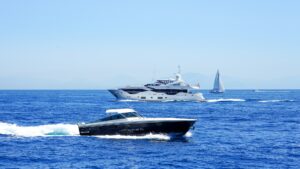
Underway at cruising speed — fuel, routing and repositioning quietly shape the real charter cost.
Where APA fits — and why it is not the problem
Most clients first meet the concept of extra spending through APA.
But APA itself is not the hidden cost.
It is simply the accounting structure that allows the yacht to operate on your behalf.
The confusion happens when clients believe:
“If I understand APA, I understand the cost.”
You don’t.
APA is the container.
The operational layer is the behaviour.
The most common hidden costs of yacht charter — clearly listed
Here is the practical reality brokers see most often:
-
fuel variation created by route and speed changes
-
marina and mooring premiums in high-pressure ports
-
repositioning legs not obvious at booking stage
-
event-week operational inflation
-
provisioning logistics for remote anchor zones
-
shore-side transport coordination and security
-
tender and toy operating fuel and wear
-
customs and local harbour requirements
None of these are errors.
They are normal operational consequences.
The real question clients should ask instead
Not:
“How much will the hidden costs be?”
But:
“What decisions during my week create cost exposure?”
This shift changes everything.
The five decisions that quietly control your spend
If you want to actively manage hidden costs of yacht chartert, these five levers matter most.
1. Embarkation and disembarkation geometry
Choose ports that:
-
align with the yacht’s existing schedule
-
sit inside natural cruising corridors
This alone can eliminate entire repositioning legs.
2. Event calendar awareness
If you plan to be anywhere near:
-
Monaco Grand Prix
-
Cannes festival weeks
-
major yacht shows
Your operational spend will behave differently.
Not dramatically.
But measurably.
3. Speed discipline
Clients rarely realise how much cost is created by:
“Can we be there by lunch instead?”
Yes.
You can.
But speed is one of the most expensive comfort upgrades on water.
4. Night strategy
Every night you choose between:
-
anchoring
-
harbour berthing
-
marina berthing
The comfort difference is obvious.
The cost difference compounds across the week.
5. Provisioning style
Ultra-specific dietary sourcing, branded items, last-minute requests and remote anchor plans create operational logistics.
This is not indulgence.
It is supply chain.
Why two identical charters never cost the same
Two families.
Same yacht.
Same week.
Same coastline.
Different result.
Because:
-
one moves more
-
one changes ports
-
one hosts more guests
-
one follows events
-
one demands schedule rigidity
This is the living nature of a charter.
A broker-grade checklist to control hidden yacht charter fees
Before confirming your itinerary, ask your broker only these questions:
-
Is this embarkation port aligned with the yacht’s positioning?
-
Are any event weeks affecting this route?
-
Where will fuel exposure be highest in this plan?
-
Which nights are port-dependent versus anchor-flexible?
-
Which parts of this route increase operational complexity?
This five-line conversation replaces an hour of generic cost explanations.
The hidden psychological mistake clients make
Many clients try to eliminate hidden costs.
This is not realistic.
The correct objective is to:
control when and why you create them.
Once you understand the mechanics, the numbers stop being stressful.
They become design variables.
If you want to prevent most of these errors before you even shortlist brokers, read how to choose a yacht charter company properly.
How professionals quietly structure low-stress charters
Experienced charter clients and owner-reps do something simple:
They design the week around:
-
operational simplicity
-
geographic continuity
-
and optionality
Not around headline destinations alone.
This is why some itineraries feel effortless — and others feel busy even on large yachts.
A short reality check on “unexpected costs on a yacht charter”
If a cost feels unexpected, it usually means:
-
the operational trigger was not discussed early enough
-
not that the cost is abnormal
This guide exists to prevent that gap.
Why this matters more in the Mediterranean
The Mediterranean is:
-
port-dense
-
event-saturated
-
weather-responsive
-
and logistically compressed
Which makes Mediterranean yacht charter hidden costs far more sensitive to itinerary design than in many other cruising regions.
The Med rewards planning discipline.
The strategic relationship between this guide and your other research
If you are building your charter understanding properly:
-
use the Mediterranean yacht charter cost breakdown to frame total budget reality
-
use what APA really covers in a yacht charter to understand cash-flow mechanics
-
use this guide to manage behavioural cost creation
They form one system.
Not three separate topics.
A final word on hidden costs of yacht charter
There is nothing wrong with creating operational spend.
In fact, many of the most memorable charter moments — spontaneous route changes, extended anchor time, late-night harbour entries — exist precisely because the yacht can adapt.
The danger is not cost.
The danger is not understanding what creates it.
When you understand the hidden costs of yacht charter, you stop negotiating numbers.
You start designing outcomes.
That is how experienced charter clients travel.
Quietly.
Confidently.
In control.
read next
Yacht Charter Cost by Size: What 30m, 50m, 70m, and 100m Yachts Really Cost
How much does it cost to charter a yacht in the Mediterranean?
The Best Port to Start a French Riviera Yacht Charter — Monaco, Cannes or Antibes