
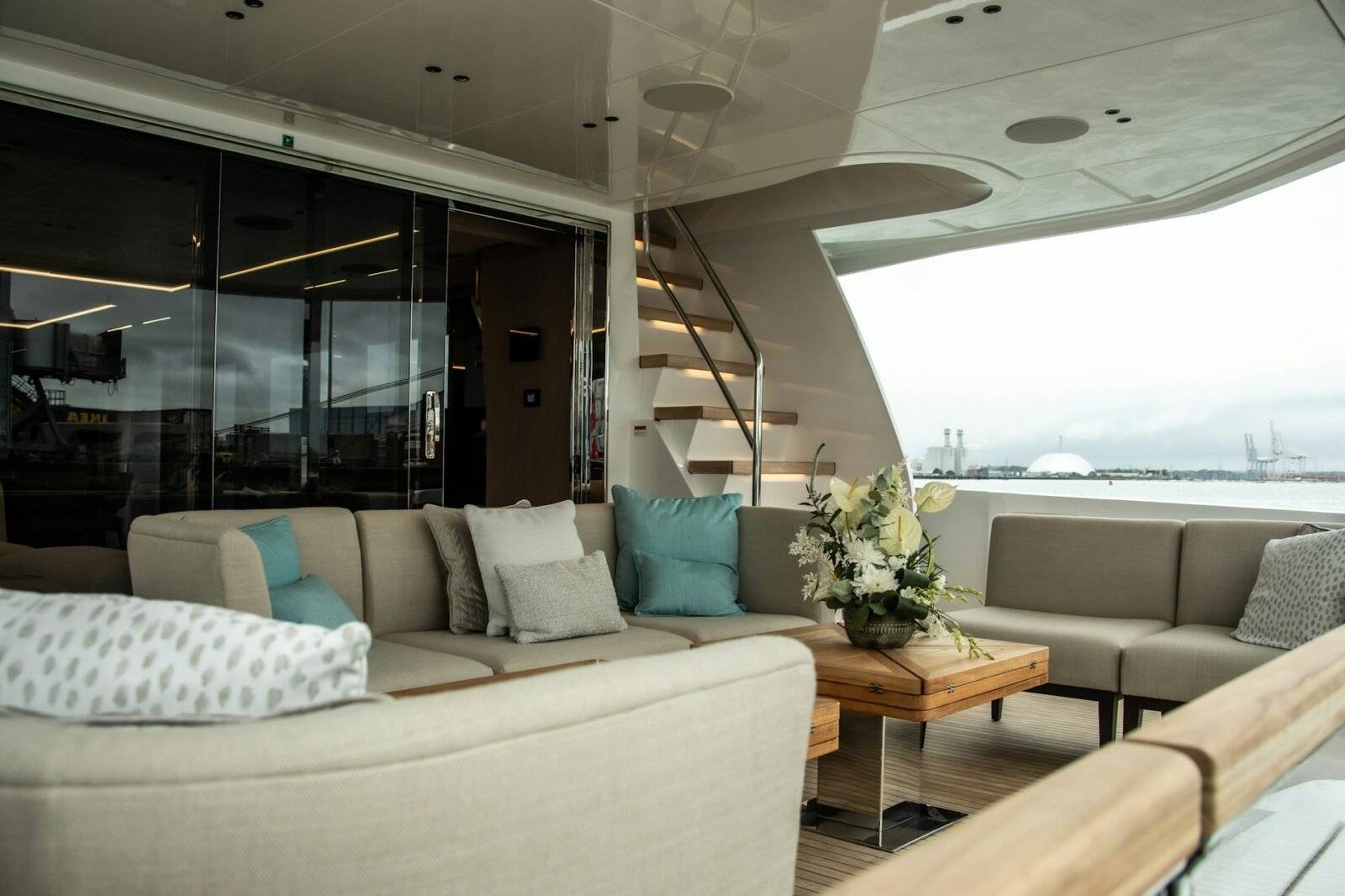
At dawn, the boat is only breath and outline.
The water glimmers with soft tones of amber. The distant bay is graphite.
You cross the saloon barefoot. The floor answers with a quiet thud—good timber.
A bronze pull still holds last night’s warmth. Nothing tries to impress you. It just works.
You can cross the room by memory.
That’s the measure of a luxury yacht interior.
When design decisions are respected everywhere on board, one space seamlessly flows into the next. The boat speaks one language from saloon to stateroom.
An investment in the interior becomes an investment in experience. Quality choices elevate the atmosphere and withstand frequent use.
This guide provides ten investment pieces you’ll still love after 1,000 sea miles—materials that feel better with use, lighting that flatters every hour, and finishes that survive salt and sun.
1) Bronze where your hand lands
Whether you’re aboard a contemporary Sanlorenzo or a classic Riva, bronze has a special place.
Door pulls, latches, locker buttons, and switch plates—all the parts you grab without thinking are suited to bronze.
Bronze latches and handles carry a comforting weight. They warm in the hand and land without fuss or rattle, dampening vibrations. Opening doors and lockers becomes an experience in itself.
The patina on bronze hardware is delightfully alive. As heat, air, and oils interact with the alloy, it develops a darkened patina and polished highlights that are unique to your touch. Latches begin to tell stories of countless journeys.
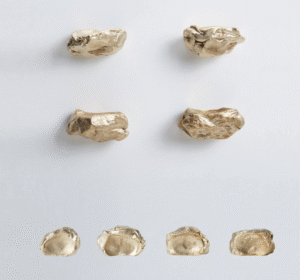
Impronta brass doorknobs by Nicole Valenti for Artemest. Lost-wax cast with a soft, organic “imprint” surface.
When designing bronze hardware, lost-wax casting allows for intricate sculpts to suit any decor. NIVA Designs is known for using this method to create unique, innovative handles.
Keeping the bronze tone consistent across each deck provides subtle continuity between spaces. Each room flows into the next.
Even outside, bronze is at home; it naturally withstands moisture and salt. Sealing hardware with beeswax or marine lacquer further enhances its durability in wet zones.
2) Alabaster lighting to set the mood
After dark, you want glow, not glare.
Alabaster plates set the mood, offering a quiet, intimate atmosphere that is perfect for unwinding in the evening. They gently illuminate skin and timber with a candle-like warmth.
No two pieces of alabaster are identical. The panel glows from within when lit, showcasing its natural veining.
Alabaster lighting complements the room without demanding attention. Consider running a quiet ceiling plate in the saloon, sconces down the passage, and a small pendant over a console. Designers such as Alabastro Italiano and Matlight Milano offer a plethora of options.
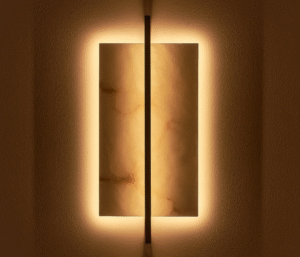
“Tile” wall sconce in veined alabaster with a light-bronze spine by Matlight Milano. The stone’s natural glow reads beautifully at night.
When incorporating alabaster lighting into your vessel, make sure that the light sources have a CRI of 95+ and a color temperature of 2700K. These specifications ensure that the space is warmly lit and that colors pop as they would in natural daylight. From there, G-force mounts and anti-corrosion fixings keep alabaster fixtures stable at sea.
3) Intentional veneer
Sightlines calm down when grain runs with the boat.
Smoked oak steadies the palette.
Eucalyptus and fiddleback sycamore bring a quiet maritime shimmer.
The trick is continuity—the veneer running through the bulkhead, doors, and casework should feel like one piece, not three. When a single idea travels through the vessel, it becomes a unified space instead of a cluster of separate worlds.
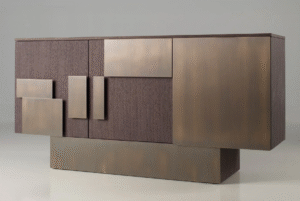
Evo-Mod sideboard in brown oak veneer; satin face and low-relief brass keep the grain reading as one field.
A satin finish reflects light softly and highlights wood depth without stealing the show. It forgives scuffs and doesn’t emphasize fingerprints. The mirror-like shine of a gloss finish should be used sparingly to accent a room.
Artemest features bespoke veneer casegoods and marquetry from Annibale Colombo and Modesign. Vintage and antique casegoods are plentiful on 1stDibs. Choose a casegood that harmonizes with the space. Subtle presence wins over flashiness every time.
4) Bouclé and cashmere seating
When people sit, the room should calm.
Bouclé gives sculptural shoulders to a settee.
Cashmere softens stone and timber without visual noise.
Zip-off covers mean a spill is a pause, not a crisis.
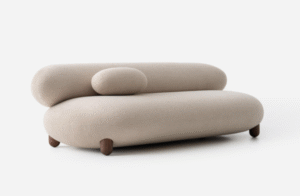
NOOM “Flock” in cream bouclé. Dense foam keeps the profile crisp. The piping tone echoes a bronze hardware family.
Countless variations of designer bouclé sofas and chairs can be found on Artemest and 1stDibs from upholstery studios. Secolo, for instance, designs quality bouclé seating with soft curves to suit many spaces.
Bouclé and cashmere seating contribute to a palette when the piping matches the metal family of your interior. Dense foam cores of 40–45 kg/m³ allow cushions to last over many seasons. A balance of practicality and aesthetic guarantees longevity and timelessness.
5) Leather for everyday surfaces
Rails, posts, bed surrounds—the places you touch or lean against without realizing—deserve leather.
Stainless is honest and unyielding. Leather is artful and civilized.
A rail that cushions the palm turns everyday movement into choreography.
A headboard that cradles the body makes lounging restorative.
As you move through your day, leather provides quiet comfort and ease.

Döttling “Gatsby” leather safe. Conceal behind veneer; through-bolt to structure with anti-vibration pads; add 24-V power for winders/humidity control.
Even at sea, leather can last. Applying a UV topcoat protects leather from fading, premature drying, and cracking. A hidden start and finish to leather wraps ensures that sweat and salt don’t lift them.
Specialist workshops, such as Marine Leather and Foglizzo, offer couture leather wrapping built to withstand wet, salty conditions. Comfort and durability coexist.
6) One high-gloss moment
On board, gloss is punctuation, not wallpaper.
When used sparingly like jewelry, gloss embellishes and refines.
Give each space a single glossy plane—a tray top, console lid, or nightstand face—and let everything around it stay satin so light has one star to land on.
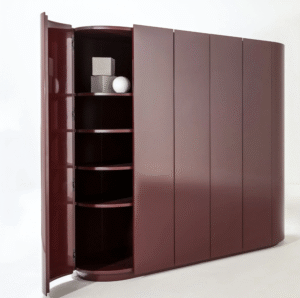
A red-lacquered cabinet by Laura Meroni. A glossy finish covers the exterior plane, while the interior is matte.
Quality high-gloss pieces, whether antique or modern, elevate any space when incorporated thoughtfully. Collectible gloss accents and trays are discoverable on 1stDibs. Bianchini Atelier and Laura Meroni also have a variety of tables and casegoods featuring glossy finishes.
7) Honeycomb-backed stone for depth without weight
Marble and onyx cool sunkissed skin after a day in the summer heat.
They gently counterbalance the warmer tones in a space and have a grounding feel.
Interior pieces made of honeycomb-backed stone introduce the unique aesthetic of stone without testing a vessel’s weight limit.
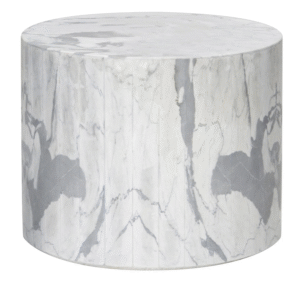
Dimarmo “Pilier” coffee table in lightweight Carrara marble. Thin 3–5 mm stone bonded to an aluminium honeycomb keeps mass down while preserving real marble under hand—ideal for luxury yacht interiors.
Honeycomb-backed stone with a polished finish can be a room’s high-gloss moment. A polished finish sharpens color depth and enhances natural veining patterns. A honed finish, on the other hand, yields a smooth, velvety matte or satin surface.
When fitting marble onto a honeycomb aluminum frame, match veinings across joins for continuity. As needed, install hidden clips or gasketed panels for service. Design lift-off access behind vanities and credenzas. Lightweight stone panels and furniture can be sourced from Stonesize and BEONIT Design.
8) Mohair & silk rugs
Luxury isn’t deep pile.
Low-pile mohair or mohair-silk with leather binding and a proper underlay turns footfall into presence instead of noise.
Mohair balances durability and aesthetic.
The fabric is naturally lustrous and dynamic, so rug colors shift based on viewing angle and lighting. Its fibers remain resilient in the face of foot traffic. Booking a quarterly clean keeps mohair-silk rugs fresh. If you treat it like a favorite jacket, it will age like one.
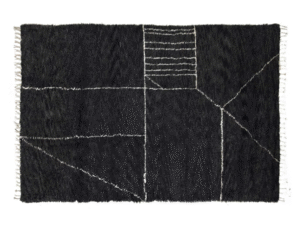
Moroccan Touch MT07 by Amini — a charcoal/ivory wool–mohair rug with a calm, low-pile look that keeps rooms quiet.
CHI Design makes custom hand-loomed mohair silk rugs for the yachting world. Collector-grade vintage silks are available on 1stDibs. A binding tone that matches your bronze hardware or leather wraps will integrate nicely.
To install a rug aboard, use a marine rubber or dense felt underlay taped to anti-skid pads. Cut runners with hatch lines in mind. Maintain aesthetic without slippage.
9) Raffia, grasscloth & silk wall panels
Texture changes how light sits on a room.
Fields of texture where eyes linger—headboards, narrow passages, a saloon niche—engage the senses.
Natural materials, such as raffia, grasscloth, and silk, add visual depth, casting subtle shadows and throwing highlights.
When part of lightweight, lift-off wall panels, these materials decrease echo and are easily maintained. The surface underneath remains fully accessible.
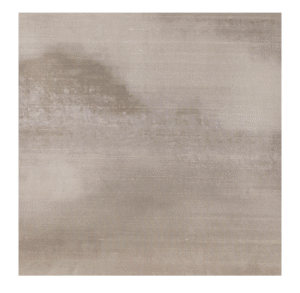
Giardini “Stone Silk” — hand-loomed silk shantung in a quiet stone palette.
When evaluating options, be sure to sample each textile under the boat’s light—showroom LEDs deceive. Laminate the textile to a breathable backer and panel it on marine ply or phenolic honeycomb. Secure the panel to the wall with hidden turn-button fasteners.
10) Timeless art & objects
Rooms need a point of view.
A few carefully selected pieces bring dimension and life to a space.
Consider a photograph under anti-reflective acrylic, a resin-coated print on aluminium, or a small sculpture that’s pinned.
Three good pieces placed like punctuation beat thirty.

Michael G. Jackson, Abstract Black & White. A calm, graphic field that reads well in warm yacht light; frame with AR acrylic and secure hangers for sea.
Log the provenance and size of each work. When installing, use discreet security measures such as museum gel or hidden pins to keep artwork in place even when the sea gets choppy. Art services such as Artelier can help you source a contemporary art collection that suits the interior design of your vessel.
How the boat speaks one language
A luxury yacht interior looks expensive when it’s calm.
Calm comes from repeats:
The same metal family wherever fingers land.
The same warm light in every room.
The same timber tone with continuous grain.
From there, intentional choices embellish the space without adding noise:
Stitch and piping nod to the metal.
Gloss appears once per room, gently playing with light.
Each design element harmonizes with the others to create a cohesive, timeless feel.
Common questions
Do textile wall fields last at sea?
Yes, if they’re panel-mounted with sealed edges and a breathable backer. Panels lift for service, and seams stay tight through seasons.
Will bronze stain adjacent lacquer?
To avoid staining, you can back-paint or gasket contact points and use nylon-washered countersunk screws. Keep a light beeswax schedule, so the adjacent lacquer stays clean.
Light dimming that won’t flicker on camera?
Use 24-V drivers with PWM around 1–2 kHz and warm 2700 K (CRI 95+) lights. Save presets for day, golden hour, and night.
Can we correct polyester gloss onboard?
Yes. Remove the sacrificial clear coat with a foam pad and fine compound. Micro-swirls and edge halos polish out in a lay day.
How many “statements” per room?
One glossy moment. One art focal point. Everything else stays quiet; that’s the expensive look.
Final word
Just before first light, the harbour turns slate and the boat adjusts herself. A rail gives a little under leather. Grain runs like a slow tide. An alabaster shade carries the dark so nothing else has to.
That’s what we’re building toward: rooms that don’t perform for attention but calmly invite.
Make a few good decisions, keep them consistent, and the result is a luxury yacht interior that feels inevitable, mile after mile.
After a long day, when guests turn in and the vessel stills, the room stands down, so you can exhale.
Beyond investment pieces
Investment pieces elevate a yacht interior, but they don’t compensate for a poor foundation. True luxury yacht interiors are rooted in superior craftsmanship, quality materials, and thoughtful design decisions. To explore what makes an interior feel timeless, visit Materials & Methods for in-depth discussions of wood finishes, stonework, refits, and layouts.