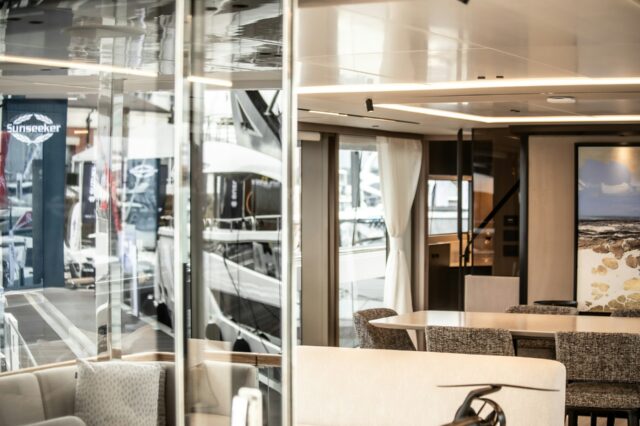
A five-year-old yacht can sometimes feel older than one launched fifteen years ago.
The difference is not always obvious. The timber may still be immaculate. The upholstery may show little wear. The stone may look almost exactly as it did at delivery. Yet something about the interior already places it in the past.
On another yacht, the opposite happens. Materials have softened, technology has been updated, perhaps a few pieces of furniture have changed, but the interior still feels coherent.
Why do some yacht interiors age better than others?
The answer is more complicated than choosing timeless colors or avoiding trends. A yacht interior does not age as one object. Its materials, technology, finishes, furniture and equipment all move through time at different speeds. Sunlight affects one surface more than another. Technology can become obsolete while the joinery surrounding it remains beautiful. A new carpet may sit beside ten-year-old timber. A reupholstered sofa may introduce a different design language into an otherwise original room.
Eventually, those different timelines either continue to work together—or they begin to separate.
That is often when an interior starts to feel old.
A Yacht Interior Has More Than One Age
The launch year tells us the chronological age of a yacht.
It tells us surprisingly little about the perceived age of its interior.
Inside, several clocks are running simultaneously.
There is material age: how timber, leather, textiles, stone, metals and coatings change through use.
There is technological age: how quickly screens, controls, entertainment systems, switches and interfaces become superseded.
There is visual age: the moment when particular colors, furniture forms, finishes or decorative treatments become strongly associated with an earlier design period.
There is environmental age: the accumulated effect of sunlight, humidity, salt, temperature, movement and daily life at sea. These are genuine considerations in marine interiors, where finishes and materials have to accommodate conditions very different from those of a static residential space.
And then there is intervention age.
This is what happens after delivery.
Something gets repaired. Something else is replaced. A television changes. A sofa is reupholstered. New controls appear. Lighting is upgraded. Carpet is renewed.
After enough years, an interior may contain elements from several different moments.
The number on the build plate has not changed.
The room has.
Ageing and Looking Dated Are Not the Same Thing
This distinction matters.
An interior can be old without looking dated.
It can also be perfectly preserved and still feel dated.
Physical ageing describes what happens to an object or material over time. Visual ageing describes how we perceive it.
The two are not necessarily connected.
Consider three different conditions.
Patina is change that can add character. Leather softens. Timber develops tonal variation. Certain metals become less uniform. The evidence of time becomes part of the material rather than an argument against it.
Wear is evidence of use. A surface may remain completely serviceable while showing that it has been touched, walked on or lived with.
Deterioration is different. A coating separates. Upholstery cracks. A finish becomes cloudy. Adhesives fail. A surface no longer performs as intended.
Then there is a fourth condition that has nothing to do with physical failure at all:
visual obsolescence.
A perfectly maintained material, fitting or piece of furniture can remain technically excellent while communicating a very specific design period.
This is why making an old yacht look new and helping an interior age well are not the same objective.
The Marine Environment Does Not Age Everything Equally
A yacht interior lives in an unusually dynamic environment.
UV exposure can affect colors and finishes. Humidity influences materials and assemblies. Movement matters. Areas close to exterior spaces experience conditions differently from protected cabins deeper within the yacht. Marine interior engineering also has to account for vibration, service access and long-term maintenance behind finished surfaces.
But the important design consequence is not simply that yachts experience wear.
It is that they experience uneven wear.
A timber panel away from direct sunlight may change very slowly while fabric beside a panoramic window changes much faster.
Frequently handled leather ages differently from a decorative panel.
Carpet follows circulation.
Hardware records touch.
An owner’s suite used occasionally experiences a different life from a main saloon crossed throughout the day.
Even identical materials can therefore tell different stories within the same yacht.
When those differences remain subtle, they can contribute character.
When they become disconnected, the eye begins to notice age.
Materials Rarely Age at the Same Speed
This is why the original material specification matters long after launch.
Not because one species of wood or one type of stone is inherently timeless, but because materials change differently.
Wood
Wood rarely remains visually static.
Exposure to light can alter tone. Finishes can become duller or warmer. Frequently touched areas acquire a different surface character from protected ones.
None of this automatically makes timber undesirable.
The more important question is whether the change still feels compatible with the original design.
Beautifully selected and finished timber can gain depth. Poorly resolved finishes can instead make the same material appear tired.
And repairs matter.
A replacement veneer that is technically close but not quite right can become more noticeable than the original ageing around it. Grain direction, sheen and tone all influence whether old and new continue to read as one surface.
Leather and Textiles
Soft materials tell time quickly because they interact directly with people and sunlight.
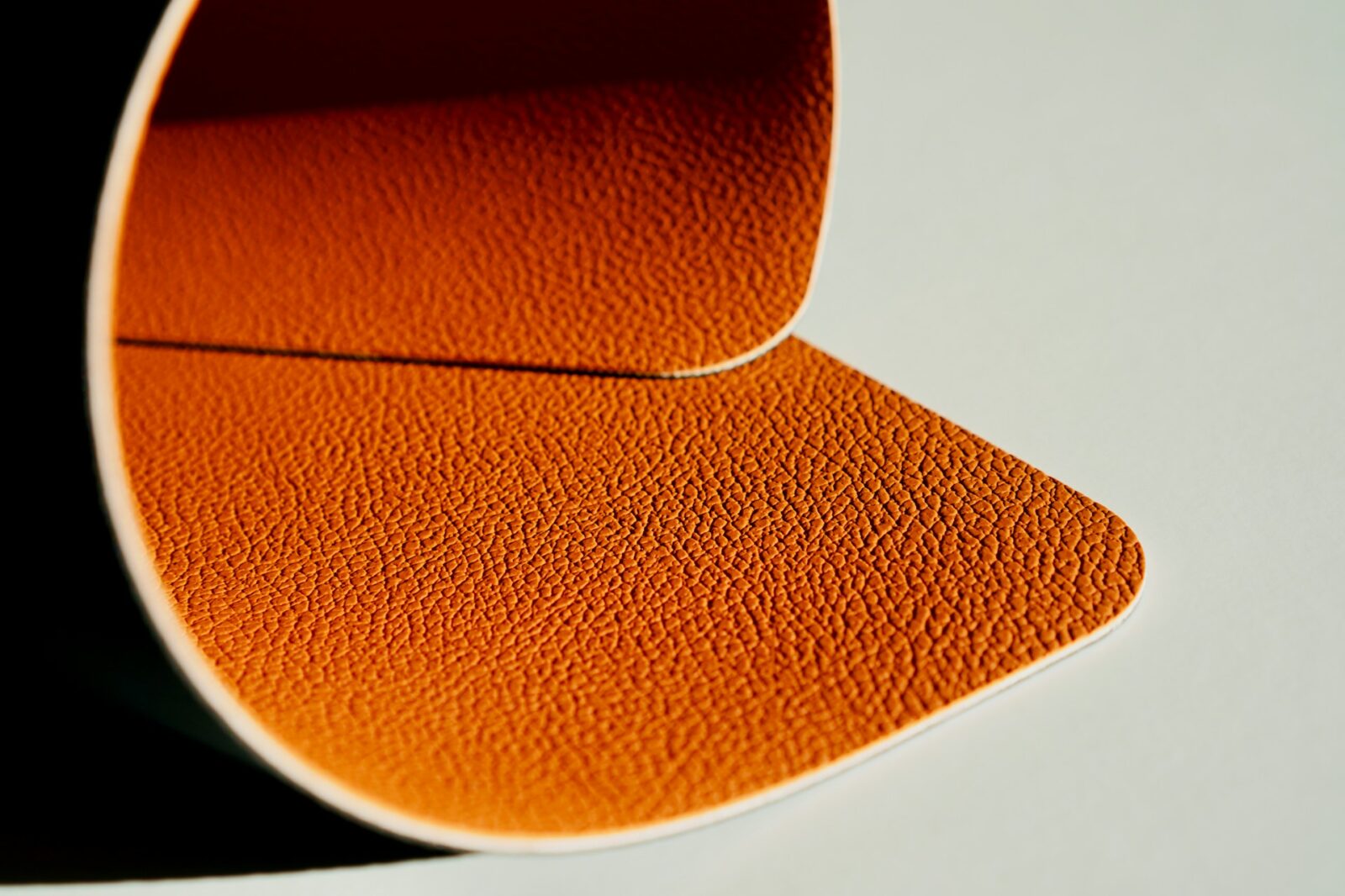
Leather stretches and softens. Fabrics fade. Cushions change shape. Cleaning affects surfaces. Areas exposed to stronger daylight may no longer match protected ones.
Again, change itself is not the problem.
A leather surface developing character can be beautiful.
Cracking, peeling or severe uneven discoloration is something else.
The difference between graceful ageing and deterioration often begins with whether a material was appropriate for its exposure, use and maintenance requirements in the first place.
Stone
Stone often moves through time more quietly.
But its physical durability does not guarantee visual longevity.
A highly distinctive stone can remain in excellent condition while its pattern, scale or application reveals the design period in which it was selected.
And stone never exists alone.
Joints, metal trims, surrounding timber, sealants and adjacent surfaces may change more noticeably than the stone itself.
Sometimes the most durable element in a room becomes the anchor against which everything else’s age is measured.
Metal
Metal can acquire patina, scratches, fingerprints or changes in sheen.
Some finishes become richer through that process.
Others simply become difficult to keep visually consistent.
The broader lesson across yacht materials is simple: durability is not the same as graceful ageing. A material has to survive physically, but it also has to remain convincing alongside everything around it.
Light Can Reveal Age Before Design Does
Daylight is an unforgiving inspector.
It reveals differences in tone between an original panel and a repaired one. It exposes fading in textiles. It makes variations in gloss visible. It can show exactly where furniture once protected a surface from years of sunlight.
This is especially noticeable in modern yachts with large areas of glazing.
But artificial light also tells time.
A room that has been partially updated may contain different generations of lighting technology, different color temperatures or different qualities of illumination. Individually, every fitting may work. Collectively, the room can begin to feel inconsistent.
This is an important distinction.
Lighting does not merely age.
It can reveal how everything else has aged.
Technology Ages Differently From Architecture
Few elements inside a yacht move through time as quickly as technology.
A beautifully made cabinet may remain relevant for decades.
The touchscreen built into it may not.
Displays change proportions. Interfaces change. Speakers become smaller. Charging standards evolve. Control systems are replaced. What once looked futuristic can become one of the easiest ways to estimate when an interior was built.
The problem is not that technology becomes old. That is inevitable.
The problem begins when temporary technology becomes visually inseparable from permanent architecture.
This becomes particularly apparent during refits. Current technical guidance for yacht interiors emphasizes surveying existing infrastructure, coordinating new visible interfaces and preserving access so future hardware can be serviced or replaced without unnecessary destruction of retained finishes.
That tells us something larger about ageing.
An interior may have a much longer useful aesthetic life than the systems embedded inside it.
When those systems can evolve independently, the architecture gets to keep ageing on its own terms.
When they cannot, a perfectly good room can become visually tied to obsolete equipment.
Furniture Often Dates a Room Before Architecture Does
Furniture occupies an interesting position.
It is visually powerful but relatively easy to change.
Sofa proportions, chair profiles, table shapes, upholstery construction and decorative detailing all move through design cycles faster than architecture.
That can make furniture one of the first things that places an interior in a particular period.
But it also makes furniture useful.
If the architecture underneath remains strong, changing a few carefully chosen pieces can alter the perceived age of an entire room without touching the joinery, flooring or spatial structure.
This is why an older yacht does not necessarily require an interior redesign simply because some elements feel familiar.
Sometimes the room is still excellent.
Its furniture has simply reached a different point in its life.
The Most Overlooked Cause: A Yacht Can Age Through Its Updates
A yacht does not spend ten years untouched.
And this may be the most overlooked reason some interiors begin to feel older than their chronological age.
Imagine a yacht after delivery.
A few years later, the main saloon is reupholstered.
Later, the television is replaced.
Then a damaged section of timber is repaired.
New reading lights arrive in the guest cabins.
The carpet changes.
Several control panels are updated.
A new owner introduces different furniture and art.
None of those decisions is necessarily wrong.
Each may solve a genuine problem.
But every intervention introduces another moment into the room.
If those changes are considered independently rather than as part of the original design language, coherence slowly begins to disappear.
The new upholstery may be excellent but slightly cooler in tone.
The replacement hardware may be beautifully made but more contemporary.
The new lighting may be technically superior but visually unrelated to the fittings that remain.
Nothing is obviously bad.
The room simply stops agreeing with itself.
That can make an interior feel older more quickly than ordinary wear ever could.
Why Making a Yacht “More Modern” Can Make It Feel Older
The natural response to an ageing interior is often modernization.
Sometimes that is exactly what is needed.
Sometimes it exaggerates the problem.
Place ultra-contemporary lighting into highly traditional joinery without resolving the relationship between them and both can become more noticeable.
Add aggressively modern furniture to an interior whose architecture speaks another language and the contrast may highlight the age of the architecture rather than refresh it.
Replace only half of a visible technology system and the equipment that remains can suddenly look older.
This is why successful updates require more than choosing newer things.
They require judgment about what deserves to remain.
A coherent ten-year-old interior can feel far more resolved than a ten-year-old interior containing a collection of unrelated two-year-old improvements.
Newness is not coherence.
Maintenance Changes the Way We Perceive Design
Two yachts built at the same time can have remarkably different interiors years later.
How they were used matters.
Where they cruised matters.
Exposure to sunlight matters.
Cleaning methods matter.
Climate control matters.
How quickly small damage was repaired matters.
And the quality of those repairs matters.
Marine upholstery specialists, for example, explicitly select materials and construction methods around humidity and UV exposure because soft furnishings in demanding marine environments face different stresses from ordinary residential upholstery.
But good maintenance is not about preserving the illusion that nothing has ever happened.
Over-restoration can be as visually disruptive as neglect if every sign of age is treated as something to erase.
The objective is better understood as continuity.
Maintain what performs.
Restore what deserves to remain.
Replace what has genuinely reached the end of its useful life.
And when something changes, understand what surrounds it before deciding what should take its place.
A well-maintained yacht does not necessarily look new.
It looks cared for.
Good Architecture Gives an Interior More Time
There is another reason some yacht interiors age better.
Underneath the materials, furniture and technology, the room itself still works.
The sightlines make sense.
Circulation feels natural.
Furniture sits comfortably within the volume.
Ceiling heights and architectural lines feel resolved.
Natural light reaches the right places.
Views are framed rather than obstructed.
These qualities do not make an interior immune to time, but they give it something worth preserving.
When the underlying architecture is weak, cosmetic updates have to work increasingly hard to compensate.
When the architecture is strong, an older textile or familiar furniture silhouette can be surprisingly easy to forgive.
This is why perceived age should never be diagnosed from finishes alone.
Sometimes what looks like an old interior is simply a good room wearing old clothes.
The Yachtluéur Age Map
Before deciding that an interior needs modernization, separate what you are seeing into five layers.
SURFACES
What has genuinely deteriorated?
Look for fading, cracking, delamination, staining, damaged finishes and repairs that no longer integrate properly.
OBJECTS
What is physically fine but strongly associated with another design period?
Furniture, decorative lighting, textiles and accessories often live here.
TECHNOLOGY
What visibly reveals its generation?
Screens, controls, speakers, switches and charging infrastructure can sometimes date a room more strongly than its materials.
INTERVENTIONS
What has already been changed?
Look for replacements that are individually good but no longer share the same tone, scale, finish or design language as the original interior.
ARCHITECTURE
Finally, ignore everything replaceable.
Does the room underneath still work?
If the answer is yes, the yacht may not need redesign.
It may need editing.
That distinction can save both the character of an interior and a great deal of unnecessary intervention.
When an Older Yacht Needs Refreshing—and When It Doesn’t
Once the layers are separated, the response becomes clearer.
A refresh makes sense when the architecture remains strong but replaceable elements have reached the end of their visual or physical life. Textiles, loose furniture, carpet, selected lighting components, technology and accessories can change without redefining the yacht.
Restoration makes more sense when original craftsmanship or materials remain valuable but need specialist attention. The objective is not to make them look newly manufactured. It is to recover their integrity.
A more considered renewal may be needed when years of unrelated interventions have weakened the interior’s coherence. In that case, the challenge is often deciding what to remove rather than how much to add.
A larger refit becomes appropriate when the problem sits deeper—in layout, systems, serviceability, permanent materials or the way the yacht now needs to function. Contemporary refit practice likewise distinguishes between selective renewal and major transformation rather than treating every ageing interior as a blank slate.
The scale of intervention should follow the scale of the problem.
Not the age printed on the yacht’s specification sheet.
What Makes Yacht Interiors Age Better?
There is no material palette that guarantees longevity.
There is no color that stops time.
And there is no style that permanently escapes changing taste.
The yacht interiors that age better tend to have something more fundamental in common.
Their architecture remains useful after their decoration changes.
Their materials were chosen with an understanding of how they would actually live at sea.
Their craftsmanship remains worth preserving.
Their technology can evolve without forcing the room around it to disappear.
Their maintenance protects character rather than merely chasing newness.
And when changes are made, those changes respect what is already there.
Most importantly, the different ages inside the yacht continue to feel related.
A ten-year-old piece of joinery beside a new sofa is not inherently a problem.
A restored surface beside new technology is not inherently a problem.
Old and new can coexist beautifully.
They simply need to belong to the same room.
Age Is Not the Enemy
The goal of a yacht interior should not be to remain visually frozen at launch.
Materials will change.
Technology will change.
Owners will change.
The way people live onboard may change as well.
That is not evidence that the original design failed.
A successful interior has enough strength to absorb those changes without losing its identity.
Sometimes that means replacing something.
Sometimes it means restoring it.
And sometimes the most intelligent decision is to leave an excellent older element exactly where it is.
The yacht interiors that age best are not those that resist every sign of time.
They are the ones in which time never becomes the most noticeable thing in the room.
Beyond Age
Understanding why an interior has aged is only the beginning. The next decision is what deserves to remain, what should evolve, and whether intervention will genuinely improve the yacht rather than simply make it newer. Read: Yacht Refit Design Strategy: When a Refit Adds Value — and When It Destroys It.
read next

Timeless vs Trendy Yacht Design: What Actually Ages Well

Yacht Interior Color Palette: How Tone Shapes Space at Sea