
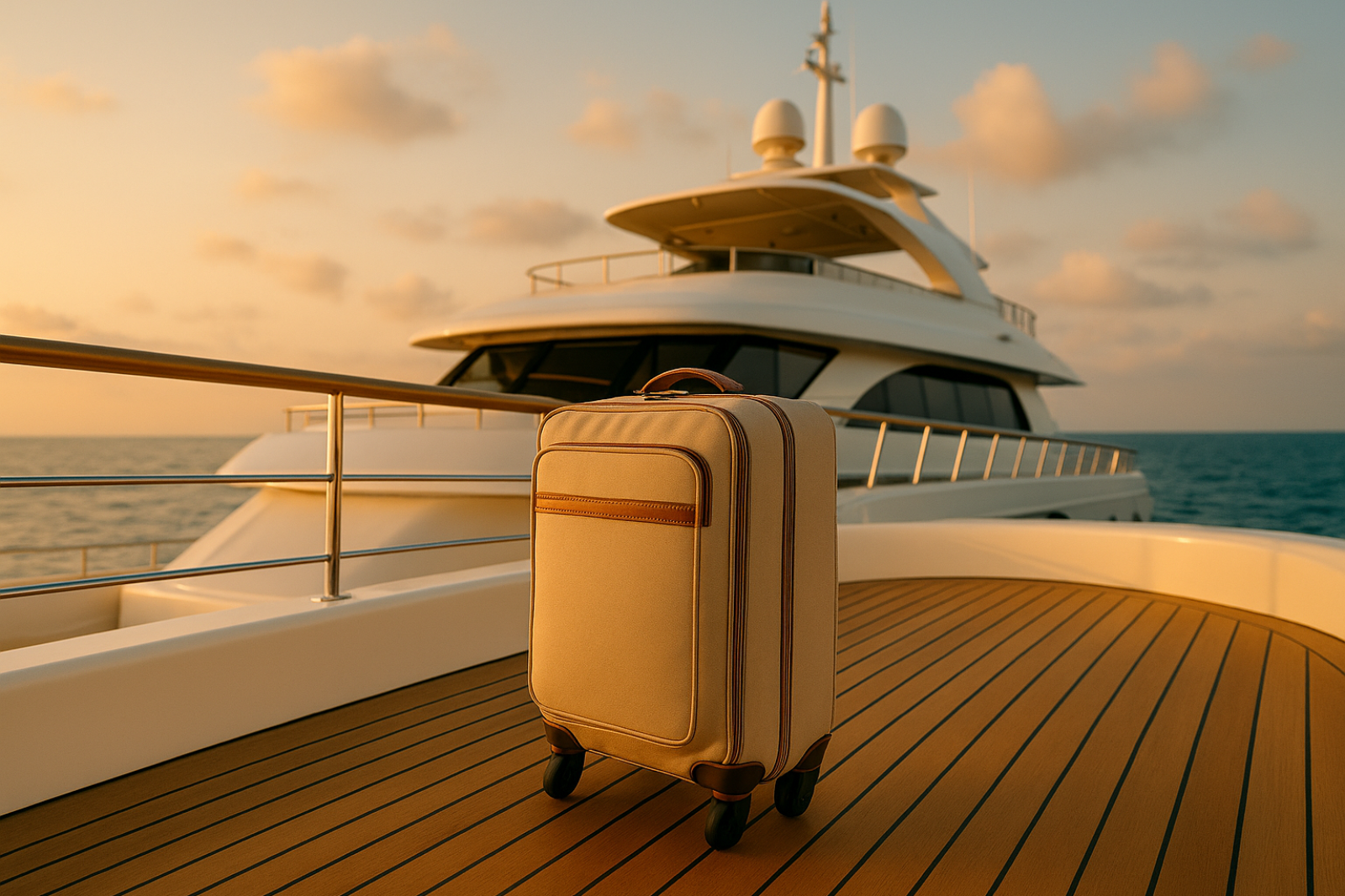
Packing for a first-time yacht charter is a matter of restraint.
In truth, what you pack and how you pack it will determine whether your first hours aboard the vessel are efficient or chaotic.
Overpacking or forgetting key items will make for a rocky ride.
Carefully choosing each item and staying organized facilitate a smooth start.
This first-time yacht charter packing list will keep you elegant on deck, comfortable at anchor, and trouble-free ashore.
Why packing for a yacht is unique
A yacht is not a floating hotel.
Space is finite. Surfaces are delicate. Marine conditions matter.
Yacht charters require strategic packing that meets the occasion.
Space & storage
Cabins are beautifully designed but compact.
Storage spaces are irregularly shaped to fit the boat’s hull.
Soft bags slide under berths; hard suitcases don’t.
Clothes and shoes must be well-organized to fit in hanging lockers and stateroom wardrobes.
Crewed charters may already provide basic toiletries, towels, and hairdryers. Ask your broker or crew so you don’t overpack.
At sea, overpacking is not a mere inconvenience — excess items may overflow into your living space, creating clutter and safety hazards.
Surfaces
Certain kinds of footwear are prohibited because they damage teak decks.
High heels and other shoes with hard soles dent and gouge the wood.
Dark rubber soles leave black scuff marks that are difficult to scrub out.
Street shoes track dirt and pebbles on board, wearing down the deck’s finish.
Teak prefers footwear with non-marking soles.
Conditions at sea
Marine environments prompt unique considerations when packing.
Wind, water, and sun rewrite dress codes. Even during high summer, evenings can be cool. The breeze is stronger and more constant than on land. And as a vessel moves, it creates its own wind. Light layers will keep you comfortable.
You’ll be exposed to sea spray, especially during tender runs. Consider packing waterproof pouches and dry bags to protect phones, e-readers, and cameras from salt and moisture.
Quick rule of thumb: soft-sided luggage, light layers, non-marking deck shoes, reef-safe sunscreen, and less than you think.

Luxury yachts and sailing boats anchored off the Italian Riviera — a serene bay framed by lush green hills.
Clothing: the capsule that works everywhere
A capsule wardrobe will simplify packing and save space while keeping you fashionable. Build it around breathable fabrics (e.g., linen, cotton, technical blends) in a neutral palette, so mixing and matching garments will create a variety of easy outfits. The following capsule wardrobe, for instance, suits a week-long charter well:
Daytime on deck
- 2–3 swimwear sets & cover-ups
- 3–4 light shirts
- 2 bottoms
- Non-marking deck shoes, boat shoes, or clean white-soled trainers
- 1 hat with a chin cord or snug brim (for the breeze)
- Polarized sunglasses (glare reduction for comfort)
Evening ashore
- 1 linen blazer or lightweight jacket
- 1–2 easy dresses or tailored trousers with crisp shirts
- Loafers/espadrilles
- 1 light scarf (surprisingly useful in wind & AC)
Layering
- 1 merino or cashmere cardigan
- 1 packable rain shell (Caribbean squalls, Mediterranean mistral)
Underlayers
- Enough underwear to avoid daily laundry
- No-show socks (also great inside fins)
Footwear etiquette
Most yachts enforce a shoes-off policy as soon as you step on board. There may be a basket at the gangway for collecting your street shoes.
Owners and captains prefer that guests go barefoot, but they may allow clean, light-soled boat shoes.
When looking for suitable deck shoes, make sure that they are explicitly marketed as non-marking.
Personal essentials
Marine conditions can take a toll on the body — the rocking motion of the vessel may induce seasickness, and high UV exposure can cause severe sunburn. Mitigating the effects of these conditions and maintaining personal wellness require thoughtful preparation. To stay safe, healthy, and comfortable on your trip, consider packing these essentials:
- Reef-safe sunscreen to protect marine life (crew will thank you; many yachts request it)
- After-sun or light aloe gel
- SPF lip balm
- Insect repellent (for dusk ashore & Caribbean)
- Seasickness options, such as acupressure bands & ginger candies (speak to your doctor about medication if you’re sensitive)
- Prescription meds (keep duplicates in separate pouch)
- Basic first-aid (yachts have kits, but your favorites travel well)
- Dry bag (10–15L) for tender runs
- Waterproof phone pouch
- Microfiber towel (handy for shore/swim toys, even if the yacht provides towels)
- Reusable water bottle
- Earplugs/eye mask (for lighter sleepers)
- Small laundry bag (keep sand/salt off wardrobes)
- Water shoes (for rocky coves and reefy beaches)
Tech & power
Staying online during your trip is straightforward when you know what to ask and what to bring.
If you’re travelling internationally, ask the crew about the voltage aboard. Mediterranean yachts often run 220V on shore power, but Caribbean yachts may run 110V. While most personal electronics are dual-voltage, items with heating elements or motors, such as hair straighteners, curling irons, and electric toothbrushes, are typically designed only for the voltage standard of the country where you bought them.
Cell towers and Wi-Fi are primarily land-based technologies, so vessels must rely on satellite networks to stay connected. If you need a consistent, stable connection, ask the crew about Wi-Fi plans.
Once you know the voltage aboard and have arranged a suitable Wi-Fi plan, pack the following items to stay charged and connected:
- Power bank
- Multi-port USB charger
- Cables for all devices (bring spares)
- International adapter
- E-reader/tablet with offline playlists & books
- Compact camera
- Laptop (if you must work)
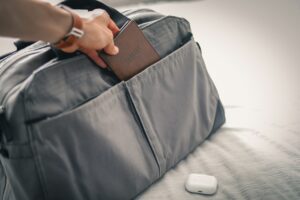
Keep passports, insurance papers and travel essentials together in a soft-sided bag — a smart move for your first yacht charter.
Documents & money
Sorting through the logistics of traveling abroad is tedious but necessary. Seamless cross-border travel requires having the proper documents on hand. Many remote marinas do not accept credit cards, so acquiring cash in local currency is a must. Gathering the following items is the boring part you’ll be glad you did:
- Passport (valid 6+ months)
- Visas (if required)
- Charter contract
- Itinerary
- Crew contact
- Travel insurance details (check that your policy covers yacht charter activities)
- Credit card
- Cash in local currency
- Driver’s license (if you might rent a car)
- Skipper license & sailing resume (for bareboat charters)
- A copy of your preference sheet (handy ashore)
Luxury & comfort
It’s the little delights that elevate a charter. Familiar comfort items make a vessel feel like a sanctuary. Travel-friendly games fill quiet hours and enhance social dynamics on board. The following items will keep you comfortable and entertained:
- Linen pouch with a signature scent (rollerball; aerosols can stain)
- Silk pillowcase (tiny pack size; outsized comfort)
- Deck-friendly robe or kaftan
- Pack of cards, travel backgammon, or Kindle games
- Compact binoculars (for spotting coves and dolphins)
- Small foldable tote bag for markets and beach clubs
- A favorite snack
Kids & teens
Special considerations come into play when there are kids and teens on the trip.
Check with the crew about lifejacket sizes and water-toy rules.
Fill out a preference sheet tailored to the dietary preferences of the kids or teens. Keep hydration and snacks easily accessible to them.
Rental snorkel gear is typically designed for adults, so it is hard to find a good fit for smaller faces and bodies. Consider bringing kid-sized snorkel gear that fits properly.
The following items will actually get used during your trip, keeping younger guests comfortable and engaged:
- Rash-guard tops
- Sun hats with neck straps
- Polarized sunglasses (strap helps)
- Favorite snacks
- Favorite stuffed animal or blanket
- Small games (magnetic travel sets) A personal insulated water bottle
- Seasickness remedies (seek pediatric guidance from your doctor)
- Extra microfiber towels
Things first-timers forget (and regret)
Forgetting key items can cause problems down the line. Sun, moisture, and salt can damage unprotected belongings, and inadequate clothing will make for an uncomfortable week. Be sure to bring the following items on your trip:
- Soft-sided luggage (then they wrestle a hard case all week)
- Non-marking shoes (black scuffs on day one is a mood killer)
- Waterproof phone case (the day you need it is the day you don’t have it)
- Power strip (cabins have limited sockets)
- Light layer (sunset breeze is cooler than you expect)
- Reef-safe sunscreen (some yachts require it)
- Cash (small marinas may prefer cash over card)
Crewed vs. bareboat
Crewed charter
On a crewed charter, comfort and luxury are the focus. You can pack less—the crew provides towels, toiletries, hairdryers, and robes on many yachts. Ask for a list of what is provided to avoid overpacking.
Prioritize selecting evening wear you’ll actually enjoy ashore. Because the crew will handle operations and logistics, you’ll have much more time to explore.
It is worth bringing comfort items, such as eye masks, silk pillowcases, and light throw blankets, since you’ll use them daily.
Bareboat charter
On a bareboat charter, self-sufficiency and safety take the forefront. You’re the captain, so pack sailing gloves, a headlamp with a red-light mode, and an extra microfiber towel.
You are also responsible for all provisioning. In addition to groceries, bring non-perishable snacks and electrolytes.
While vessels do have first-aid kits, it helps to bring your own compact first-aid kit with your preferred seasickness solution, bandages, and rehydration tabs.
Before your trip, confirm the inventory (e.g., linens, galley kit, snorkel sets) with your operator so that you can fill in the gaps.
Mediterranean vs. Caribbean
During the summer, the Mediterranean has dry heat. The sun is strong during the day, but the evenings are cool. A light jacket will keep you comfortable in the breeze. Harbors and city dinners often call for smart-casual style. Closed-toe loafers, linen blazers, and relaxed dresses read well.
The Caribbean is home to humid heat and tropical showers. A rain shell and insect repellent are musts. Water shoes are useful for traversing reefy beaches. Bright resort wear is perfectly at home.
What not to pack
Some items are not allowed on board. Others will make your life harder. The wrong items will needlessly take up extra space without providing any benefit. Avoid the following blunders when packing for your yacht charter:
- Hard suitcases (you’ll be battling with them)
- Heels & black-soled shoes (they aren’t allowed on board)
- Bulky speakers (the yacht already has a sound system)
- Candles & incense (these are a fire risk)
- Messy self-tan (it stains fabric furnishings)
- Drones (if you want to bring one, check local regulations and the captain’s policy)
Efficient packing method
Packing your bags with intention will make your life easier when it’s time to access your belongings. Sort your clothing by purpose, then roll garments and transfer them into packing cubes. Rolling your clothes will save space and minimize harsh creases. Packing cubes can be directly transferred into drawers and wardrobes when you unpack, making the process organized and efficient.
Group up tender-run items (e.g., dry bag, pouch, sunglasses, hat) together and leave them by the cabin door when you settle in. Then, when it’s time for a tender run, you can grab them and go, knowing that you have everything you need.
A complete first-time yacht charter packing list
Every charter is unique, down to the itinerary and length of the trip. This first-time yacht charter packing list can be copied and adapted to suit your needs as you prepare for your journey.
Clothing:
- Swimwear x3
- Cover-ups x2
- Light shirts x3–4
- Shorts/skirts x2
- Evening dress or button-up with trousers x2
- Linen blazer/light jacket
- Scarf
- Socks/underwear
- Sleepwear
- Non-marking deck shoes
- Espadrilles/loafers
- Water shoes
Sun care:
- Reef-safe sunscreen
- After-sun/aloe
- SPF lip balm
- Hat
- Polarized sunglasses
Health:
- Seasickness options
- Personal medications & duplicates
- Small first-aid kit
- Hand sanitizer
- Wipes
Waterproofing:
- Dry bag
- Phone pouch
- Microfiber towel
Tech:
- Power bank
- Multi-USB charger
- Cables & spares
- International adapter
- E-reader/tablet
- Camera
Documents & money:
- Passports
- Visas
- Insurance
- Contract/itinerary
- Credit cards
- Cash
- Driver’s license
- Skipper license (bareboat)
Comfort:
- Silk pillowcase
- Tote bag
- Compact binoculars
- Cards/backgammon
- Favorite snack
Common questions
1. Will I get seasick?
Most guests are fine, especially on larger yachts in settled weather. If you’re concerned, bring non-drowsy remedies and talk to your doctor in advance; ginger and acupressure bands help some people.
2. What kind of sunscreen works best?
Cream-based sunscreens offer the best protection from the sun. Spray-on sunscreens spread unevenly and may make decks slippery. Make sure you choose a reef-safe option.
3. Should I pack my own snorkel and dive gear?
Most crews will provide gear that fits adults. If there are children on the trip, pack gear that fits them properly.
4. Can I bring jewelry?
It’s best to keep jewelry at home. Rings can slip off easily in water. Seawater can cause jewelry to corrode, rust, and tarnish.
A frictionless transition
Packing for your first yacht charter is an art in which every item must earn its place.
When you pack with intention, the transition from land to sea is seamless.
You honor the culture aboard.
You bypass the chaos of cluttered stateroom lockers.
You allow yourself to remain fully present for the journey.
Beyond packing — book your first charter with confidence
Packing is the final step in planning for a trip. The first step is to choose the right destination. Then, you’ll be ready to select a charter company. Read our guide to finding the right fit, so your first week afloat begins in trusted hands. If you’d like individualized support, our Charter Concierge offers refined guidance. As you budget for your trip, read our guide to APA (Advance Provisioning Allowance) to learn how onboard costs work.