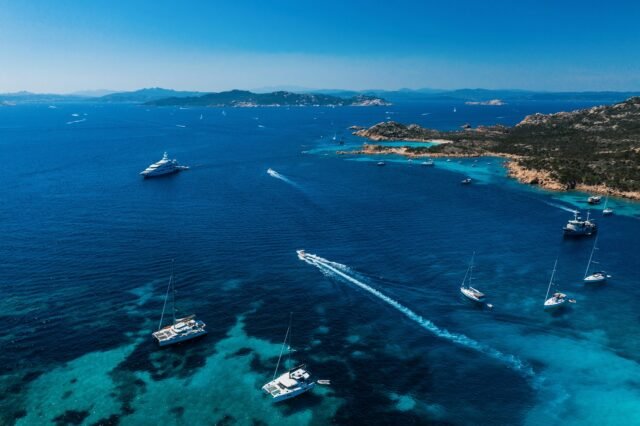
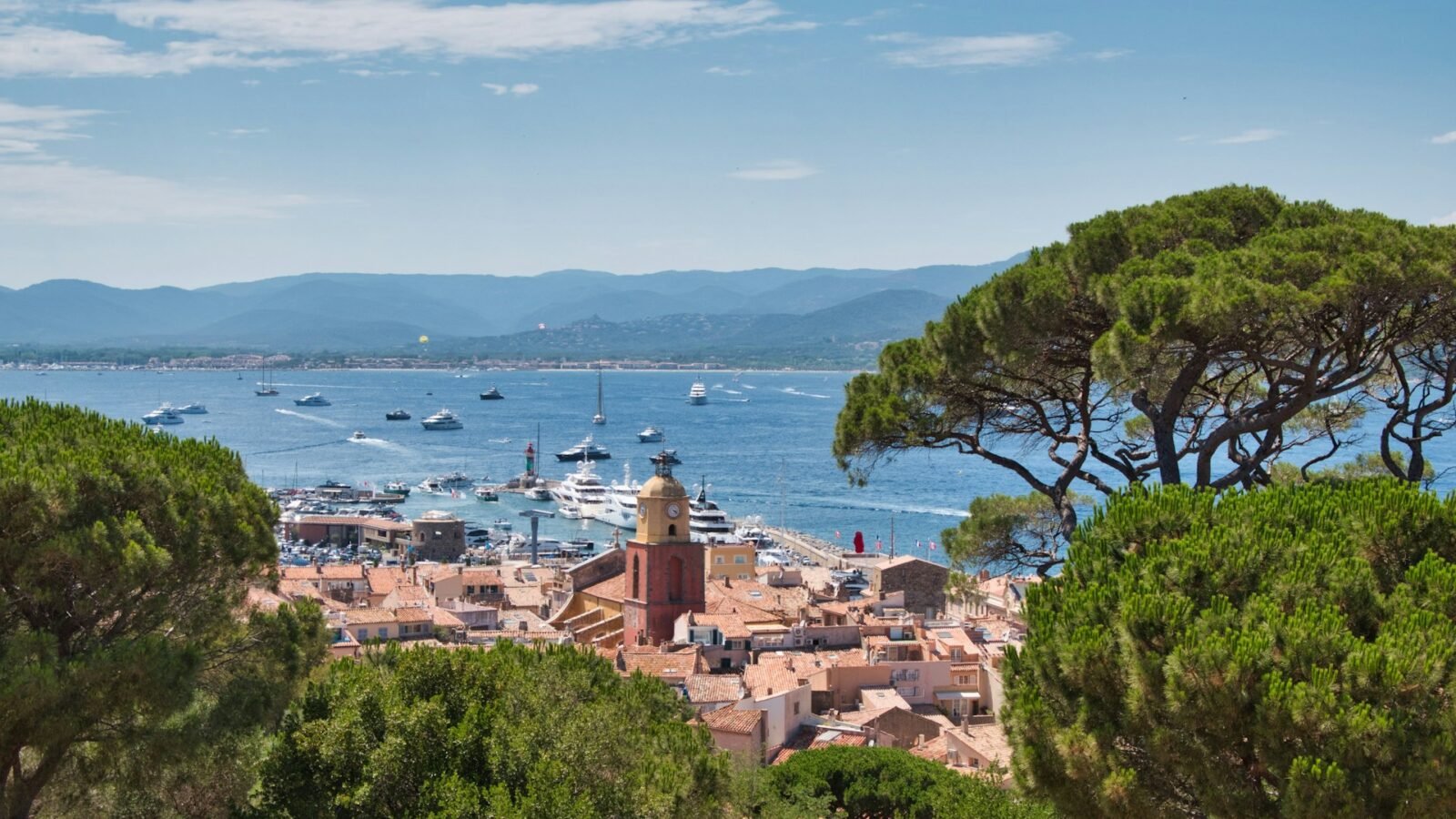
Saint-Tropez is often sold as a single, seamless scene: a yacht in the harbour, lunch on Pampelonne, a walk through the village before dinner. The geography tells a more interesting story. The Old Port sits inside a compact Provençal town; Pampelonne is a long beach on the opposite, eastern side of the peninsula, in Ramatuelle. Moving between them involves the yacht, a tender, and decisions that cannot be made by restaurant reservation alone.
The pleasure of exploring Saint-Tropez by yacht lies in having the freedom to choose a rhythm. The difficulty is resisting the urge to book every famous experience into the same day. The most rewarding visit usually has one centre of gravity: the village, the beach, or the sea itself.
Saint-Tropez by Yacht: Old Port or Pampelonne?
| If you want… | Give priority to… | The trade-off |
|---|---|---|
| Markets, old streets and a sense of place | The Old Port and village | Less time for a long beach lunch |
| A celebrated lunch with sand underfoot | Pampelonne Beach | A separate mooring and shore-transfer plan |
| Privacy, swimming and service aboard | The yacht and a suitable coastal stop | Fewer hours exploring ashore |
| Both the village and the beach | A full, deliberately paced day | Two distinct destinations, not one quick stop |
| Dinner beside the harbour | Saint-Tropez in the evening | A confirmed return arrangement |
Pampelonne is not an extension of the Old Port. Nor is the most convenient anchoring position necessarily the one closest to your restaurant. That distinction is the foundation of a successful day.
The Old Port: Go Beyond the Waterfront
The Vieux Port deserves its reputation. Fishing boats and superyachts share the visual stage beneath ochre and rose-coloured façades, while cafés face the quays. Yet the most revealing Saint-Tropez is often one street behind the waterfront.
Walk into La Ponche, the old fishing quarter, where narrow lanes open unexpectedly towards the sea. Continue towards Place aux Herbes for the everyday texture of the village, or climb to the Citadel for a view across the Gulf of Saint-Tropez. The Maritime History Museum inside the Citadel adds substance to a place too easily reduced to its summer image.
On Tuesday and Saturday mornings, the Provençal market occupies Place des Lices, generally from 8 a.m. to 1 p.m. It is a good reason to come early, though not necessarily a quiet one: market days attract their own crowds. The tourist office recommends arriving before 8:30 a.m. for the most comfortable start.
A less obvious window is early afternoon. While many visitors are at the beaches, the village centre can be easier to explore. If shopping and a leisurely walk matter more than the market, there is no obligation to race ashore at sunrise.
Allow around two hours for a focused visit to the harbour and La Ponche. Add the market, the Citadel or serious shopping, and the morning deserves more room. The village is not improved by treating its streets as a checklist.
Pampelonne Beach: Three Different Ways to Spend Lunch
Pampelonne’s reputation can obscure the fact that its beach clubs offer quite different experiences. The right choice depends less on which name is best known than on what your guests want from the afternoon.
Club 55: The long-established lunch
Club 55 is the classic choice for an unhurried Mediterranean lunch. Its own description emphasises straightforward seaside cooking rather than elaborate gastronomy; restaurant service begins at 12:15 p.m. and continues until approximately 4 p.m.
There is an important booking detail: a restaurant table and sunbeds are separate arrangements. The club takes sunbed reservations by telephone, and lunch is not served on the loungers. Guests expecting a table, a shaded spot on the sand and a seamless arrival should have each element confirmed.
Club 55 also advertises a pontoon and boatmen on VHF Channel 17. The crew should confirm the current landing procedure rather than assume that a restaurant booking covers the transfer.
La Réserve à La Plage: A quieter design sensibility
La Réserve à La Plage, conceived with Philippe Starck, offers a more design-conscious setting, with a restaurant, bar and relaxation areas. It suits guests looking for polished surroundings without necessarily making the afternoon a performance.
La Réserve à La Plage operates seasonally, so opening dates and reservations should be confirmed for the intended charter period.
Bagatelle: Lunch as the social event
Bagatelle St. Tropez is a different proposition: lively French-Mediterranean dining where the restaurant itself may be the afternoon’s principal entertainment. It will suit a celebratory group better than guests seeking a discreet conversation.
Its published operating days are not seven days a week, and the venue asks visitors arriving by sea to contact the restaurant to arrange its boat service. Check both the opening day and the maritime arrival before building an itinerary around it.
The editorial rule: book one beach-club experience well. A second lunch venue, a hurried swim and a late village visit rarely improve the day. And if the yacht has an excellent chef, lunch aboard may be the most appealing reservation of all.
Three Saint-Tropez Yacht Days That Actually Work
These are guest-facing schedules, not promises of passage times or berthing availability. The captain must establish whether the yacht can reposition, where it may stop, and how the tender can operate.
1. Village first, Pampelonne second
Best for: First-time visitors who want to understand Saint-Tropez as well as enjoy its beach culture.
Aim to be ashore in the village during the morning. Visit the market if it is operating, then take the lanes through La Ponche rather than spending the whole visit on the quay. Reboard with enough margin for the yacht to reposition and for the crew to organise the Pampelonne arrival.
Make a single beach-club lunch the fixed appointment, ideally leaving the later afternoon free for the yacht. This sequence gives the old town its most purposeful hours and lets lunch unfold without a second deadline.
Do not choose it if the group expects a long shopping morning, a museum visit and an early lunch. Something will be sacrificed.
2. Pampelonne by day, the Old Port after dark
Best for: Guests whose priority is a beach-club afternoon followed by dinner in town.
Start aboard. If conditions and the yacht’s authorised position allow, enjoy the water before going ashore for lunch. Stay long enough to appreciate the chosen venue rather than treating it as a stop between appointments.
Later, return towards Saint-Tropez for an evening walk and dinner, but only with a workable berth or tender plan. The yacht’s overnight position is the crucial detail. A restaurant reservation in town does not secure harbour space.
This is the more glamorous sequence, and the one most easily undermined by an improvised return transfer.
3. The yacht-led day, with one short visit ashore
Best for: Families, returning visitors and guests who value privacy more than a famous table.
Let the captain choose a suitable cruising and stopping area according to the weather and local rules. Swim, have lunch aboard and use the tender for one short visit if conditions permit.
For a half-day charter, this may be the strongest option. Trying to include both the Old Port and Pampelonne can turn the experience into a series of departures.
A successful Saint-Tropez by yacht itinerary is not measured by the number of times guests step ashore.
Berths, Moorings and Tenders: Three Separate Decisions
A berth in the Port de Saint-Tropez puts the village at your feet. It is particularly valuable for an evening ashore, but suitability depends on vessel dimensions and confirmed availability. The port operates formal booking procedures; its current guidance directs vessels above 18 metres to Magelan eResa and smaller vessels to Navily. Large-yacht guests should leave the berth request to the captain or charter team, not assume that a prominent quay will be available.
For a larger yacht, berth allocation is a technical and operational decision, not merely a matter of preference. Different quays have different limits; dimensions, draught and availability all matter. Guests can enjoy the village without bringing the mother ship alongside, but the alternative needs to be agreed before anyone dresses for dinner.
A Pampelonne mooring serves a different purpose. The bay operates a regulated mooring system, with sectors and arrangements linked to vessel length. The Pampelonne Mooring operator publishes online reservations and seasonal information. A beach-club table does not reserve a buoy; a buoy does not reserve a restaurant table.
A tender landing is a third piece of the plan. A club’s boat service, a private yacht tender and an authorised landing point are not interchangeable. Confirm who is collecting guests, where, and how they will return. Consider the comfort of children and anyone who finds boarding in a swell difficult.
For guests visiting Saint-Tropez by yacht, the details should be almost invisible. For the crew, separating these three arrangements is what makes the day feel effortless.
The 2026 Pampelonne Rules: Why Old Anchoring Advice Is Risky
Pampelonne’s Posidonia seagrass meadows are protected marine habitats, vulnerable to damage from anchors and chains. The bay’s Zone de Mouillages et d’Équipements Légers (ZMEL) is designed to manage yacht access while limiting that damage.
The regulations were amended in June 2026. Among the changes were revised sector boundaries and the reclassification of a former large-yacht anchoring area into a zone for smaller vessels within the ZMEL. The rules vary by vessel category, and a position that appears convenient on an old chart or cruising blog may no longer be authorised.
This is why generic instructions to anchor a set distance offshore are not reliable. The captain must use current official notices, charts and the operator’s guidance for the actual yacht. Anchoring on Posidonia is prohibited; managed moorings and designated areas are not optional formalities.
Responsible navigation is not a separate virtue added to a luxury charter. It is part of doing the job properly.
When the Weather Changes the Answer
Pampelonne faces east. An easterly swell can make the bay uncomfortable and tender operations less attractive, even on a bright day. The relevant decision depends on sea state, vessel characteristics, the landing point and the captain’s assessment, not a simplistic wind-direction rule.
Agree on an alternative before committing to the beach. More time in the village may be the better choice; a suitable location elsewhere in the Gulf may also be possible. Neither should be promised without checking conditions and regulations.
The same restraint applies to the attractive coastline around L’Escalet and Cap Taillat. These are not universal fallback anchorages. Their environmental protections and exposure require their own assessment.
The ability to change plans is one of yachting’s privileges. Use it.
How Much Time—and Which Season?
| Time available | The most convincing plan |
|---|---|
| Two or three hours | The Old Port and La Ponche, or one prearranged shore visit |
| Half a day | One priority: village, beach lunch or time aboard |
| A full day | Village plus Pampelonne, with transfer margins |
| Afternoon into evening | Pampelonne followed by the village, if return logistics work |
| Overnight | A slower combination of harbour life and the beach |
In May and June, Saint-Tropez can feel less compressed, although beach-club and mooring seasons do not necessarily begin together. July and August bring the familiar summer energy and greater pressure on reservations. September often rewards guests who prefer a different pace, but late September and early October can be busy around Les Voiles de Saint-Tropez, the celebrated sailing regatta.
The best season for Saint-Tropez by yacht depends on the atmosphere you want, not simply the warmest forecast.
There is no universally best month. A lively beach-club holiday and a quiet village visit are different ambitions.
The Five Questions to Ask Before You Go
- What is the one non-negotiable experience? The market, a particular lunch or an evening in town should determine the day’s order.
- Where is the yacht actually going to be? Confirm the berth, mooring or authorised stopping plan before discussing tender times.
- What exactly has been reserved? Restaurant table, sunbeds, mooring and transport may require separate confirmations.
- Who handles the shore transfer? Agree on the landing, return arrangements and a sensible latest departure.
- What is Plan B? A weather-dependent itinerary needs an alternative the guests would genuinely enjoy.
The final question is often the difference between an elegant day and a tightly scheduled one.
Frequently Asked Questions
Can you visit Saint-Tropez by yacht without a berth in the Old Port?
Yes, a visit may be possible using an appropriate offshore arrangement and a coordinated tender, subject to vessel size, weather and local restrictions. A harbour berth is especially convenient for guests staying late in the village, but it is not the only option.
Can you do Saint-Tropez and Pampelonne in one day?
Yes, if it is a genuine full day and the yacht’s movements and transfers are practical. The simplest sequence is the village in the morning followed by one Pampelonne lunch. For a short visit, choose one.
Can yachts anchor directly outside Club 55?
Not wherever they wish. Pampelonne has regulated mooring and anchoring areas, and protected Posidonia habitats. The yacht’s authorised position must be established separately from any Club 55 restaurant or beach reservation.
Is Pampelonne Beach part of Saint-Tropez?
No. It lies in Ramatuelle, on the eastern side of the Saint-Tropez peninsula. That geographical distinction is essential to planning a yacht visit.
The Verdict: Give the Day a Centre of Gravity
The Old Port is for discovering the village; Pampelonne is for surrendering a few hours to the beach; the yacht is for everything that becomes possible between them.
The most successful Saint-Tropez by yacht experience does not attempt to give each equal billing. It chooses a priority, makes the necessary arrangements and leaves enough space for the pleasure of being at sea.
Beyond Saint-Tropez
Saint-Tropez makes more sense when considered within the wider Riviera. For the decision between its beach culture and the urban appeal of Monaco or Cannes, read our Monaco vs Cannes vs Saint-Tropez by Yacht comparison.
For the quieter anchorages, different coastal personalities and the question of where to spend your time, continue with French Riviera by Yacht: Where to Go, Where to Stop and What Each Place Does Best. Our Charter collection explores the broader decisions behind a Mediterranean voyage.
The privilege is not seeing everything. It is having the time to enjoy what you choose.
read next
Monaco vs Cannes vs Saint-Tropez by Yacht: Which Stop Fits Your Trip?
French Riviera by Yacht: Where to Go, Where to Stop and What Each Place Does Best