
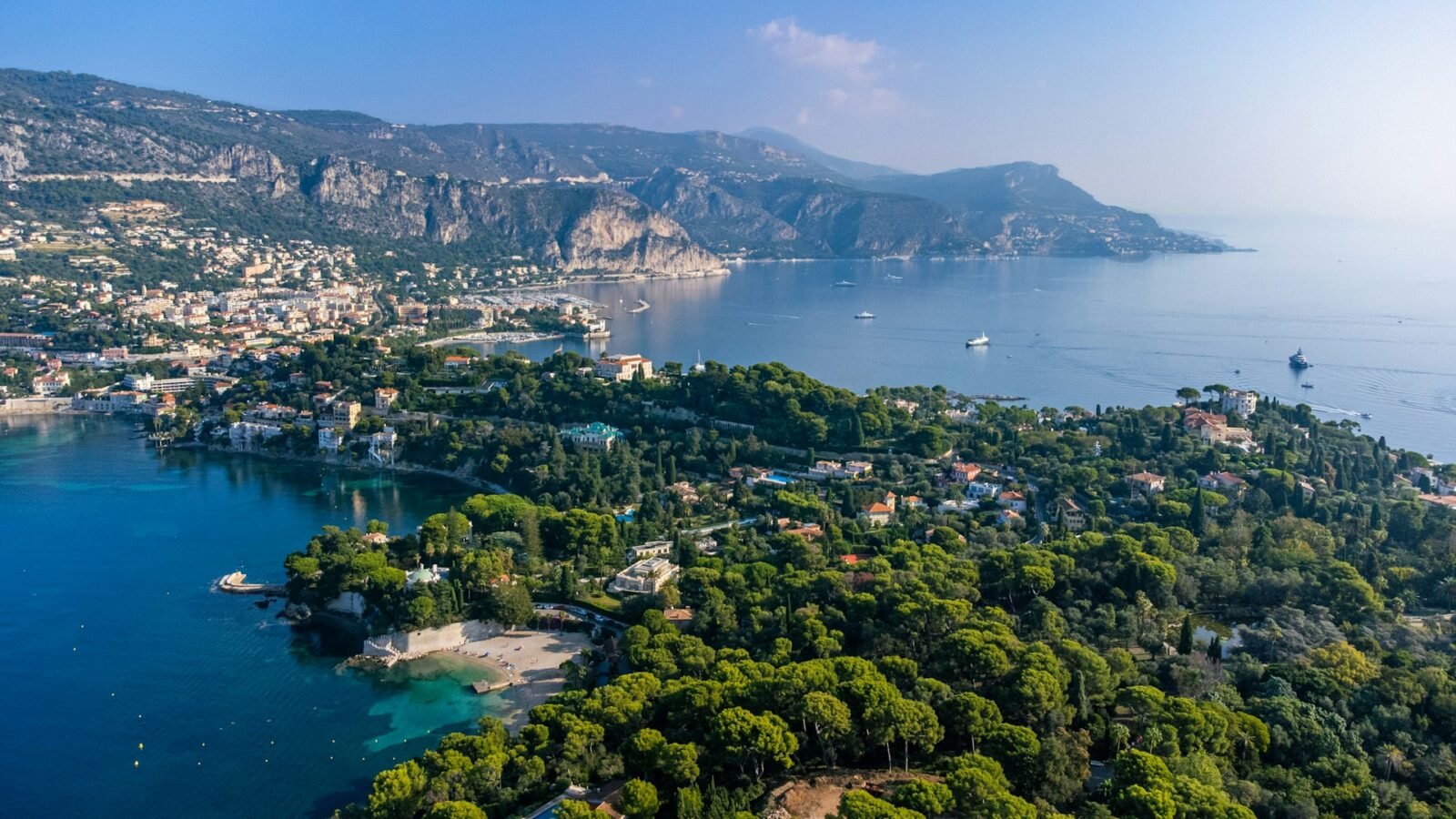
The French Riviera is surprisingly easy to get wrong by yacht.
Not because there are too few places worth visiting, but because there are too many famous ones. Monaco, Cannes, Antibes and Saint-Tropez can fill an itinerary before anyone has asked what the guests actually want from their time at sea.
Yet these destinations offer fundamentally different experiences. Monaco rewards an evening ashore. Cap Ferrat is often at its most compelling from the water. Cannes makes it possible to combine city life with an island afternoon. Saint-Tropez is a social destination whose reputation can easily dictate more time than it deserves.
Exploring the French Riviera by yacht means having the freedom to choose between these experiences—not feeling obliged to collect them all.
The most successful charter is rarely the one that visits the greatest number of ports. It is the one that understands where to stop, when to go ashore and when the yacht itself is the best place to spend the day.
French Riviera by Yacht: Which Stops Are Worth Your Time?
| Destination | Best reason to visit | What to consider |
|---|---|---|
| Monaco | Dining, events and an unmistakable international atmosphere | Urban rather than secluded |
| Cap Ferrat & Villefranche | Coastal scenery, swimming and time aboard | Anchoring and shore access depend on conditions and regulations |
| Antibes | Maritime heritage, an atmospheric old town and culture | Less of a social spectacle |
| Cannes | Restaurants, shopping and nearby islands | Busy waterfront during peak periods and major events |
| Lérins Islands | A slower day close to nature | Limited shoreside entertainment and protected areas |
| Estérel Coast | Red-rock landscapes and scenic cruising | Better appreciated as a coastal experience than a port destination |
| Saint-Tropez | The old harbour, restaurants and summer social life | Popularity makes timing important |
| Pampelonne | Beach clubs and long lunches by the sea | A separate experience from Saint-Tropez town |
| Porquerolles | Beaches and a quieter, nature-led Mediterranean | Extending west changes the balance of the trip |
This is a guide to choosing, not a ranking. The right stop depends on what you want to do there—and what you would be giving up to include it.
Monaco: Go for What Happens Ashore
Monaco is one of the Riviera’s most distinctive yacht destinations because the harbour and the city belong to the same world.
Port Hercule sits beneath a densely developed principality where international events, celebrated restaurants, architecture and luxury shopping are part of the appeal. For guests who enjoy that atmosphere, arriving by yacht feels entirely appropriate.
But Monaco is not where most people will find the quiet Mediterranean escape they imagine when booking a charter.
That distinction makes the decision straightforward.
Choose Monaco for an evening worth planning around: dinner, an event or time exploring the city. Give it longer if those experiences genuinely interest your group.
If the priority is swimming, privacy and a relaxed afternoon aboard, the coastline nearby offers more compelling possibilities.
Monaco is not a compulsory starting point or an essential overnight stop. Its value comes from the city, not simply from having its name on the itinerary.
Cap Ferrat and Villefranche: When the Coast Is the Attraction
Between Monaco and Nice, the Riviera changes character.
Saint-Jean-Cap-Ferrat is a wooded peninsula known for its villas, gardens and elegant coastline. Nearby Villefranche-sur-Mer occupies a deep natural harbour beneath a colourful hillside town. Beaulieu-sur-Mer offers a more understated waterfront setting between them.
From land, these are individual destinations. From a yacht, their relationship becomes more interesting.
Cap Ferrat is particularly rewarding as scenery. Villefranche adds the possibility of a picturesque village visit. Beaulieu can suit guests who want a quieter town atmosphere without the intensity of Monaco.
The temptation is to turn each into a separate stop. There is little reason to do so unless the guests have a particular interest ashore.
For a water-led charter, this stretch is better approached as an area in which to spend time, rather than a list of places to tick off.
There is an important practical qualification. Attractive water does not necessarily mean permitted anchoring. French Mediterranean rules protecting Posidonia seagrass affect where yachts may anchor, with restrictions varying by location and vessel size. Weather, traffic and tender arrangements also influence the choice.
The captain should determine the appropriate stopping area. The guests should decide what they want the afternoon to feel like.
Here, that may mean doing very little—and enjoying it considerably more.
Antibes: The Riviera Beyond the Spectacle
Antibes is sometimes overshadowed by the more recognisable names on either side of it. That can be part of its appeal.
Port Vauban is a significant yachting centre, but the town has an identity that extends well beyond the marina. Its historic ramparts face the sea, while the old centre offers narrow streets, markets and a more lived-in atmosphere than the Riviera’s most polished waterfronts.
The Musée Picasso, housed in the Château Grimaldi, gives culturally curious guests another reason to visit.
Antibes works particularly well for an unhurried afternoon or evening ashore. There is enough to explore without organising the entire visit around a famous restaurant or an event.
It is also a useful reminder that a yacht’s practical base and a guest’s preferred destination are different questions. A marina may be operationally convenient without being the highlight of the holiday.
Antibes deserves consideration for its character, not merely for its importance to the yachting industry.
For guests who enjoy historic towns and Mediterranean street life, it can be more satisfying than another highly choreographed luxury stop.
Cannes: The Best Compromise for Different Interests
Cannes has an advantage that is easy to overlook: it allows guests to want different things.
The Croisette, hotels, restaurants and boutiques make the town attractive to people who enjoy spending time ashore. The nearby Lérins Islands offer a completely different environment without requiring a major change of cruising area.
That combination makes Cannes particularly useful for mixed groups.
Some guests may prefer lunch and shopping in town. Others may be happier spending the afternoon on the water. Cannes can accommodate both preferences without making the entire day revolve around one activity.
Its flexibility is also its weakness.
There is always another restaurant, reservation or reason to go ashore. During major events, the waterfront becomes especially busy. A visit intended to combine sea and city can easily become a full day of appointments.
The solution is to choose one priority.
If the attraction is Cannes itself, enjoy the town properly. If the aim is a relaxed afternoon around the islands, resist adding an elaborate shoreside programme.
The most successful Cannes stop is not necessarily the busiest one.
The Lérins Islands: A Day Without Another Harbour
Just offshore from Cannes, the Îles de Lérins offer a contrast that feels greater than the geographical distance suggests.
Île Sainte-Marguerite is wooded and associated with Fort Royal. Smaller Saint-Honorat is home to a working monastic community and has a notably different atmosphere from the mainland resorts.
The islands appeal to guests who want the sea to become the focus again.
After several days of restaurants, shopping and busy waterfronts, swimming and lunch aboard can feel more rewarding than another celebrated destination.
That does not make the islands an unrestricted playground. Their natural surroundings are protected, and navigation, anchoring and access must respect current local regulations.
Nor do they need to become a full-day excursion for everyone.
For some guests, exploring the islands ashore is the attraction. For others, the pleasure lies in the change of scenery and the chance to slow down.
The distinction matters because a yacht holiday does not improve automatically with every additional activity.
Sometimes the most worthwhile stop is the one that asks least of the guests.
The Estérel Coast: Don’t Treat the Journey as Dead Time
West of Cannes, around Théoule-sur-Mer, the Estérel massif introduces a different Mediterranean landscape.
Its red volcanic rock contrasts sharply with the developed waterfronts and pale architecture of the eastern Riviera. Seen from the sea, the coastline can be one of the most visually distinctive parts of the region.
Yet it is often treated simply as the stretch between Cannes and Saint-Tropez.
That overlooks an important advantage of travelling by yacht.
A passage does not have to be wasted time between destinations. When the scenery is worth the journey, cruising becomes part of the experience.
The Estérel is particularly appealing to guests interested in landscapes, photography or an afternoon that does not depend on a restaurant reservation.
This is not an invitation to anchor in any attractive cove. Conditions, seabed protections and local restrictions determine what is possible.
The point is to allow time to appreciate a coast that offers something different from the Riviera’s famous harbours.
For some guests, those red cliffs will be more memorable than another afternoon in town.
Saint-Tropez: A Famous Name That Needs a Reason
Saint-Tropez is a small town carrying an enormous reputation.
Its old harbour, artistic history, restaurants and summer social scene have made it one of the Mediterranean’s most recognisable destinations. That identity is real, and for the right guests, it is precisely why the town deserves a visit.
But Saint-Tropez is not an experience that everyone needs in equal measure.
A group interested in restaurants, shopping and the atmosphere around the harbour may want to spend an evening here. Guests who prefer quiet anchorages and time aboard may find that a shorter visit is enough.
During busy periods, popularity affects the practical experience. Harbour arrangements, tender access and reservations require planning rather than assumptions.
The key is to decide what Saint-Tropez is supposed to contribute.
Is it lunch and a walk through the old town? An evening ashore? The social atmosphere itself?
Once that is clear, the amount of time to allocate becomes easier to judge.
Saint-Tropez may justify an important place in the holiday. It does not automatically justify an entire day and night simply because it is famous.
And one distinction is essential: visiting Saint-Tropez town is not the same as spending the day at Pampelonne.
Pampelonne: Choose the Beach Experience Deliberately
Pampelonne lies along the coast of Ramatuelle, outside Saint-Tropez.
Its beach clubs and restaurants have become part of the wider Saint-Tropez mythology, but a day here has a different purpose from visiting the old harbour.
At Pampelonne, the experience is built around the beach: a long lunch, a particular club or time between the shore and the yacht.
For guests who enjoy that style of summer day, it can be a highlight.
For those who do not, its reputation is not a reason to go.
The logistics also deserve attention. Pampelonne is not a conventional marina visit. Navigation, anchoring and shore transfers are subject to local arrangements and restrictions, particularly relevant to larger vessels.
A beach reservation should therefore be coordinated with the captain and charter team before it becomes a fixed point in the itinerary.
The useful question is not whether Pampelonne is iconic. It is whether a beach-club day is genuinely how your group wants to spend its time.
Porquerolles: When the Riviera Becomes a Different Holiday
Farther west, Porquerolles and the Îles d’Hyères introduce a more nature-led Mediterranean experience.
Porquerolles is known for its beaches and landscapes, while nearby Port-Cros forms part of a protected national park environment. The atmosphere is markedly different from Monaco, Cannes or Saint-Tropez.
That difference can be exactly what some guests want.
But Porquerolles should not be treated as a casual addition to an already full central Riviera itinerary.
Continuing west changes the geographical focus of the trip and reduces the time available elsewhere. The area also has significant marine protections, including rules affecting anchoring, navigation and access.
For guests whose main priority is nature and time away from developed waterfronts, this western region may deserve a substantial part of the holiday.
For those primarily interested in the Riviera’s social destinations, it may be better reserved for another charter.
The decision is not about whether Porquerolles is worth visiting. It is whether it belongs to the holiday you are actually planning.
The Practical Question Most Riviera Guides Miss
A destination can look perfect on a map and still be a poor fit for a particular yacht.
Vessel size affects berthing options and anchoring permissions. A larger yacht may provide exceptional comfort aboard but face greater restrictions in certain coastal areas. A smaller vessel may have different access possibilities, though comfort and operating conditions remain important.
Tender transfers matter too.
A restaurant beside the sea is not necessarily easy to reach from a yacht. The vessel may need to remain some distance offshore, landing arrangements may be specific, and conditions can make a transfer less comfortable than expected.
This becomes especially important for guests with limited mobility, families with young children or anyone who dislikes repeated tender journeys.
The best French Riviera yacht destinations are therefore not universal.
Before committing to a stop, ask three questions:
- What are we going there to do? If there is no convincing answer, the stop may be unnecessary.
- How will we experience it? From the yacht, on foot, through a tender transfer or from a marina?
- What does including it cost us? Not just in cruising time, but in lost flexibility and time elsewhere.
These questions reveal why two guests aboard different yachts may need entirely different itineraries, even when they share the same interests.
They also explain why a good captain’s local knowledge is more valuable than a rigid list of fashionable anchorages.
When Is the Best Time to Explore the French Riviera by Yacht?
The answer depends on the experience you want.
July and August bring the Riviera’s summer social scene into full view, along with stronger demand for restaurants, harbours and beach destinations.
May can be especially event-driven around the Cannes Film Festival and Monaco Grand Prix. June and September may appeal to guests looking for a different balance between activity and crowds.
But quieter dates do not guarantee calm seas, warm swimming conditions or unrestricted access to every business.
Weather, water temperature, event schedules and seasonal openings all influence the experience.
Guests planning a holiday around beach clubs and nightlife should choose their dates differently from those prioritising swimming, scenery and quiet afternoons aboard.
There is no single best month for every French Riviera yacht charter. There is a better season for the particular holiday you want.
How to Choose the Right Riviera Experience
For a shore-led charter, prioritise Monaco, Cannes and Saint-Tropez. These destinations reward guests who enjoy restaurants, shopping, events and evenings ashore. Pampelonne belongs in the plan if a beach-club day is part of the appeal.
For a water-led charter, give more attention to Cap Ferrat, Villefranche, the Lérins Islands and suitable stretches of the less developed coastline. Let the captain select appropriate locations according to the vessel, weather and current rules.
For a balanced first visit, choose a small number of contrasting experiences. One glamorous evening, one characterful town and several genuinely relaxed periods on the water will often reveal more about the Riviera than a different famous harbour every day.
Above all, resist giving every destination equal time.
The French Riviera by yacht is compelling because Monaco, Antibes, Cannes, Saint-Tropez and the quieter coastline are not interchangeable. Each offers a different reason to be there.
The aim is to recognise which reasons matter to you.
A successful Riviera charter is not a tour of everything the coast is famous for. It is a carefully chosen experience of the places that suit you best.
Beyond the Riviera
Where you go is only part of planning a yacht holiday. The vessel, charter arrangements and balance between time underway and time at rest can be just as important.
Explore Yachtluéur’s Charter collection for further guidance on creating a Mediterranean yacht experience that works as well in practice as it looks on paper.
read next
Monaco vs Cannes vs Saint-Tropez by Yacht: Which Stop Fits Your Trip?
Best Mediterranean Yacht Destinations: How to Choose the Right Cruising Region
