

Most yacht interiors do not age badly because they were cheap.
They age badly because they were designed to impress the present.
That is the mistake.
A room built around the mood of a year will eventually carry the date of that year. A room built around proportion, repetition, and calm can survive fashion, survive refit cycles, and survive the slow visual fatigue that life at sea exposes faster than life on land.
That is what timeless yacht interior design really is.
Not a neutral palette. Not a safe room. Not an absence of personality.
It is a discipline.
And if you get it right, the cabin does something rare: it still feels correct long after novelty has left.
Why Yacht Interiors Date Faster Than Houses
A yacht is harder on design than a house.
Light is stronger. Reflection is harsher. Movement exposes weak decisions. Confined volume makes visual noise feel louder. A fashionable gesture that might survive in a large residence can feel tired in a cabin much sooner, because there is nowhere for it to hide.
This is why timeless yacht interior design is not just an aesthetic preference. It is a structural response to the way interiors are actually lived at sea.
The current market language around yacht interiors often talks about sanctuary, wellness, natural materials, multifunctional living, and personalization. All of that matters. But the real question is not what sounds current. It is what still feels convincing after repeated use, changing light, and years of proximity.
A yacht interior is not viewed once.
It is crossed barefoot at dawn. It is lit at midnight. It is inhabited in silence, in motion, in fatigue, and in routine.
That is where timelessness is tested.
What Timeless Yacht Interior Design Actually Means
Timeless yacht interior design is the art of removing expiry signals.
It does not mean traditional styling.
It does not mean avoiding new ideas.
It means that nothing in the room depends on temporary fashion to make sense.
A timeless cabin usually shares a few quiet traits:
- the materials belong to the same family
- the light supports the room instead of decorating it
- the forms feel settled rather than eager
- the space stays calm under repetition
You stop noticing individual decisions.
You start feeling the room as one language.
That is the difference between a room that photographs well and a room you can live with.
The Five Failure Points That Make Yacht Interiors Date
Timelessness becomes clearer when you understand what fails.
1. Too much contrast
Many interiors age because they are built on impact: dark against light, gloss against matte, statement stone against statement timber, sculptural fixture against sculptural furniture.
At first, this feels expensive.
Later, it feels loud.
Contrast is not the enemy. But when contrast becomes the main event, the room depends on surprise. Surprise fades quickly.
Timeless interiors usually prefer tonal depth over visual shock. They layer, rather than announce.
2. Too many materials
This is one of the most common mistakes in yacht interiors.
Wood, stone, metal, leather, lacquer, mirrored surfaces, specialty textiles, accent trims—each chosen correctly, each expensive, each impossible to remove once they begin arguing with each other.
A room with too many materials rarely feels rich. It feels unresolved.
Timeless yacht interior design relies on controlled repetition. Fewer materials, used more intelligently, create a stronger identity than a room trying to prove range.
3. Statement lighting
Lighting dates rooms faster than owners expect.
A fixture that feels sculptural today can become a timestamp tomorrow. Visible lighting often carries the strongest “trend year” signature in a room.
The timeless approach is quieter. Light should shape atmosphere, reduce glare, support movement, and flatter material. It should not need to become the room’s personality.
The best lighting decisions disappear into comfort.
4. Furniture with a fashion shelf life
Some furniture belongs to a room. Some furniture belongs to a year.
The pieces that age fastest are often the ones most eager to signal relevance: exaggerated curves, fashionable proportions, over-designed silhouettes, pieces selected because they felt “current” rather than inevitable.
Timeless rooms usually lean toward archetypal forms. Not generic forms. Settled forms.
A chair should feel right in five years, not just identifiable in one.
5. Decorative ceilings and panel games
A yacht interior already contains enough geometry. So when ceilings, wall treatments, and panels become overly expressive, the room starts working too hard.
This is one of the least discussed causes of dated interiors.
The surface language becomes too busy, too clever, too tied to a moment in taste.
Timelessness prefers discipline over invention for its own sake.

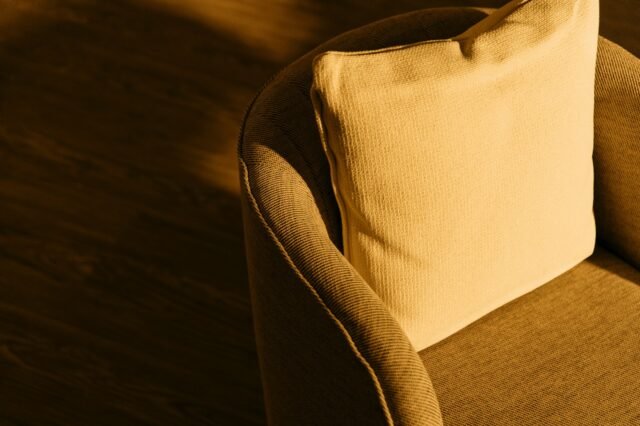
Material consistency and controlled light — where warmth becomes structure, not decoration.
The Four Principles of a Cabin That Won’t Date
If you want a cabin to remain convincing, build around these principles.
1. Material consistency over material variety
A room should not feel like a sample box.
When wood, stone, leather, and metal are selected, they must belong to the same temperature, the same level of visual energy, and the same emotional register. The point is not sameness. The point is agreement.
This is where many cabins fail. They contain luxury materials, but no common language.
2. Soft transitions over hard statements
Edges matter. Tone shifts matter. Texture changes matter.
A timeless room moves from one surface to another without interruption to the nervous system. Nothing jars. Nothing snaps too loudly into focus. This is especially important on a yacht, where scale is compressed and every transition is felt more strongly.
Softness is not weakness.
It is control.
3. Atmosphere over decoration
The room must work before it is accessorized.
If the cabin only becomes interesting after objects, styling, or decorative layering, the architecture was never strong enough. Timeless yacht interior design begins with proportion, light, and flow. Decoration comes later, and in smaller doses than most people think.
4. Calm as the final measure
A timeless room can still be bold. But it cannot be restless.
This is the test: does the room become easier to inhabit over time, or more tiring?
If it becomes more tiring, it is carrying too many expiry signals.
If it becomes easier, calmer, and more readable, it is probably built on lasting principles.
Timeless vs Trendy Yacht Design
The difference is not moral. It is structural.
A trend-driven room often does this:
- seeks instant visual effect
- relies on novelty
- uses variety as proof of luxury
- lets visible fixtures and forms carry identity
- feels strongest at first glance
A timeless room does something else:
- builds confidence slowly
- relies on repetition and proportion
- uses restraint as proof of control
- lets light, material, and flow carry identity
- feels stronger after time inside it
That is why trendy rooms can perform well in short bursts but weaken under repeated living.
Timeless rooms deepen.
Why Timeless Design Has Commercial Value
This is where design stops being abstract.
A cabin that won’t date is not only more elegant. It is more resilient.
It tends to photograph well for longer. It appeals to a wider range of charter clients. It reduces the pressure for cosmetic interventions. It protects value by delaying the moment when an owner feels the interior has become stale.
That matters.
Because yacht interiors are not judged only by designers. They are judged by guests, brokers, buyers, crews, and owners trying to understand whether the room still feels credible.
Timeless yacht interior design improves that credibility window.
And that window has value.
This is the same logic that sits beneath your charter pieces: when design pedigree and interior condition influence how a yacht is perceived, they also influence how confidently it enters the market. The room is never “just aesthetic.” It is part of the asset’s reading.
How to Recognize a Timeless Yacht Interior in 30 Seconds
You do not need a design degree for this.
You need a few better questions.
Ask:
- Can I identify the year this room is trying to belong to?
- Are there too many materials competing at once?
- Is the light visible, or simply felt?
- Does the room calm down after the first glance?
- Do the forms feel settled, or fashionable?
- Would this still feel right if every loose object were removed?
If the room still holds after those questions, it has a chance.
If it collapses without novelty, then novelty was all it had.
The Hard Truth About Personality
Many people assume timelessness means sacrificing character.
It doesn’t.
It means placing character where it can survive.
Not in a trend-led fixture. Not in a decorative ceiling move. Not in a material combination chosen for shock.
Personality survives best in:
- proportion
- texture
- light temperature
- restraint
- one or two decisions repeated with conviction
That is why the strongest cabins rarely feel empty.
They feel edited.
Closing
Trends create attention.
Timelessness creates permanence.
And on a yacht, permanence is not about resisting change. It is about building a room that can absorb time without losing its authority.
That is the goal.
Not a cabin that feels current.
A cabin that still feels correct when the current has moved on.
What Most Interiors Get Wrong
Most yacht interiors are designed to impress at first glance — but few are built to stay with you.
If you want to understand why, read: Yacht Interior Design: Why Most Interiors Feel Impressive — But Not Memorable.
Materials Shape Longevity
Timeless yacht interiors are rarely created through style alone. Materials quietly determine how a space ages, reflects light, and holds its character over time. Read: Yacht Interior Materials Explained: Wood, Stone, Leather, and Metal at Sea.
read next
Yacht Interior Design Mistakes: The Hidden Signs of a Trend-Driven Interior
Why Some Yacht Interiors Age Better Than Others