Most people can tell when a yacht feels expensive.
Far fewer can explain why.
A guest may notice marble, leather, or a dramatic staircase. Yet those features alone reveal very little about the actual quality of a yacht. Two interiors can use similar materials and produce completely different experiences.
The difference is usually found in execution.
This is where yacht craftsmanship becomes visible.
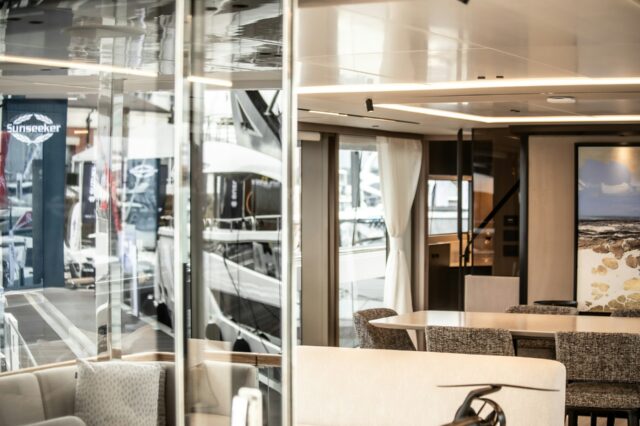
Not through grand gestures, but through small decisions repeated hundreds of times throughout an interior. A cabinet door. A leather seam. A drawer slide. The alignment between two panels. The way a light disappears into a ceiling detail.
The best yachts rarely advertise their quality.
They simply make every detail feel inevitable.
If you want to evaluate yacht craftsmanship, the good news is that you do not need access to a shipyard, technical drawings, or construction specifications. In many cases, a careful ten-minute walk through an interior reveals more than a lengthy brochure ever could.
Why Craftsmanship Matters More Than Decoration
Luxury materials create potential.
Craftsmanship creates value.
A yacht can feature rare stone, exotic timber, and premium leather yet still feel disappointing if those materials are assembled carelessly. Likewise, a relatively restrained interior can feel extraordinary when every surface, transition, and detail has been executed with precision.
This is why yacht craftsmanship remains one of the most important indicators of yacht build quality.
Materials attract attention.
Execution earns trust.
Owners may initially fall in love with an interior because of its appearance, but they continue appreciating it years later because of how well it was built.
Great craftsmanship is what allows an interior to age gracefully rather than merely photograph well.
The Yachtluéur 10-Minute Onboard Read
When stepping aboard a yacht for the first time, focus on five areas:
- Joinery alignment
- Gaps and tolerances
- Material transitions
- Hardware feel
- Lighting integration
Together, these signals reveal an extraordinary amount about yacht craftsmanship and yacht construction quality.
1. Joinery Alignment
Joinery is often the fastest way to assess quality.
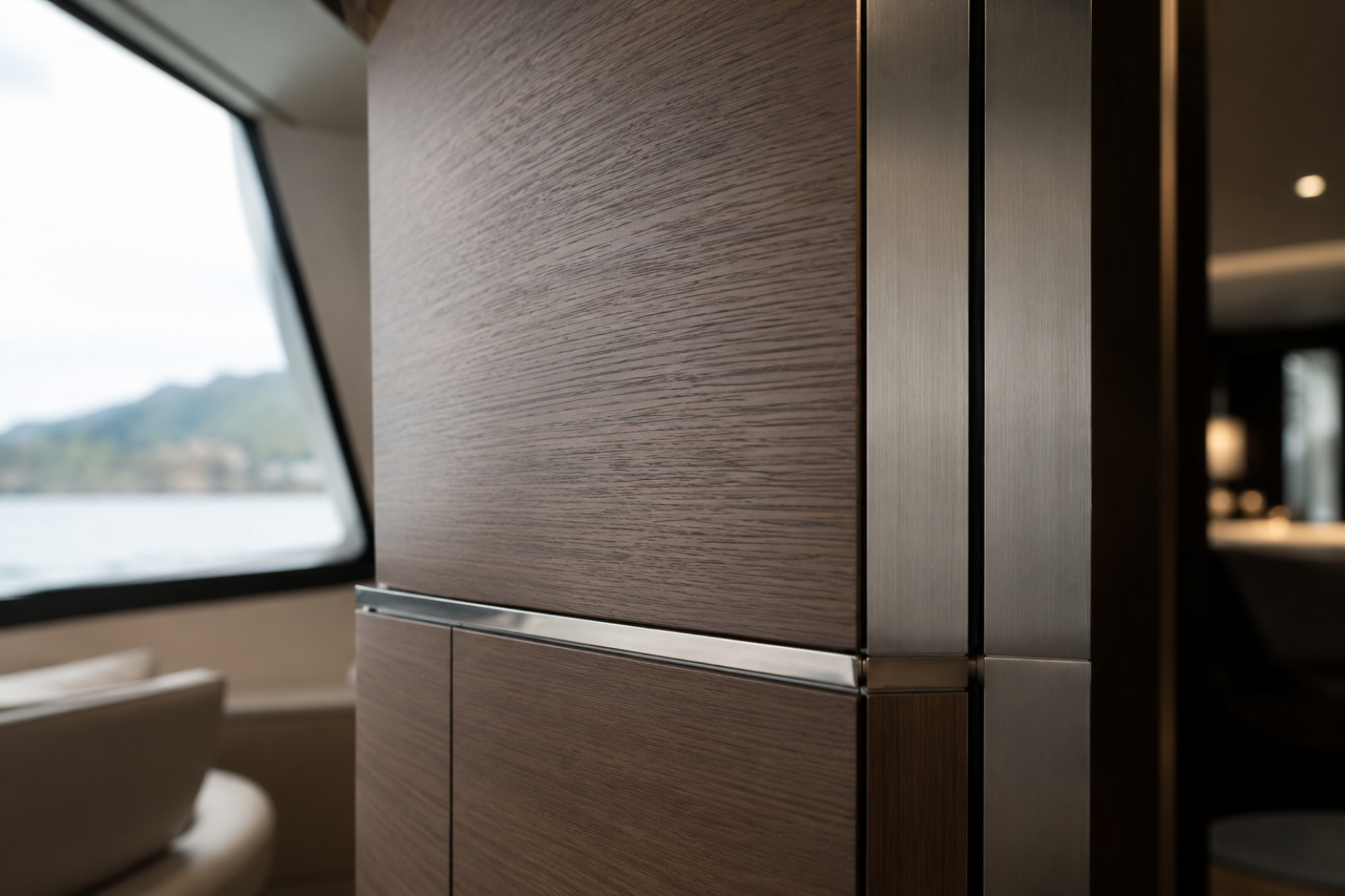
Look at cabinetry, wardrobes, shelving, wall panels, and doors. Examine how wood grain flows across surfaces. Notice whether lines continue naturally from one panel to another.
Exceptional yacht joinery quality creates visual continuity.
Poor workmanship interrupts it.
A grain pattern that suddenly shifts direction, a veneer that fails to align across adjacent panels, or inconsistent panel spacing may seem minor individually. Collectively, however, they reveal the level of care invested during construction.
Many of the world’s most respected builders devote enormous attention to yacht woodworking quality because these details are impossible to hide from experienced eyes.
The goal is not perfection.
The goal is consistency.
Consistency is often the clearest signal of true yacht craftsmanship.
2. Gaps and Tolerances
One of the least glamorous indicators of quality is also one of the most revealing.
Look at the spaces around doors, drawers, cabinetry, and wall panels.
Are they consistent?
Or do they vary from one section to another?
This area is commonly referred to as fit and finish.
Strong yacht fit and finish is defined by discipline rather than extravagance.
Many people assume luxury means smaller gaps. In reality, consistency matters more than size. A perfectly controlled reveal creates calm. Uneven spacing creates visual noise, even when viewers cannot consciously identify the cause.
This is one reason high-end yacht craftsmanship feels different from ordinary construction.
The eye notices order before the mind understands it.
3. Material Transitions
Quality becomes most visible where two materials meet.
Wood to leather.
Stone to timber.
Metal to veneer.
Glass to upholstery.
These moments are surprisingly difficult to execute well.
Each material expands, contracts, reflects light differently, and ages at a different rate. Bringing them together seamlessly requires both engineering and craftsmanship.
This is why material transitions often reveal more about yacht interior detailing than large design features ever could.
A beautifully executed transition feels natural.
A poorly executed one immediately draws attention to itself.
The finest interiors create the impression that every material belongs exactly where it is.
Nothing feels forced.
Nothing feels decorative for its own sake.
4. Hardware Feel
Open a drawer.
Close a cabinet.
Slide a door.
Repeat.
The experience should feel consistent every time.
Hardware is one of the most heavily used components inside any yacht. While guests often focus on aesthetics, experienced owners frequently judge quality through touch.
A well-built mechanism feels controlled.
Not heavy.
Not dramatic.
Controlled.
This distinction matters.
Exceptional yacht craftsmanship reveals itself through thousands of interactions that occur throughout the life of the yacht. Every handle, hinge, latch, and sliding mechanism contributes to the overall perception of quality.
Over time, these moments accumulate.
They become part of the owner’s daily experience.
5. Lighting Integration
Many interiors contain lighting.
Far fewer integrate it successfully.
Look closely at how light is introduced into the space.
Can you see exposed LED strips?
Are there harsh hotspots?
Does glare appear in reflective surfaces?
Do shadow lines feel intentional?
One of the strongest signals of luxury yacht craftsmanship is lighting that seems almost invisible.
You notice the atmosphere.
Not the fixture.
This requires careful planning, coordination between disciplines, and precise installation. Lighting is not merely decoration. It influences mood, perception, and visual comfort throughout the yacht.
The best lighting systems disappear into the architecture itself.
For readers, not audiences.
Yachtluéur letters are released selectively — when observation becomes reference, and reference becomes worth keeping.
Thank you!
You have successfully joined our subscriber list.
What Shipyards Rarely Say Directly
Time is one of the most expensive materials on a yacht.
Not marble.
Not leather.
Not timber.
Time.
A substantial portion of yacht build quality comes from labor hours invested in refinement.
Checking alignment.
Adjusting tolerances.
Refining transitions.
Correcting imperfections.
Repeating the process until everything feels right.
This is one reason why two yachts using similar materials can differ dramatically in quality.
The difference is often invisible on a specification sheet.
Yet it becomes obvious once you begin looking closely.
Why Great Craftsmanship Feels Calm
The highest level of yacht craftsmanship creates an unusual effect.
Calm.
Not excitement.
Not spectacle.
Calm.
Nothing competes for attention.
Nothing feels unresolved.
Nothing appears accidental.
The interior simply works.
This idea connects directly to luxury, timelessness, and layout design. Great craftsmanship supports all three. Without execution, luxury becomes decoration. Without execution, timeless design becomes theory. Without execution, even the best layout struggles to feel coherent.
Craftsmanship is the mechanism that transforms design intent into lived experience.
The Yachtluéur Quality Test
If you remember only five things when evaluating a yacht, remember these:
- Alignment
- Tolerances
- Transitions
- Hardware
- Lighting
Together, they reveal far more about yacht craftsmanship than a list of materials ever will.
Many interiors can impress visitors for five minutes.
Far fewer continue revealing quality after five years.
That distinction is where true value lives.
Closing
A yacht is not defined by the materials installed on board.
It is defined by the precision with which those materials are brought together.
The finest examples of yacht craftsmanship are often the least obvious. They appear in details that most guests never consciously notice yet somehow continue to feel.
A perfectly aligned panel.
A seamless transition.
A silent drawer.
A controlled shadow line.
These details rarely appear in marketing brochures.
Yet they are often the reason one yacht feels merely expensive while another feels genuinely exceptional.
Beyond Craftsmanship
Exceptional yacht craftsmanship depends on more than precise execution. The materials themselves shape how an interior ages, feels, and performs at sea. Read: Yacht Interior Materials Explained: Wood, Stone, Leather, and Metal at Sea.
read next
Why Some Yacht Interiors Age Better Than Others

Timeless vs Trendy Yacht Design: What Actually Ages Well