
Introduction
People rarely remember a beautiful light fixture.
They remember how a room made them feel.
A yacht interior can feature extraordinary materials, flawless joinery, and impeccable proportions, yet still feel cold, uncomfortable, or strangely lifeless. Often, the problem has nothing to do with the architecture itself.
It is the light.
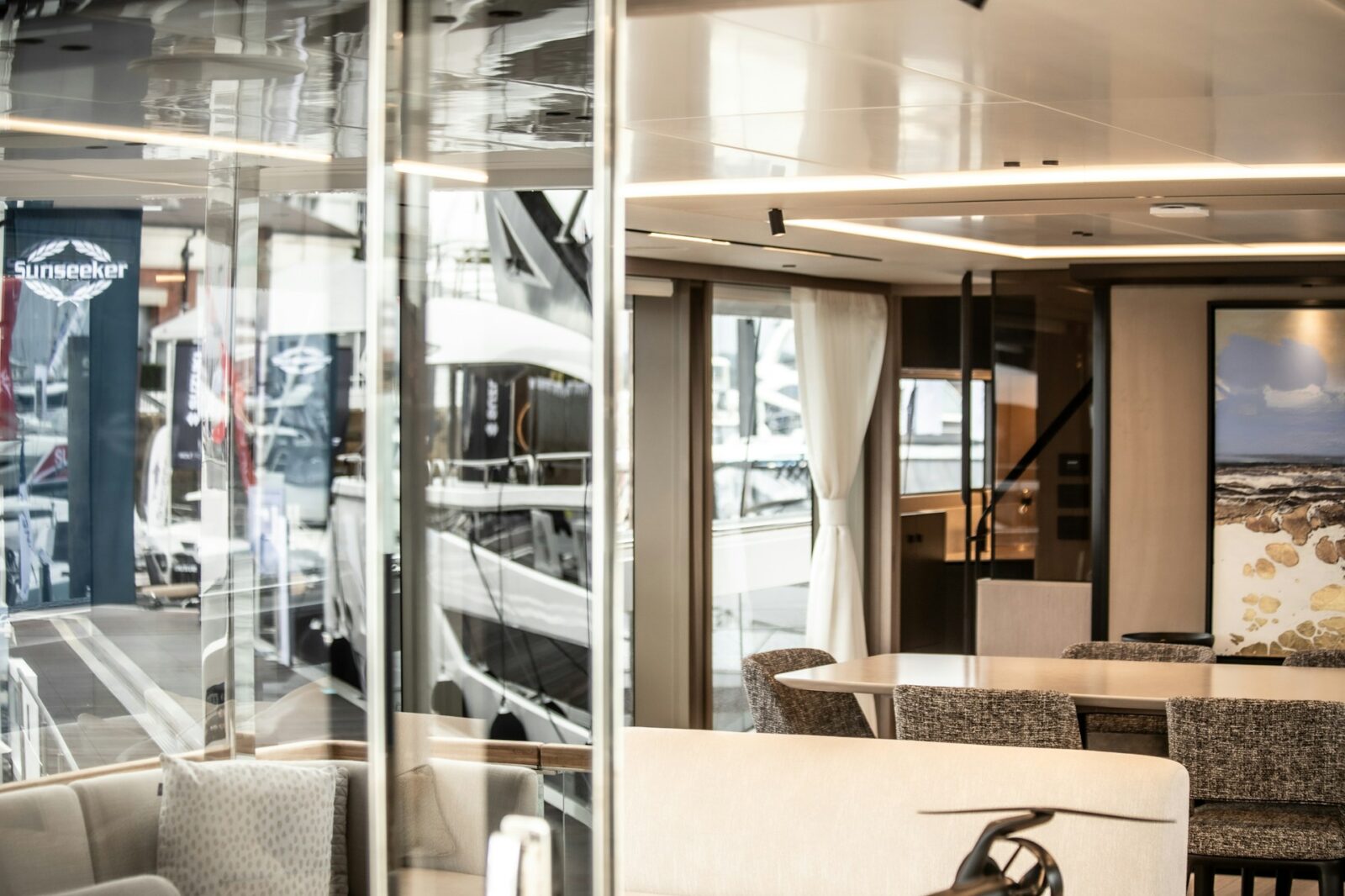
Lighting is one of the few design elements without physical weight, yet it transforms every material surrounding it. It reveals the grain of wood, softens natural stone, reduces visual fatigue, guides movement, and quietly shapes the atmosphere from sunrise until long after sunset.
This is why yacht lighting design deserves far more attention than it usually receives. On land, lighting often serves the room. At sea, it serves both the room and the people living within it, adapting to changing daylight, reflections from the water, and the rhythm of life onboard.
The finest yacht interiors are rarely the brightest.
They are the ones where the light feels inevitable.
Why Light Changes Everything
Before anyone notices the marble, the walnut veneer, or the craftsmanship of a perfectly aligned cabinet, the brain has already interpreted the room through its light.
Within moments, we instinctively decide whether a space feels welcoming or clinical, calm or stimulating, intimate or exposed.
Materials matter enormously.
But materials are always experienced through light.
The same oak veneer can feel warm in the evening and almost colourless under harsh white illumination. A carefully selected slab of quartzite may reveal extraordinary depth during the day yet appear flat beneath poorly positioned spotlights. Even leather changes character as shadows soften its texture and highlights move across its surface.
This is why experienced yacht designers think beyond illumination.
They design perception.
Light determines which surfaces become focal points, which details quietly disappear, and how the eye travels naturally through the interior. It creates visual hierarchy without walls and defines atmosphere without adding a single piece of furniture.
In many ways, light is the final material every yacht interior receives.
Unlike wood, stone, or leather, however, it changes every hour of the day.
Yacht Lighting Is Different From Residential Lighting
Many residential lighting principles still apply aboard a yacht.
The environment does not.
A house remains largely stable. Natural daylight follows a predictable path, reflections are relatively controlled, and the structure itself never moves.
A yacht experiences a completely different reality.
Large glazing introduces constantly changing daylight. Sunlight reflects from the surrounding water, increasing brightness in unexpected ways. During evening cruising, darkness arrives without the familiar glow of city streets, while interior lighting begins interacting with reflections in the glass itself.
Movement also changes perception.
Even in calm conditions, the human eye works continuously to maintain balance. Excessive brightness, poorly controlled glare, or inconsistent lighting levels can contribute to visual fatigue far more quickly than in a static building.
This is why successful yacht lighting design is rarely about making spaces brighter.
It is about making them more comfortable.
The goal is not maximum illumination.
The goal is effortless perception.
The same principle applies to marine-grade materials, where long-term performance matters just as much as first impressions.
The Five Layers of Yacht Lighting
The best yacht interiors rarely rely on a single lighting idea.
Instead, they combine several layers that work together almost invisibly. Remove one layer and the space still functions. Combine all five correctly, however, and the interior gains a sense of depth that guests may never consciously notice—but will immediately feel.
1. Orientation
Good lighting quietly guides movement.
Guests should instinctively understand where corridors continue, where stairs begin, and how different spaces connect without consciously searching for the next step.
Soft floor lighting, concealed wall illumination, and subtle transitions between spaces create confidence while preserving the calm atmosphere expected aboard a luxury yacht.
When orientation works well, people never think about it.
They simply move naturally.
2. Function
Every luxury interior must first succeed as a place to live.
Before lighting creates atmosphere, it must support everyday life without drawing attention to itself.
Reading should never strain the eyes.
Preparing a meal should feel natural.
Wardrobes should reveal colour accurately.
Bathroom mirrors should illuminate faces evenly rather than casting harsh shadows.
These moments may seem ordinary, yet they define comfort far more than dramatic lighting scenes.
The mistake many interiors make is treating every activity with the same level of brightness.
Luxury does the opposite.
It gives every task exactly the amount of light it requires—and nothing more.
Good task lighting disappears into daily life because it feels intuitive.
Poor task lighting constantly reminds you it exists.
3. Atmosphere
Atmosphere is where yacht lighting design becomes emotional rather than technical.
A yacht is one of the few environments where people spend an entire day within the same interior.
Morning coffee.
Lunch underway.
A quiet afternoon reading.
Dinner with friends.
Late-night conversations.
The room remains the same.
The feeling should not.
This is why successful yacht interiors rarely rely on fixed lighting levels.
They rely on change.
As daylight fades, artificial lighting gradually becomes warmer, softer, and less directional. Brightness decreases while comfort increases. Reflections become gentler. Shadows deepen slightly, allowing materials to gain richness instead of disappearing into darkness.
The result is subtle.
Guests rarely notice that the lighting has changed.
They simply feel that the room has become calmer.
Hospitality has understood this principle for decades.
The finest hotels rarely impress through brightness.
They create atmosphere through restraint.
Luxury yachts follow the same philosophy.
4. Architecture
Lighting should reveal architecture.
It should never compete with it.
One of the most common mistakes in modern interiors is allowing light fixtures to become the visual focus. Rows of identical spotlights, exposed LED strips, or decorative fittings often distract from the very craftsmanship they were meant to celebrate.
Exceptional yacht interiors work differently.
They allow light to reveal proportion.
A concealed ceiling detail makes the room feel taller.
A softly illuminated wall emphasises length.
A gentle wash of light across timber highlights the direction of the grain.
Even narrow corridors feel wider when vertical surfaces receive more attention than the floor beneath them.
The architecture remains unchanged.
Yet the perception of space improves dramatically.
This is why experienced designers often describe light as an architectural material.
Not because it occupies physical space.
Because it shapes how physical space is understood.
5. Time
Perhaps the most overlooked aspect of yacht lighting design is that a yacht is experienced across an entire day.
Morning light encourages alertness.
Afternoon light balances comfort with activity.
Sunset asks for warmth.
Evening invites conversation.
Late at night, lighting should support movement without disturbing rest.
The interior should evolve naturally alongside the day.
Colour temperature plays an important role here.
Cooler light generally supports focus and practical tasks.
Warmer light encourages relaxation and visual comfort.
Neither is inherently better.
The success lies in choosing the appropriate light for the appropriate moment.
Many modern lighting systems allow these transitions to happen gradually through dimming and programmable scenes.
Technology, however, is only the tool.
The objective remains human experience.
Guests should never feel that the lighting system is performing.
They should simply feel that the yacht always seems perfectly lit.
Warm Light vs Cold Light
One of the simplest decisions in lighting also has one of the greatest effects on atmosphere.
Warm light is often associated with comfort because it resembles the natural colours of sunrise, sunset, candlelight, and fire. It softens timber, enriches leather, and gives natural stone greater visual depth.
Cooler light serves a different purpose.
It improves clarity.
It helps distinguish colours.
It supports practical tasks in areas such as galleys, utility spaces, and technical workstations.
Problems arise when a single colour temperature is used everywhere.
A dining saloon illuminated like an office immediately loses its sense of hospitality.
Likewise, a technical workspace lit entirely with warm ambient lighting becomes less functional.
The finest yacht interiors understand that lighting is not a single setting.
It is a sequence.
Each space—and each hour—deserves its own visual language.
Why Luxury Is Never Bright
Why Glare Destroys Luxury
Many people assume luxury means more light.
In reality, luxury usually means better light.
One of the quickest ways to reduce the perceived quality of a yacht interior is uncontrolled glare. A polished stone countertop reflecting exposed downlights. A glossy wood surface bouncing bright highlights across a saloon. A seating area where guests constantly adjust their eyes because the lighting competes with the view outside.
None of these problems originate from expensive materials.
They originate from poor lighting decisions.
This is why the finest yacht lighting design rarely attempts to eliminate shadows entirely.
Shadows create depth.
They separate surfaces.
They allow the eye to rest.
Without them, every material begins to feel equally flat.
Visual comfort has become one of the defining characteristics of contemporary luxury. Guests should never be conscious of where the light comes from.
They should only notice that spending several hours onboard feels effortless.
Luxury is not brightness.
Luxury is comfort.
Why Indirect Lighting Makes Spaces Feel Larger
One of the greatest strengths of architectural lighting is that it changes perception without changing construction.
Indirect lighting is a perfect example.
Instead of directing light toward people, it first illuminates ceilings, walls, or architectural details. Those larger surfaces then reflect softer, more even light back into the room.
The effect is immediate.
Ceilings appear higher.
Walls feel lighter.
Furniture seems to float rather than sit heavily on the floor.
Hard transitions soften.
The room begins to breathe.
This approach is especially valuable aboard yachts, where every centimetre matters. Expanding physical dimensions is impossible.
Expanding perceived space is not.
Many of the world’s finest yacht interiors rely more on reflected light than direct light.
Guests rarely realise why the room feels larger.
They simply experience it.
How Light Changes Every Material
No material exists independently of light.
Wood changes colour.
Stone gains or loses depth.
Leather appears softer.
Brushed metal becomes quieter.
Even carefully executed yacht craftsmanship can disappear if illumination is poorly considered.
This explains why lighting should never be treated as the final decorative layer added after construction.
It belongs to the design process from the very beginning.
Consider a walnut veneer.
Under warm indirect lighting, it develops richness and warmth.
Under harsh white lighting, the same veneer may appear darker, heavier, and less inviting.
Natural stone behaves similarly.
Gentle wall-washing reveals subtle mineral variation and depth.
Poorly positioned spotlights often flatten the entire surface into simple reflection.
Lighting does not change the material.
It changes our perception of the material.
This is especially true for yacht wood finishes, where the direction, warmth, and intensity of light determine how timber is ultimately perceived.
The relationship is equally important in yacht stonework, where careful lighting reveals depth and natural veining rather than unwanted reflections.
The Yachtluéur Lighting Test
Before evaluating any yacht interior, ask a few simple questions.
Can you comfortably remain in the space for several hours?
Does the lighting reduce effort rather than demand attention?
Do materials appear natural?
Wood should feel warm.
Stone should reveal depth.
Leather should retain softness.
Is movement intuitive?
Can guests naturally understand where to walk without obvious visual guidance?
Does the atmosphere evolve throughout the day?
Morning, afternoon, sunset, and evening should never feel identical.
Do you notice the fixtures before the room?
If the answer is yes, the lighting has probably become the architecture instead of supporting it.
The finest yacht lighting quietly disappears.
Its success is measured by what people feel—not by what they notice.
The Most Common Yacht Lighting Mistakes
Good lighting is often invisible.
Poor lighting is remembered immediately.
Among the most common mistakes are:
- Too many recessed spotlights creating visual clutter.
- Brightness distributed equally across every surface.
- Excessive reliance on decorative fixtures instead of architectural lighting.
- Ignoring dimming and scene control.
- Mixing incompatible colour temperatures within the same space.
- Allowing reflections to dominate polished materials.
- Treating lighting as equipment instead of architecture.
Each mistake seems relatively small.
Together they fundamentally change how a yacht is experienced.
Lighting Is Hospitality
Perhaps the greatest lesson from luxury hospitality is that guests rarely compliment lighting.
They describe the room instead.
“It feels peaceful.”
“It feels warm.”
“It feels elegant.”
“It feels comfortable.”
Lighting quietly shapes every one of those impressions.
That is why the finest yacht interiors never use light to impress.
They use it to welcome.
Closing
Light is the only material in a yacht interior that cannot be touched.
Yet it transforms every material surrounding it.
It gives warmth to wood.
Depth to stone.
Softness to leather.
Presence to craftsmanship.
Without changing a single wall, it reshapes the entire experience of life onboard.
The finest yacht lighting design is never remembered because guests admired the fixtures. It is remembered because they forgot the lighting was there at all. That is when illumination becomes architecture—and ultimately, what makes a yacht interior truly luxurious.
Beyond Lighting
Light reveals every material inside a yacht, but it cannot create quality on its own. Once illumination has done its work, craftsmanship becomes visible through every joint, transition, and detail. To learn how experienced eyes recognize true quality onboard, read: Yacht Craftsmanship Signals: How to Recognize True Quality On Board.
read next
Why Some Yacht Interiors Age Better Than Others

Timeless vs Trendy Yacht Design: What Actually Ages Well